All Blog Post

Featured

Biblical Wisdom For Effective Parenting

Effective parenting requires more than knowledge and good intentions. Discover how God’s Word, the Holy Spirit, and wisdom from above can help parents raise children according to God’s purpose.

Parenting is one of the greatest responsibilities entrusted to humanity.

It is also one of the areas where knowledge, experience, good intentions, and even genuine love may sometimes prove insufficient.

Every child is different. Every season brings new questions, and every stage of development can present new challenges.
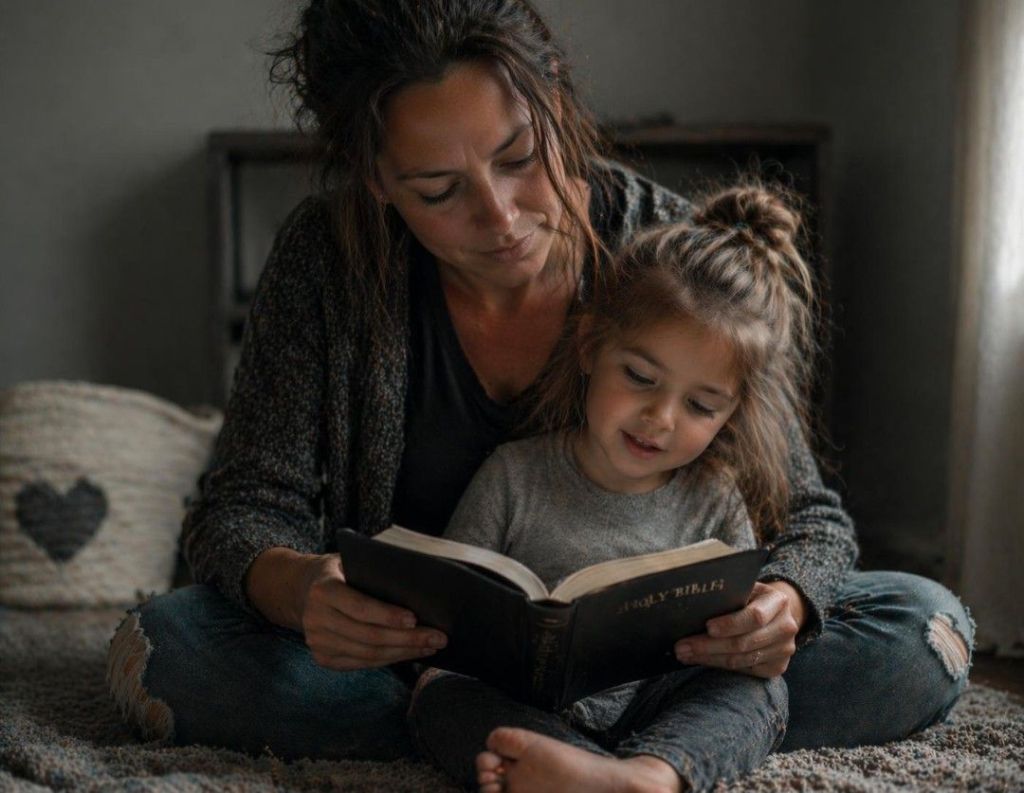
This is why parents need more than information.

We need wisdom.

And not merely human wisdom.

We need the wisdom that comes from above.

God did not create people merely to exist. Every person carries purpose, potential, capacity, and usefulness. In Christ, we are redeemed not merely to live, but to fulfil God’s purpose and become useful vessels in His hands.

Parenting is part of that assignment.

God has entrusted children to parents, guardians, teachers, and caregivers, and He expects us to nurture them according to His purpose.

So the question is not only:

“How can I become a better parent?”

A deeper question is:

“Lord, how do You want me to raise this child?”

“O my Lord, let the man of God which thou didst send come again unto us, and teach us what we shall do unto the child that shall be born.”

Judges 13:8

That is a powerful parenting prayer:

“Lord, teach me what to do with this child.”

The effectiveness of our parenting will be greatly influenced by our willingness to hear, receive, and obey God’s instruction.

We Are Redeemed to Be Solution Bearers

God did not create us merely to occupy space.

Redemption in Christ brings us into a life of purpose. We are called to become instruments through which God’s wisdom, love, truth, and goodness can reach our generation.

This includes parenting.

When a child is confused, a parent can provide direction.

When a child is afraid, a parent can provide security.

When a child fails, a parent can teach restoration.

When a child struggles with character, a parent can provide correction and instruction.

When a child is searching for identity, a parent can point the child toward God.

But to become effective solution bearers, we must remain responsive to God’s instructions.

How far we go in any area of challenge is often connected to how willing we are to receive and put God’s instructions to work.

There Is No Finish Line in the School of Wisdom

“Give instruction to a wise man, and he will be yet wiser…”

Proverbs 9:9

There is no graduation ceremony in the school of wisdom.

A wise parent remains teachable.

Having successfully navigated one season of parenting does not mean we automatically know how to navigate the next. Children grow. Their questions change. Their emotional needs change. Their environments change.

Therefore, our need for wisdom continues.

The wise parent does not say:

“I already know everything about parenting.”

The wise parent says:

“Lord, teach me.”

God’s Word Still Gives Wisdom

The wisdom of Scripture has not become obsolete.

Human circumstances may change. Technology may advance. Cultures may shift. Parenting challenges may take new forms.

But God’s principles remain powerful.

“Thy word is a lamp unto my feet, and a light unto my path.”

Psalm 119:105

God’s Word still gives direction.

It still corrects.

It still teaches.

It still reveals.

It still transforms.

The Bible may not mention every modern parenting situation by name, but it gives us principles through which we can approach those situations with God’s perspective.

God’s Word is the light that shines the way forward through every challenge we may face.

What Is Wisdom?

Wisdom is more than knowledge.

Knowledge tells us what we know.
Wisdom teaches us what to do with what we know.

Biblical wisdom, therefore, is putting God’s Word to work in the situations of life.

It is one thing to know that Scripture teaches patience.

It is another thing to practise patience when a child repeatedly tests you.

It is one thing to know that children should be corrected.

It is another thing to know how, when, and why to correct.

“Whatsoever he saith unto you, do it.”

John 2:5

Joshua 1:8 similarly connects meditation on God’s Word with doing what is written.

The power is not merely in possessing Scripture.

The power is in putting Scripture to work.

God’s Wisdom Gives Insight for the Parenting Assignment

Manoah understood something many parents can overlook:

Having a child does not automatically mean knowing how to raise that child according to God’s purpose.

That is why he asked God:

“Teach us what we shall do unto the child…”

Judges 13:8

There will be moments when natural observation is not enough.

A child’s outward behaviour may not reveal everything happening within.

This is where divine wisdom becomes precious.

God can help us discern what needs attention, what requires patience, what should be confronted, what should be nurtured, when to speak, when to listen, and how to respond.

This does not mean rejecting education, experience, professional knowledge, or godly counsel.

It means recognizing that God remains the ultimate source of the wisdom required to fulfil the assignment He has given us.

Wisdom Must Become Action

“Whosoever heareth these sayings of mine, and doeth them, I will liken him unto a wise man…”

Matthew 7:24

Notice the combination:

Hear + Do = Wisdom in Operation

Biblical wisdom is not complete when God’s Word enters our ears.

It becomes visible when God’s Word enters our actions.

We do not engage Scripture merely to know more.

We engage it so that we can live differently.

Wisdom from Above Produces the Right Spirit

“But the wisdom that is from above is first pure, then peaceable, gentle, and easy to be intreated, full of mercy and good fruits…”

James 3:17

Godly parenting still requires correction, discipline, boundaries, and difficult conversations.

But divine wisdom teaches us how to handle them in a way that reflects God’s character.

There is a difference between firmness and harshness.

There is a difference between correction and humiliation.

There is a difference between discipline and uncontrolled anger.

Wisdom teaches us how to correct without destroying and establish boundaries without unnecessarily damaging relationship.

When human reasoning, cultural ideas, or popular parenting practices conflict with the clear principles of God’s Word, Scripture must remain our final authority.

The Holy Spirit Helps Us Engage God’s Wisdom

1 Corinthians 2:10–13 reveals that the Holy Spirit searches the deep things of God and teaches believers the things God has freely given.

The Christian parent is therefore not left entirely to trial and error.

The Holy Spirit works through God’s Word to illuminate our understanding and help us apply its truth.

Sometimes the important question is not:

“What do other parents do?”

It is:

“Holy Spirit, what are You teaching me from God’s Word about this situation?”

The Word gives us the foundation. The Spirit helps illuminate and apply that truth.

God’s Wisdom Can Bring Order and Restoration

“The LORD by wisdom hath founded the earth…”

Proverbs 3:19

God’s wisdom is creative.

It brings order where there is confusion and can help rebuild what has been damaged.

Not every family situation begins perfectly.

Some children struggle with rejection, insecurity, unhealthy patterns, or the consequences of past mistakes.

But divine wisdom does not merely teach us how to manage what is broken.

It can show us how to begin rebuilding.

The God whose wisdom created can also give wisdom for restoration.

God’s Word Illuminates and Examines

“The spirit of man is the candle of the LORD, searching all the inward parts…”

Proverbs 20:27

And Psalm 119:105 says:

“Thy word is a lamp unto my feet, and a light unto my path.”

Psalm 119:105

Together, these Scriptures give us a powerful picture.

God’s Word illuminates the path before us, but it also helps us examine what is within us.

Sometimes the question is not only:

“What is wrong with my child?”

It is:

“Lord, what are You showing me about me?”

Perhaps our reaction needs correction.

Perhaps our expectations need adjustment.

Perhaps God is teaching us patience.

Perhaps He is asking us to change how we communicate.

Divine wisdom does not only examine the child. It also examines the parent.

How Do We Stir Up This Wisdom?

1. Be Born Again

“Except a man be born again, he cannot see the kingdom of God.”

John 3:3

Godly parenting begins with a parent who is willing to be governed by God.

We need Christ. We need the Holy Spirit. We need the life of God within us.

2. Acknowledge God as the Source

“He giveth wisdom unto the wise, and knowledge to them that know understanding.”

Daniel 2:21

We can learn from books, teachers, counsellors, experienced parents, and professionals.

But ultimately:

God is the principal source of divine wisdom.

Prayer should not merely be our emergency exit. Fellowship with God should become our daily source of direction.

3. Desire Wisdom

If we desire God’s wisdom, we will make room for it.

We will seek it, study, listen, learn, and remain teachable.

4. Ask for Wisdom

“If any of you lack wisdom, let him ask of God…”

James 1:5

There is no shame in saying:

“Lord, I don’t know what to do.”

That admission may become the doorway to receiving what we need.

5. Search the Scriptures

When facing a parenting challenge, ask:

“What does God’s Word say about this?”

Then search. Study. Meditate. Compare Scripture with Scripture. Pray. Listen. Keep searching until light comes.

6. Put It to Work

The ultimate purpose of receiving wisdom is application.

Read the Word. Believe it. Meditate on it. Receive instruction from the Holy Spirit. Then obey it.

Engage the wisdom. Don’t merely read it.

A Parent’s Prayer

Perhaps one of the most powerful prayers a parent can pray is the prayer of Manoah:

“Lord, teach me what I shall do unto the child.”

Not merely:

“Lord, make my child behave.”

Not only:

“Lord, remove this problem.”

But:

“Lord, teach me.”

Teach me how to speak.

Teach me how to listen.

Teach me when to correct.

Teach me when to wait.

Teach me how to discipline.

Teach me how to encourage.

Teach me how to recognize what You are doing in my child.

Teach me how to nurture the gifts You have placed within this child.

Teach me how to point this child toward You.

Teach me how to fulfil my responsibility faithfully.

Because ultimately, the child belongs to God, and I am a steward of the assignment.

Conclusion: Wisdom for the Journey

Effective parenting requires more than good intentions.

It requires wisdom.

Experience, education, observation, professional knowledge, and godly counsel can all provide valuable help. But the parent who desires to fulfil God’s purpose must continually engage the wisdom that comes from above.

There is no finish line in the school of wisdom.

So when you face a parenting challenge, don’t ask only:

“What do people normally do?”

Ask:

“What does God say?”

When you don’t know what to do, pray:

“Lord, teach me what to do with this child.”

When the situation is confusing, turn on the light of God’s Word.

When you receive instruction, put it to work.

When you think you have learned enough, remain teachable.

When you lack wisdom, ask.

When the answer does not come immediately, keep searching.

And when God gives you wisdom, don’t merely admire it.

Engage it.

Because God’s wisdom is not given merely to make us knowledgeable parents.

It is given to make us effective stewards of the lives He has entrusted to us.

Desire wisdom. Ask for wisdom. Search the Scriptures. Receive wisdom from above. Put God’s Word to work.

That is how wisdom becomes effective in parenting.

Final Thought

The child may be in your home, but the wisdom for raising that child comes from above.

And when God’s Word becomes the light by which we parent, we are better positioned to raise children in God’s Word, character, and purpose.


Featured

A Child’s Confession May Reveal His Condition, But His Expression May Reveal His Experience

A child’s troubling words may be more than an attitude to correct. They may reveal a condition within or an experience behind the expression. Learn how godly parents can listen, discern, correct, and respond with wisdom and love.

Dedicated with gratitude to Mrs. Hilda and my precious friend, Mrs. Etua, whose lives have shown me the wisdom and power of looking beyond a child’s expression and responding with patience, love, and godly understanding.


“A man’s confession is often his condition; a man’s expression is mostly his experience.”

I woke up with this thought in my heart, and the more I reflected on it, the more I began to see how deeply it can speak to parenting, especially parenting older children.

There are seasons when a child who once seemed open, affectionate, and easy to communicate with begins to say things that leave a parent wondering:

“Where did this come from?”

“Why is my child talking like this?”

“After everything I have done for you, how can you say that?”

Sometimes children say things in anger that they may not fully mean. Sometimes they do mean what they say. Sometimes their words are simply wrong and need correction.

But sometimes, behind the expression is an experience.

And behind the experience may be a condition of the heart that the parent needs to understand.

This does not mean parents should excuse disrespectful speech. It means we should learn to listen beyond the words.

Words Can Reveal What Is Happening Within

Jesus gave us an important principle:

“For out of the abundance of the heart the mouth speaketh.”

Matthew 12:34

Our words often provide a window into what is happening inside us.

A child who repeatedly says, “Nobody cares about me,” may be expressing more than dissatisfaction.

A child who says, “You never listen to me,” may be communicating a genuine feeling of being unheard.

A child who says, “I don’t want anything to do with church,” may be expressing frustration, disappointment, confusion, influence from others, or a struggle that the parent has not yet discovered.

And sometimes the statement may simply be a wrong response that requires loving correction.

The point is not to assume that every troubling statement has a hidden meaning.

The point is to investigate before we conclude.

Instead of hearing only the words, a wise parent asks:

“What is happening inside my child that is producing this expression?”

That question can open a door that anger would have closed.

A Child’s Expression May Be Carrying an Experience

Children are constantly being shaped by what they see, hear, and experience.

Their environment speaks.

Their relationships speak.

Their friendships speak.

Their disappointments speak.

Their parents speak.

Their teachers speak.

Social media speaks.

And eventually, some of these experiences find their way into their expressions.

This is particularly important as children grow older.

An older child may not always come to a parent and say:

  • “Mum, I feel rejected.”
  • “Dad, I am struggling with comparison.”
  • “I feel like you don’t understand me anymore.”

Instead, the pain may come out as anger.

The confusion may come out as withdrawal.

The insecurity may come out as arrogance.

The disappointment may come out as disrespect.

The parent sees the expression, but there may be an experience underneath it.

This is why godly parenting requires more than correcting behaviour.

It requires discernment.

Understanding Is Not the Same as Excusing

This distinction is extremely important.

If a child is disrespectful, the parent should not simply say:

“Well, he must be hurting, so let him talk anyhow.”

No.

Godly parenting does not remove boundaries because we have discovered emotions.

A child can be hurting and still need correction.

A child can be frustrated and still need to learn respect.

A child can have a legitimate complaint and still communicate it wrongly.

Understanding the condition behind an expression does not mean approving the expression.

It simply helps the parent respond more wisely.

Instead of:

“How dare you speak to me like that!”

A parent might say:

“I will not accept disrespectful words, but I also want to understand why you feel this way. Tell me what happened.”

That sentence carries both authority and compassion.

It corrects the behaviour without rejecting the child.

Before Correcting the Mouth, Listen to the Heart

Sometimes parents are so focused on stopping the wrong words that they miss the opportunity to discover what produced them.

Imagine an older child suddenly saying:

“I hate this house. Nobody understands me.”

The immediate parental response might be:

“You hate this house? After everything we have done for you?”

The conversation can quickly become a battle.

But what if the parent paused?

What if the parent responded:

“Those words are hurtful and we need to address them. But I also want to understand what has made you feel this way. What happened?”

Now the conversation has somewhere to go.

Perhaps the child has been carrying a disappointment.

Perhaps there has been a misunderstanding.

Perhaps the child feels compared with a sibling.

Perhaps the child has been influenced by something outside the home.

Perhaps the parent has unknowingly created an environment where the child feels unable to speak honestly.

Or perhaps the child simply needs correction.

We cannot know until we listen.

What Are Our Children Experiencing at Home?

This brings us to a deeper question for every parent:

“What experiences am I creating in my child’s life?”

If expression is influenced by experience, then parenting becomes more than telling children what to say.

It becomes intentional about what we are depositing into their lives.

What does your child experience when they make a mistake?

Do they experience only criticism?

Or do they experience correction accompanied by patience?

What happens when they disagree with you?

Do they experience rejection?

Or do they learn that disagreement can be handled respectfully?

What happens when they fail?

Do they hear:

“You can never do anything right.”

Or:

“You made a mistake. Let’s learn from it and try again.”

These experiences matter.

Because one day, the child may express what has repeatedly been experienced.

The Home Is a Training Ground for the Heart

The Bible says:

“Train up a child in the way he should go: and when he is old, he will not depart from it.”

Proverbs 22:6

Training involves more than instruction.

It involves repetition.

It involves modelling.

It involves correction.

It involves environment.

It involves conversations.

It involves what a child repeatedly sees and experiences.

Children are not simply listening to what we teach them.

They are also learning from how we live before them.

If we want children who know how to apologise, they should see us apologise.

If we want children who speak respectfully, they should hear respectful communication.

If we want children who forgive, they should experience forgiveness.

If we want children who trust God, they should see us trusting God.

If we want children who respond to difficult situations with faith, they need to see faith lived out in the home.

The home is not merely where children sleep.

The home is one of the classrooms where their character is being formed.

What If the Parent Is Part of the Experience?

This may be the most uncomfortable question, but it may also be one of the most productive.

Sometimes we ask:

“What is wrong with my child?”

when we should also ask:

“Is there anything in our relationship that needs attention?”

This is not an invitation for parents to blame themselves for every difficulty.

Children make their own choices. Friends influence children. Culture influences children. The internet influences children. And children have their own personalities and struggles.

But parents should remain humble enough to examine themselves.

  • Could my child feel unheard?
  • Have I been correcting more than connecting?
  • Have I compared this child with another child?
  • Have I made achievement more important than character?
  • Have I created an atmosphere where my child is afraid to tell me the truth?
  • Have I been physically present but emotionally unavailable?
  • Have I been teaching God’s Word without consistently demonstrating God’s love?

These questions are not accusations.

They are invitations to growth.

God’s Word Can Change Both Condition and Expression

Here is where godly parenting becomes more than behavioural management.

We do not merely want children who know how to sound Christian.

We want children whose hearts are being shaped by God’s Word.

The Bible says:

“Thy word have I hid in mine heart, that I might not sin against thee.”

Psalm 119:11

The goal is not simply to put Scripture into a child’s memory.

It is to allow God’s Word to take root in the heart.

Because when the heart is transformed, expression can change.

  • Fear can begin to give way to faith.
  • Bitterness can give way to forgiveness.
  • Selfishness can give way to generosity.
  • Anger can give way to self-control.
  • Hopelessness can give way to hope.

And a child who once expressed pain through destructive words can gradually learn healthier ways to communicate what is happening inside.

This is why parents must not abandon their children in difficult seasons.

Keep teaching. Keep praying. Keep listening. Keep correcting. Keep loving.

Galatians 6:9 reminds us:

“And let us not be weary in well doing: for in due season we shall reap, if we faint not.”

Galatians 6:9

Parents, Don’t Let One Statement Become Your Child’s Identity

One of the greatest mistakes a parent can make is turning a child’s temporary expression into a permanent identity.

Your child may say:

“I can’t do anything.”

Don’t respond:

“You’re lazy.”

A child may say:

“Nobody loves me.”

Don’t respond:

“You’re always complaining.”

A child may behave rebelliously. Don’t conclude:

“You will never amount to anything.”

Correction should address what the child did, not pronounce a hopeless verdict over who the child is.

There is a profound difference between:

“What you did was wrong.”

and:

“You are a bad child.”

The first corrects behaviour.

The second attacks identity.

Godly parenting should help children understand:

  • “You did wrong, but you are not beyond redemption.”
  • “Your words were wrong, but you can learn to communicate differently.”
  • “You made a mistake, but your mistake does not have to define your future.”

Listen Beyond the Expression

Perhaps this is the challenge for parents today:

The next time your older child says something that hurts you, don’t respond only to the sound of the words.

Pause.

Listen.

Pray.

Discern.

Then respond.

Ask:

  • What did my child say?
  • What might my child be feeling?
  • What experience could be influencing this expression?
  • What needs correction?
  • What needs conversation?
  • What needs prayer?
  • What needs to change in me?
  • What does God’s Word say about how I should respond?

Sometimes the answer will be discipline.

Sometimes it will be a conversation.

Sometimes it will be an apology.

Sometimes it will be a boundary.

Sometimes it will be prayer.

Sometimes it will be all of them.

But the goal is not simply to silence the child.

The goal is to help shape the heart from which the expression comes.

A Prayer for Parents

Father, give us wisdom to understand our children beyond their words.

Help us to recognize when an expression is revealing pain, confusion, frustration, or a wrong attitude.

Give us the grace to correct what is wrong without rejecting the child.

Teach us to listen before we judge, to understand before we condemn, and to discipline with love and wisdom.

Help us examine our own lives and make our homes places where Your Word, love, truth, patience, and godly character are continually experienced.

May the seeds we plant today become a harvest of godly character tomorrow.

And when our children’s words concern us, remind us that You are still working in their hearts.

In the  Jesusname,
Amen.

Final Thought

A child’s words can tell us where something may be happening.

A child’s expressions can tell us what experiences may have shaped them.

But neither should make us give up on the child.

A condition can change.

An experience can be healed.

An expression can be retrained.

And a heart can be transformed by the Word of God.

So when your child’s words hurt, don’t listen only to the expression.

Listen for the condition.

Look at the experience.

Correct what is wrong.

Heal what is wounded.

Teach what is missing.

And keep planting God’s Word.

Because godly parenting is not merely about raising children who know what to say.

It is about raising children whose hearts have been shaped by what is true.

“Keep thy heart with all diligence; for out of it are the issues of life.”

Proverbs 4:23

Godly parenting doesn’t just change what a child says. It helps shape what eventually comes out of the heart.


Growing children in God’s Word, character and purpose.

If this article encouraged you, explore more practical biblical insights for raising children in God’s Word, character and purpose at Godly Parenting Insights.

Godlyparentingtips.family.blog

Featured

I Understood by Books: God’s Provision for Wise Parenting

Discover how Daniel’s example of learning through books applies to Christian parenting today. Learn why God provides faithful teachers and biblical resources to help parents raise godly children.

God provides His Word and faithful teachers to guide us in raising the next generation.

I Understood by Books: God’s Provision for Wise Parenting

A Little Humor to Start:

A little boy was asked by his Sunday school teacher, “What do we learn from the story of Adam and Eve?” He thought for a moment and replied, “Well… I learned that if you don’t have anyone to blame, blame the snake!” 🤣

Parenting can sometimes feel like that—full of unexpected twists, finger-pointing, and moments where we wonder, “Did I sign up for this?” But here’s the good news: God never left us without help.

Romans 11:33 (KJV)

“O the depth of the riches both of the wisdom and knowledge of God! how unsearchable are his judgments, and his ways past finding out!”

The wisdom of God is deep, inexhaustible, and multifaceted. No single person can ever fully comprehend the greatness of His wisdom in one lifetime. Yet, in His mercy, God has chosen to reveal His wisdom progressively through His Word, through faithful teachers, and through the testimonies of men and women who have walked with Him.

This truth is especially important in parenting. Raising children is one of life’s greatest responsibilities, yet God never intended parents to navigate it alone. His wisdom has already been revealed for our benefit.

One of the clearest biblical examples of this is found in the life of Daniel.

Daniel 9:2 (KJV)

“In the first year of his reign I Daniel understood by books the number of the years…”

Daniel did not receive understanding by starting from the beginning. He studied the writings that God had already given through His prophet Jeremiah. Through those writings, he understood God’s purpose and responded with faith and prayer.

This teaches us an important principle: God often brings understanding through His written Word and through the faithful writings of those who have learned His ways. The principle Daniel applied to understanding prophecy is the same principle parents can apply to raising children. We learn from God’s Word first, then from the experiences of faithful believers who have already walked the journey before us.

We Do Not Have to Start From Scratch

One of the greatest mistakes we can make is believing that our situation is unique or that no one has ever faced the challenges before us.

God’s Word reminds us otherwise.

Ecclesiastes 1:9 (KJV)

“The thing that hath been, it is that which shall be… and there is no new thing under the sun.”

There is nothing you are going through today that someone has not gone through before. Whether it is the challenge of raising children, building a godly home, overcoming fear, navigating difficult seasons, or dealing with the pressures of modern life, someone has walked that road before you and, by God’s grace, came out victorious.

This is one of God’s beautiful provisions for His children. We do not all have to learn through painful experience. We can learn through Scripture, through godly examples, and through the written testimonies of faithful believers.

Life is full of challenges, and parenting is no exception. Every parent desires to raise children who love God, honour His Word, and become a blessing to their generation.

The encouraging truth is this: we do not have to discover everything by trial and error.

God has raised faithful men and women throughout history who have walked this path before us. They have learned valuable lessons, overcome challenges, and recorded biblical principles that can help the next generation.

Their testimonies become learning opportunities for us.

God’s Word Comes First

The Bible remains our final authority in every area of life.

Every book we read, every teaching we receive, and every piece of advice we follow must agree with God’s Word.

Yet God also gives teachers to help us understand and apply biblical truth.

Isaiah 30:20-21 (KJV)

“And though the Lord give you the bread of adversity, and the water of affliction, yet shall not thy teachers be removed into a corner any more… And thine ears shall hear a word behind thee, saying, This is the way, walk ye in it…”

God does not leave His children without guidance. He gives us His Spirit, His Word, and faithful teachers who point us back to Him.

Learn From Proven Lives

Not every book deserves our attention.

As Christian parents, we should intentionally seek books written by men and women whose lives, families, and ministries demonstrate faithfulness to God’s Word. Their counsel should never replace Scripture, but it can help us apply Scripture more wisely.

Throughout history, God has raised men and women whose families, ministries, and lives testify to the faithfulness of His Word. Many have prayerfully documented the lessons God taught them so that others may benefit from their experiences.

Personally, I have been greatly encouraged by reading books on godly parenting written by seasoned Christian leaders, including Pastor Mrs Faith Oyedepo. Their biblical insights challenged me, strengthened my faith, and gave me practical wisdom for raising children God’s way.

Reading such books is not replacing God; it is learning from the testimonies of those whom God has already taught.

A Wise Parent Never Stops Learning

A wise parent is a humble parent.

Proverbs 1:5 (KJV)

“A wise man will hear, and will increase learning…”

There is always something new to learn, another lesson to discover, and another biblical principle to apply.

As we continue reading God’s Word and learning from faithful teachers, God enlarges our understanding and equips us to lead our families with greater wisdom.

Just as Daniel understood through books, we too can grow in understanding by faithfully studying God’s Word and learning from biblically sound, proven voices.

Prayer

Heavenly Father, thank You for Your Holy Word, which is our perfect guide. Give us humble hearts that are willing to learn. Lead us to faithful teachers and sound biblical resources that strengthen our homes. Grant us wisdom to raise our children according to Your Word, and help us to apply what we learn for Your glory. In Jesus’ name, Amen.

Key Takeaway:

God never intended us to walk the journey of parenting alone. He has provided His Word as our foundation and faithful teachers to help us understand and apply it. Read the Bible diligently. Learn from biblically proven voices. Apply God’s truth faithfully, and trust Him with the results.


I pray that God empowers every parent, every guardian, every teacher, and everyone entrusted with the responsibility of raising children to faithfully train them in the way of the Lord. May He grant us wisdom, discernment, humility, and a teachable spirit as we continue to grow in His truth.

May God help every parent in the mighty name of Jesus.

Grace and peace.
Keep building godly homes, one Scripture at a time.
Remain ever blessed.

Jesus is Lord!

— Michael’s Ministry

Featured

Don’t Leave the Children Behind

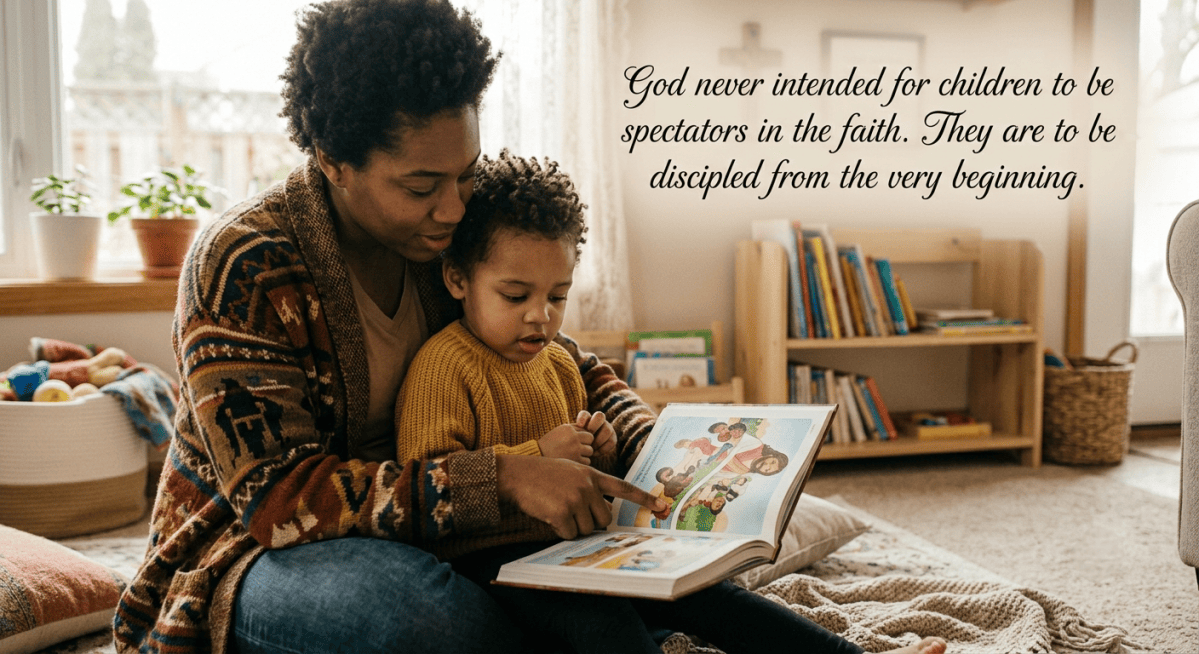
God never intended children to be spectators in the faith. Discover why Moses refused to leave the children behind and how Scripture teaches parents to disciple their children from the very beginning.

Exodus 10:9 (KJV)

“And Moses said, We will go with our young and with our old, with our sons and with our daughters, with our flocks and with our herds will we go; for we must hold a feast unto the Lord.”

One of the most overlooked lessons in the story of Israel’s deliverance from Egypt is Moses’ refusal to leave the children behind.

As Pharaoh’s heart grew harder, he began to negotiate with God’s command. At one point, he was willing to let the adults go but wanted the children to remain in Egypt. It sounded like a reasonable compromise. Yet Moses refused.

He boldly declared:

“We will go with our young and with our old, with our sons and with our daughters, with our flocks and with our herds will we go…”

Why?

Because worship is not only for adults. Serving God is not something children should discover later in life. They are to be part of God’s people from the very beginning.

This truth is echoed throughout Scripture.

Train Them Early

Proverbs 22:6 (KJV)

“Train up a child in the way he should go: and when he is old, he will not depart from it.”

Notice that Scripture says train up a child, not an adult. God places the responsibility on parents and guardians to begin early, laying a biblical foundation before the world lays its own.

Every child is a gift from God and should be introduced to God’s Word from the earliest years.

God Knows Every Child Before Birth

God’s purpose for our children does not begin when they become adults. It begins with Him.

Jeremiah 1:5 (KJV)

“Before I formed thee in the belly I knew thee; and before thou camest forth out of the womb I sanctified thee…”

If God knows a child before birth, then parents should recognise that raising a child is a sacred stewardship. We are nurturing lives that God already knows and has a purpose for.

Timothy Learned the Scriptures from Childhood

Timothy became a faithful servant of Christ, but that did not happen by accident.

Paul reminded him:

2 Timothy 3:15 (KJV)

“And that from a child thou hast known the holy scriptures, which are able to make thee wise unto salvation through faith which is in Christ Jesus.”

Timothy’s spiritual strength was built on a foundation laid in childhood. Someone took the time to teach him God’s Word while he was still young.

What an encouragement to every parent, grandparent, guardian, and teacher.

Jesus Was Brought Up in the Things of God

Even our Lord Jesus Christ gives us an example.

The Scriptures tell us that His earthly parents faithfully took Him to Jerusalem every year according to the Feast of the Passover.

Luke 2:41 (KJV)

“Now his parents went to Jerusalem every year at the feast of the passover.”

By the age of twelve, Jesus was found in the temple, listening, asking questions, and speaking with understanding.

Although He was the Son of God, His parents still raised Him in a home where worship, obedience, and the things of God were part of everyday life.

Godly parenting is not simply providing food, clothing, and education. It is intentionally surrounding our children with God’s Word until His truth becomes the foundation of their lives.

Don’t Leave the Children Behind

Today’s world has many attractions competing for the hearts of our children.

The greatest mistake parents can make is assuming children are too young to know God.

Moses understood something every parent should remember: the whole family belongs before God.

  • When we pray, let them pray with us.
  • When we study God’s Word, let them study with us.
  • When we worship, let them worship with us.
  • When we serve the Lord, let them serve alongside us.

Don’t leave the children behind.

Bring them into God’s presence while their hearts are still tender.

Prayer

Heavenly Father, thank You for the children You have entrusted to us. Give us grace to faithfully teach them Your Word from their earliest years. Help us never to leave them behind but to lead them into a genuine relationship with You. May they grow to love, obey, and serve You all the days of their lives. In the name Jesus the Christ, Amen.

Please Note:

The best inheritance we can leave our children is not wealth or success, but a life firmly rooted in God’s Word. Start early. Walk with them. Worship with them. Teach them faithfully, and trust God to establish them in His perfect will.


I pray that God empowers every parent, every guardian, every teacher, and everyone entrusted with the responsibility of raising children to faithfully train them in the way of the Lord. May He grant us wisdom, patience, discernment, and grace to lead the next generation into a genuine relationship with Jesus Christ.

May God help every parent in the name of Jesus the Christ. Amen.

Grace and peace.
Keep building godly homes, one Scripture at a time.
Remain ever blessed.

Jesus is Lord!

Featured

INVESTING IN OUR CHILDREN’S DESTINY AND ETERNITY

A spiritual guide revealing how true parenting success is rooted not in school achievement, but in Word and prayer investment.

We do not secure a great destiny via school, but through conscious spiritual investment.

Parents invest millions of money and time ensuring their children attend the best schools. They pay for extra moral classes outside school hours to ensure success, while little or no time, money, or effort is made toward their spiritual well-being.

I have seen this error repeated time and time again. The rich, the poor, the famous, and people of different walks and stations in life repeat this error and end up with the same result: “children with lost destiny.”

Parents spending millions on academics is not wrong. Clothes, gadgets, don’t get me wrong these are not wrong. Extra moral lessons, attending school meetings, even driving miles against tight work schedules, you can name them.

Yet, some parents cannot be bothered to get a Bible for their children or other spiritual materials. They do not invest in tutors for spiritual growth, attend church gatherings with their children, or sponsor them in spiritual matters. They cite excuses, yet they demand excellence in school.

Like the saying goes, “When the purpose of a thing is not known, abuse is inevitable.”

In “1 John 5:4” (paraphrased): I wish above all things that you prosper at the level of your spiritual prosperity. This means your spiritual buoyancy determines the level of success you can attain in other areas of life. The spiritual controls the physical.

We pray, we wish, and invest time and money for a great destiny for our children, doing the wrong things.

The Bible says, “The labour of the foolish wearieth every one of them, because he knoweth not how to go to the city.” (Ecclesiastes 10:15)


BIBLICAL EXAMPLES

Aaron, though a priest, did not pay close attention to his children, and he lost them. David, a man after God’s own heart, was lenient with his son Absalom, and it cost him dearly.

These were not ordinary men; they were spiritually significant figures, yet their lapses in intentional parenting produced painful consequences. This shows that spiritual position does not replace parental responsibility.

Now the big question is: How much time and resources have I, as a parent, productively and intentionally invested in my child?


THE TWO WINGS OF INVESTMENT

In Revelation 12:14, the Bible says:

“And to the woman were given two wings of a great eagle, that she might fly into the wilderness… from the face of the serpent.”

The woman who gave birth was given wings for safety, so the devil would not carry her away or take the child. The devil is after the destiny of both the child and the mother.

These two wings represent:

• The Wing of the Word (Word application)

• The Wing of Prayer (Communion with God)

Like breathing in and breathing out, both must work together. One gives life in, the other releases life out. Without rhythm, survival becomes struggle.


WORD INVESTMENT

Word investment is Word application: reading, studying, meditating, and practicing the Word.

“This book of the law shall not depart out of thy mouth; but thou shalt meditate therein day and night…” (Joshua 1:8)

“…that thou mayest know how thou oughtest to behave thyself in the house of God…” (1 Timothy 3:15)

You cannot give what you do not have. Let the Word of God dwell richly in you.

Practice the Word. Be an addicted practitioner of the Word. Children are influenced more by what they see you do than what you say.

Alive Parenting Tool
God’s Parenting Model
Manual or Dust?

Reading is the act of acquiring knowledge or information on a subject matter.

Studying and meditation go beyond reading. It involves deep thinking, how, why, when, which, and what, to extract application.

“But be ye doers of the word, and not hearers only…” (James 1:22)


PRAYER INVESTMENT

Prayer investment is communication with God and standing firm on the altar of prayer.

Hannah labored on the altar of prayer and gave birth to Samuel, dedicating him to God.

Every destiny can be shaped on the altar of prayer.

“Epaphras… labouring fervently for you in prayers…” (Colossians 4:12)

Manoah also prayed concerning Samson’s destiny.

Samuel became a product of prayer and a man of spiritual authority.

Travailing Prayer Prayer Seed Family Prayer


SALVATION CALL

The first step to every provision of Scripture including investing in our children’s destiny starts with a valid experience of new birth, 2 Corinthians 5:17.

Repeat this word with me:

Lord Jesus, I come to You. I believe You are the Son of God. I believe You died and rose again for me. I receive You as my Lord and Savior. Amen.


CONCLUSION

A great destiny is not secured by a great school, but by conscious spiritual investment.

I see God empowering every parent and guardian as you take daily, intentional spiritual steps toward securing the destiny of your children.

Remain ever blessed. Jesus is Lord.

Featured

Wisdom and Understanding in Godly Parenting: Raising Children God’s Way.

Learn practical, biblical ways to apply wisdom and understanding in godly parenting and raise children according to God’s design.

In a world full of parenting advice, opinions, and endless noise, one truth remains steady and unshaken: God’s way is still the best way.

But here’s the question many parents wrestle with quietly… How do I actually raise my child in a godly way?

The answer is found in two powerful companions that must never be separated: wisdom and understanding. If you’re navigating modern challenges, you may also find this helpful: Raising Godly Children in a Digital Age.

“Wisdom is the principal thing; therefore get wisdom: and with all thy getting get understanding.” — Proverbs 4:7

Wisdom: More Than Knowing—It’s Doing

Wisdom is knowing what to do and actually doing it. It is bringing God’s Word into everyday parenting moments—the noise, the mess, the discipline, and the love.

Knowledge is having a map. Wisdom is walking the road. And sometimes, that journey is shaped by what we say—see The Power of Words in Parenting.

“Wisdom in parenting is intentional obedience to God’s Word.”

Wisdom Makes a Demand

Wisdom calls for action. God does not give wisdom for decoration, but for application.

In parenting, this means choosing consistency, doing what is right even when it is hard, and seeking God daily. This connects closely with raising children through intentional discipleship, not just discipline.

“Do what God says, the way God says it, no matter how you feel.”

“Wisdom is proven by action, not knowledge alone.”

Understanding: The Missing Link

If wisdom tells you what to do, understanding teaches you how to do it.

Understanding helps you apply wisdom correctly, especially when dealing with different children and situations. It also plays a vital role in shaping how children receive correction and guidance.

“Understanding helps you apply wisdom correctly and effectively.”

Putting It Into Practice

  • Teach God’s Word daily
  • Live what you teach
  • Discipline with love
  • Know your child
  • Pray always
  • Be patient
  • Build a godly environment

“Wisdom shows you what to do. Understanding shows you how to do it. Consistency makes it fruitful.”

Related Reading

Continue your journey in godly parenting:

Final Thought

Godly parenting is not about perfection. It is about intentional, daily alignment with God’s Word.

Every small act of wisdom and understanding is a seed planted for a child’s future.

Featured

A Prayer for Parents and Their Children

Parenting requires wisdom, grace, and God’s help. This prayer invites parents to seek God’s strength while praying for their children to discover His purpose and walk in His will.

Parenting is one of the greatest responsibilities God gives to us. It is a calling that requires patience, wisdom, grace, and constant dependence on God.

Many parents often wonder if they are doing enough or making the right decisions for their children. But the Bible reminds us that we are not meant to raise children by our own strength.

God invites us to seek His wisdom.

James 1:5
“If any of you lack wisdom, let him ask of God, that giveth to all men liberally, and upbraideth not; and it shall be given him.”

Jesus also assures us that when we seek God sincerely, He answers.

Matthew 7:7
“Ask, and it shall be given you; seek, and ye shall find; knock, and it shall be opened unto you.”

With this promise in mind, let us pray for ourselves as parents and for the precious children God has entrusted into our care.

Prayer for Parents: Grace and Empowerment

Heavenly Father,

We thank You for the gift of children. They are blessings from You and a responsibility we do not take lightly.

Lord, we acknowledge that raising godly children requires more than human wisdom. We need Your grace, Your strength, and Your guidance.

Give us patience when parenting becomes difficult. Grant us understanding hearts so we can guide our children with love and wisdom.

Help us to live as examples of faith, humility, kindness, and obedience to Your Word.

Let our homes be places where Your truth is taught, Your love is demonstrated, and Your presence is felt.

Empower us by Your Spirit to raise children who will love You and walk in Your ways.

Prayer for Our Children: Purpose and Direction

Father, we commit our children into Your hands.

You created them with a purpose, and we ask that their lives will unfold according to Your divine plan.

Help them grow to know You personally and develop a deep love for Your Word.

Give them the desire to read the Scriptures, understand Your truth, and practice Your will in their daily lives.

Protect their hearts and minds from harmful influences and lead them into paths of righteousness.

May they grow in wisdom, character, faith, and compassion.

Prayer for Wisdom in Parenting

Lord, Your Word tells us that if we lack wisdom, we should ask You.

Today we ask for wisdom in every parenting decision we make.

Teach us how to correct with love, instruct with patience, and guide our children in truth.

When we are confused or uncertain, remind us to seek You first.

Let our parenting reflect Your wisdom and not simply our emotions or fears.

Personal Supplication

Father, we also bring our personal needs before You.

You know every concern in our hearts, every challenge within our homes, and every silent prayer we carry.

We ask for Your help in every area of our lives.

Give us strength where we are weak, peace where there is worry, and hope where there is uncertainty.

We trust that as we ask, seek, and knock, You will answer according to Your perfect will.

Closing Prayer

Lord, we surrender our families into Your hands.

Guide us as parents.
Protect and direct our children.
Let our homes be places where Your Word is loved, Your presence is honored, and Your purpose is fulfilled.

In Jesus’ name,
Amen.

Encouragement for Parents

If you are a parent reading this today, remember that you are not alone. God cares deeply about your family and is always ready to guide you.

Continue to pray for your children, teach them God’s Word, and trust God with their future.


Read More Christian Parenting Resources

If this prayer encouraged you, you can read more articles about raising godly children here:

https://godlyparentingtips.family.blog

Share this article with another parent who may need encouragement today.


A Short Prayer of Salvation

If you have not yet received Jesus Christ as your Lord and Savior, you can begin that relationship today.

Lord Jesus, I come to You today just as I am.

I believe You died for my sins and rose again.
Please forgive my sins and come into my life.
Be my Lord and Savior from today.
Help me walk in Your ways and live according to Your Word.

In Jesus’ name, Amen.

If you prayed this prayer sincerely, the Bible says:

2 Corinthians 5:17
“Therefore if any man be in Christ, he is a new creature: old things are passed away; behold, all things are become new.”

Welcome to the family of God.

Featured

Parenting in God’s Love: A Biblical Blueprint

In a world that redefines love, Scripture provides a clear blueprint for parenting rooted in God’s unconditional love and obedience to His Word. Discover how Proverbs 22:6, John 14:15, and other key Scriptures guide parents to raise children in truth, grace, and Faith, beginning with a personal relationship with Christ.

The Foundation: God’s Unconditional Love

Scripture makes it clear that God’s love is not based on our performance. As it is written in Romans 5:8:

“But God commendeth his love toward us, in that, while we were yet sinners, Christ died for us.”

This is the model: a love that is given freely, not earned. It is a perfect love that, as 1 John 4:18 tells us:

“There is no fear in love; but perfect love casteth out fear: because fear hath torment. He that feareth is not made perfect in love.”

This truth directly addresses the anxieties of parenting. When we are gripped by fear and doubt about our children’s future or our own abilities, the answer is to place our absolute, unreserved trust in the God who loves us and our children perfectly. This trust in Him is the very evidence of that perfect love at work in us.

The Definition: Love is Obedience

Jesus gave us a clear definition of love in action. In John 14:15, He said:

“If ye love me, keep my commandments.”

This moves love from a sentiment to a commitment. Our love for God is proven by our willingness to follow His Word. This is the hinge upon which everything else swings. We cannot claim to love God while ignoring the instructions He has given us for every area of life, including the raising of our children. The Apostle John reiterates this in 1 John 5:3:

“For this is the love of God, that we keep his commandments: and his commandments are not grievous.”

The Command: Train Up a Child

So, if our love for God is shown by obeying His Word, we must ask: What does His Word command regarding our children? Proverbs 22:6 gives us the clear directive:

“Train up a child in the way he should go: and when he is old, he will not depart from it.”

This training is not merely academic instruction; it is the daily, intentional work of:

  • Imparting God’s Word: Teaching them Scripture, His commands, and His promises, as Deuteronomy 6:6-7 instructs:

“And these words, which I command thee this day, shall be in thine heart: And thou shalt teach them diligently unto thy children.”

  • Modeling God’s Ways: Living out that Word authentically in front of them—demonstrating forgiveness, grace, honesty, and kindness.
  • Guiding with Truth: Using God’s Word as the standard for right and wrong.

This active training is the tangible expression of our love for our children.

The Result: A Light Burden

The world offers countless methods, philosophies, and “software” for raising children. But these human systems are flawed and often leave parents exhausted, anxious, and burdened. In contrast, God’s way is simple and straightforward. As we read in Matthew 11:30:

“For my yoke is easy, and my burden is light.”

When we parent according to His Word, the impossible weight of being God to our children is lifted. We are responsible for our obedience—to train them in His love. He is responsible for the outcome.

The Promise: He is Faithful

Parenting can be daunting. The path is not always rosy. But there is no software or worldly philosophy that can produce godliness in a child. Godliness is the fruit of a relationship with God, cultivated in a home where parents love God by obeying His Word and love their children by training them in it.

Therefore, in this season of love and always, the call to every parent is clear:

  • Go to the Scriptures. As 2 Timothy 3:16-17 reminds us:

“All scripture is given by inspiration of God, and is profitable for doctrine, for reproof, for correction, for instruction in righteousness: That the man of God may be perfect, thoroughly furnished unto all good works.”

  • Meditate on God’s Word. Let it shape your heart and calm your fears, just as Joshua 1:8 commands:

“This book of the law shall not depart out of thy mouth; but thou shalt meditate therein day and night, that thou mayest observe to do according to all that is written therein: for then thou shalt make thy way prosperous, and then thou shalt have good success.”

  • Ask Him in prayer. As James 1:5 promises:

“If any of you lack wisdom, let him ask of God, that giveth to all men liberally, and upbraideth not; and it shall be given him.”

Pray:

“God, what do you want me to do concerning this child? Show me the way.”

When we do this—when we place our absolute trust in Him and parent the way He has commanded—we can rest in the promise that He is ever faithful. As Lamentations 3:22-23 declares:

“It is of the Lord’s mercies that we are not consumed, because his compassions fail not. They are new every morning: great is thy faithfulness.”

This is the easiest way to parent, not because it requires no work, but because we are no longer carrying the burden alone. We are walking in step with the God whose love never fails, and whose commandments lead to life.

The First Step: A Prayer for Salvation

Before we can parent in God’s love, we must first know His love personally. The foundation of everything we have discussed begins with a relationship with Jesus Christ. If you have never invited Him into your life, or if you want to recommit your heart to Him today, the first step is accepting Jesus Christ as your Lord and Savior. His Word assures us in Romans 10:9-10:

“That if thou shalt confess with thy mouth the Lord Jesus, and shalt believe in thine heart that God hath raised him from the dead, thou shalt be saved. For with the heart man believeth unto righteousness; and with the mouth confession is made unto salvation.”

If you want Jesus in your life, pray this prayer from your heart:

Lord Jesus, I come to You today just as I am. I believe that You died for me on the cross and rose again from the dead. I confess with my mouth that You are Lord, and I believe in my heart that God raised You from the dead. I ask You to forgive me of all my sins. Come into my heart and be my personal Lord and Savior. Take control of my life and help me to walk in Your ways from this day forward. Teach me to love You through obedience to Your Word, and guide me as I seek to raise my children in Your love. Thank You for Your unconditional love and Your faithfulness. In Jesus’ name, Amen.

If you prayed that prayer and meant it in your heart, welcome to the family of God! 2 Corinthians 5:17 says:

“Therefore if any man be in Christ, he is a new creature: old things are passed away; behold, all things are become new.”

You are now a child of God, and He will never leave you nor forsake you. Now, go forth and parent in the power of His perfect love.


May this truth bring freedom, peace, and salvation to every parent who reads it.

Featured

When Anger Turns to Butterflies, A Story Every Parent Should Share

A gentle story that teaches children emotional calmness and parents the power of soft answers. Discover how anger melts into joy, just like butterflies.

Do you have a child who struggles with anger, quick temper, or arrogance?
This simple story may be exactly what you need to teach emotional calm, gentleness, and self-control in a way a child will never forget.

Today’s parenting lesson comes wrapped in a tale, soft, simple, but powerful.


The Last Thousand Dragons

Long ago, the peaceful kingdom of Maruva was troubled by fire-breathing dragons. They were angry all the time, and whenever their temper rose, flames burst from their mouths, burning crops, scaring villagers, and darkening the skies.

But everything changed the day Sir Emmanuel, a brave but unusually kind knight, arrived.

Unlike others, he carried no sword, no spear, no shield.

Instead, he brought something strange:

A bag full of jokes…
a handful of ice cream…
and baskets of fruit.

When the first dragon roared at him, Emmanuel did the unexpected, he told the silliest joke he knew.
The dragon blinked… then burst into uncontrollable laughter.

And as it laughed, the fire in its mouth went out.

Then he handed the dragon an ice cream cone.

“Try this,” he said softly, “instead of burning cows.”

The dragon tasted it, and sighed with delight.

“Mmm… this is better than fire!”

Soon, every dragon had traded their flames for joy.
Their anger melted like ice under the sun…
and one by one, each angry dragon transformed into a joyful, colorful butterfly.

And so the kingdom of Maruva was saved, not by violence,
not by shouting,
but by kindness, gentleness, and joy.


Teaching Point for Parents

This story is more than fantasy.
It captures a powerful truth:

Joy can melt anger.
Gentleness can break stubbornness.
Kindness can tame arrogance.

Many times, our children don’t need fire-for-fire responses.
They need “Sir Emmanuel moments”, calm words, warmth, humor, connection, and grace.

Just as Sir Emmanuel replaced fire with laughter,
parents can replace tension with gentleness.


Scriptural Anchor — Proverbs 15:1

“A gentle answer turns away wrath,
but a harsh word stirs up anger.”

This is God’s parenting wisdom in one sentence.


Prayer for Parents & Children

Lord,
teach us to speak gently,
to respond with peace instead of pressure,
and to carry joy like a weapon of grace.
Help our children learn emotional calmness
and help us model it first.
Amen.


Feed Talk (Questions to Ask Your Child)

  • How did Sir Emmanuel defeat the dragons without fighting?
  • What can you do instead of getting angry?
  • What gentle phrase can you use when you feel upset?

Call to Action for Parents

Today, teach your child just one gentle phrase:
✔ “I’m sorry.”
✔ “Let’s talk.”
✔ “Can we be friends again?”
✔ “I need a moment, please.”

Show them exactly how to use it.

Model it yourself, just like Sir Emmanuel.


Bedtime Close

And that’s how Sir Emmanuel turned fire into butterflies.
Rest well tonight, and may God fill your home with peace, gentleness, and joy.

The Abraham Parenting Model: Daily Rhythms from Genesis 18

Genesis 18 holds one of Scripture’s most overlooked parenting models — not a list of rules, but a rhythm. Discover how Abraham’s morning watch, daytime service, and evening honesty with his family offer a simple, three-part pattern for directing your children toward God every single day.

We often look to the Proverbs for parenting advice, or to the epistles of Paul for household instructions. But tucked away in the narrative of Genesis 18 is one of the most profound models for parenting in all of Scripture. It is a model built not on rules, but on rhythm.

In this chapter, we find Abraham sitting at the door of his tent. He is not just hosting guests; he is modeling a lifestyle of faith that is meant to be replicated by his children. God Himself acknowledges this in verse 19: “For I have chosen him, so that he will direct his children and his household after him to keep the way of the Lord by doing what is right and just.”

Here is how we can apply the Abraham Parenting Model to our daily lives.

MORNING: “SEE God First”

“I saw the Lord at my tent door” (v.2)

A father sitting at the entrance of a tent at sunrise

Abraham’s day began with availability. He was sitting at the entrance of his tent, the threshold between his private sanctuary and the public world. He was watching. He was waiting. Before the heat of the day hit, before the tasks of the day piled up, he saw the Lord.

In our modern age, the “tent door” of our morning is usually a glowing screen. The first thing we see is usually an email, a headline, or a social media feed. This sets our internal compass for the day.

The Practice:
To parent like Abraham, we must establish a morning boundary. Before the world rushes in, we must look out for the Lord.

  • Scripture First: Aim for 5 minutes of Scripture before you check your phone. This doesn’t require a seminary degree, just a verse.
  • The Handoff: As parents, we set the spiritual temperature of the home. If our children see us prioritizing God in the morning, they learn that God is the source of our day, not just a Sunday accessory.

DAYTIME: “SERVE as Worship”

“Abraham hurried to prepare bread” (v.6)

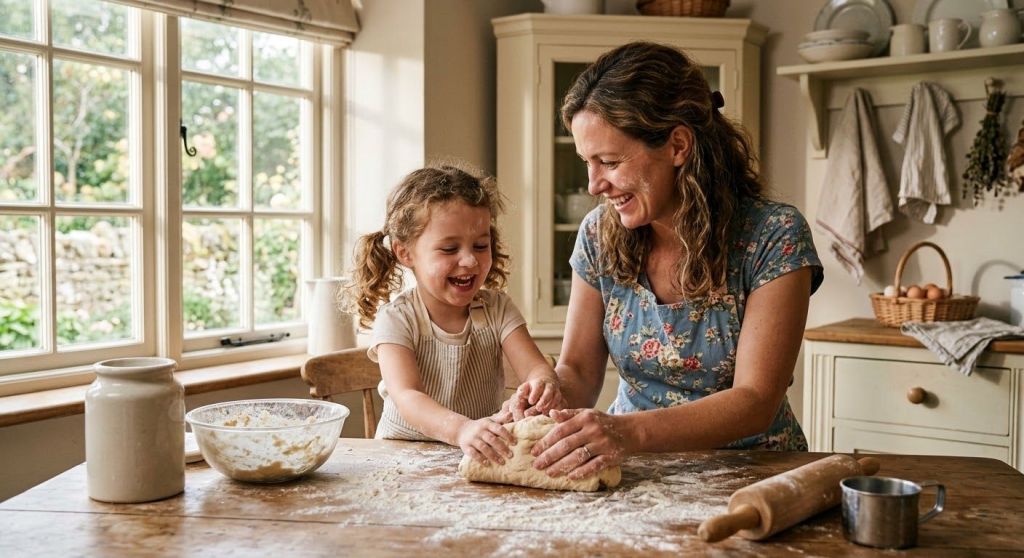
A mother and child baking bread together in a rustic kitchen

When the visitors arrived, Abraham didn’t just point them to the kitchen. He ran. He hurried. He involved his household in the preparation. He told Sarah to bake bread, and he ran to the herd to select a calf. This was messy, physical, and mundane work.

Yet, in this moment, making a meal was a sacred act. Abraham was entertaining angels (and the Lord Himself) without knowing it.

The Practice:
Parenting is largely made up of repetitive, mundane tasks. Laundry, dishes, homework, and taxi driving can feel like a distraction from “spiritual” things. But the Abrahamic model turns the mundane into the divine.

  • Turn Chores into Holy Work: When you cook, cook for the glory of God. When you fold laundry, pray for the person who wears the clothes.
  • Model Service: Let your children see you serving your spouse, your neighbors, and your church with the same “hurry” and enthusiasm Abraham showed. As Colossians 3:23 says, “Whatever you do, work at it with all your heart, as working for the Lord.”

EVENING: “SHARE Reflections”

“Shall I hide from Abraham what I do?” (v.17)

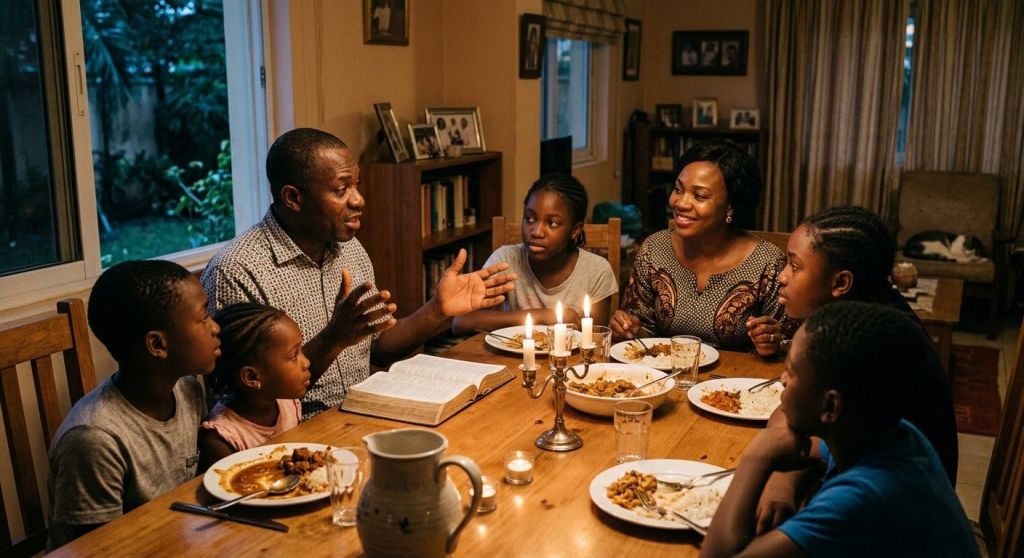
A family gathered around a dinner table at dusk

As the day turned to evening, the dynamic shifted. The meal was finished, and the Lord looked at Abraham and decided to reveal His plans for Sodom and Gomorrah. Why? Because God viewed Abraham as a partner, a friend, and He knew Abraham would teach his children.

The evening is a time for intimacy and transparency. It is when the “table talk” happens.

The Practice:
Don’t let the day end without connecting the dots between life and faith.

  • The Question: Instead of asking, “How was school?” (which yields “Fine”), ask a deeper question: “Where did we see God today?”
  • The Prophetic Role: Like God shared His heart with Abraham, share your heart with your children. Talk about how you saw God provide, how you struggled, and how you prayed. When we share our reflections, we model a living faith, not just a historical religion.

CENTRAL VERSE

“I have chosen him to direct his children…” (Gen 18:19)

This entire model hinges on the phrase “I have chosen him.” The Abraham Parenting Model is not about perfect behavior; it is about direction.

God said Abraham would “direct” his children. The Hebrew word implies a command, a guarding, and a pointing of the way. Abraham didn’t just save his children from the world; he directed them toward the Lord.

You cannot change your children’s hearts, that is the Holy Spirit’s job. But you can set the direction. You can point the car toward the Kingdom every morning, every afternoon, and every evening.

Challenge: Try the Abraham Model for one week.

  1. See God first before looking at a screen.
  2. Serve in your chores as if you were serving the Lord Himself.
  3. Share your reflections on His faithfulness at the dinner table.

He has chosen you to direct your children. Walk in that high calling today.


A Closing Call: Start Your Journey Today

Two hands reaching toward each other with a glowing cross of light

Friend, before you can walk in any of these truths, before you can parent with purpose or lead your home with intention, there is a first step. Every benefit, every promise, and every principle found in Scripture begins with one thing: being born again.

Jesus said in John 3:3, “Unless one is born again, he cannot see the kingdom of God.” Without this foundational experience, the Word of God remains a closed book and its promises remain out of reach. But the moment you surrender your life to Christ, everything changes. You are made new. You are adopted into God’s family. You receive the Holy Spirit as your Teacher, your Comforter, and your Guide.

If you have never taken this step, or if you want to rededicate your life to Him today, say this prayer with me to start your journey:

Heavenly Father, I come to You just as I am. I acknowledge that I am a sinner and that I cannot save myself. I believe that Jesus Christ is Your Son, that He died on the cross for my sins, and that He rose again on the third day. Today, I confess with my mouth that Jesus is Lord and I believe in my heart that God raised Him from the dead. I repent of my sins and I turn away from my old life. I ask You, Lord Jesus, to come into my heart. Be my Savior and my Lord. Fill me with Your Holy Spirit. I am Yours now and forever. Thank You for saving me. In Jesus’ mighty name, Amen.

If you prayed that prayer sincerely, heaven is rejoicing over you right now! You are now a child of God, born again by His Spirit. The same power that raised Christ from the dead now lives in you. Now, the journey begins, a journey of daily walking with Him, discovering His Word, and yes, even parenting according to His perfect model.

Find a Bible-believing church. Get baptized. Surround yourself with other believers. And let the Holy Spirit lead you every step of the way.

Remain Ever Blessed.
Jesus Is Lord.

Raising Children in the Fear of God: A Biblical Mandate for Every Parent Part 2

Godly parenting isn’t just about correction, it’s about the heart behind it. In part two, we look at daily instruction, the spiritual battle behind Revelation twelve, and the beautiful promise that we’re never parenting alone, the Holy Spirit is our Helper every step of the way.

Anchor Scripture: 2 Timothy 3:16-17

Yesterday, in Part 1, we looked at the foundational mandate to teach and model faith, the goal of raising godly offspring, and the role of loving discipline. Today, in Part 2, we turn to the posture of the parent’s heart, the daily rhythm of instruction, the urgent spiritual battle revealed in Revelation 12, and the promise of the Holy Spirit as our divine Helper in this sacred calling.


Part Four: Heart Posture and Daily Walk

Godly parenting is as much about the parent’s heart as it is about the child’s behavior. The tone, patience, and compassion of the parent shape the child’s view of God.

“Fathers, do not provoke your children, lest they become discouraged.”

Colossians 3:21

Harshness, neglect, or favoritism can crush a child’s spirit. Parents must guard against discouraging their children.

“A soft answer turns away wrath, but a harsh word stirs up anger.”

Proverbs 15:1

Gentleness is a powerful tool in parenting. The way we speak to our children matters.

“As a father shows compassion to his children, so the Lord shows compassion to those who fear him.”

Psalm 103:13

Earthly fathers are meant to mirror the compassion of our Heavenly Father. When parents show compassion, children learn to trust God’s mercy.


Part Five: Ongoing Instruction and Conversation

Godly parenting is not a one-time event but a daily rhythm. Children learn best when truth is woven into the ordinary moments of life.

“Teach them to your children, talking about them when you sit at home and when you walk along the road, when you lie down and when you get up.”

Deuteronomy 11:19

Every moment is a teaching opportunity. Parents are called to make God’s Word a constant topic of conversation.

“And when your children ask you, ‘What does this ceremony mean to you?’ then tell them, ‘It is the Passover sacrifice to the Lord…'”

Exodus 12:26-27

Children are naturally curious. Godly parents welcome their questions and use them as opportunities to declare God’s mighty acts.

“In days to come, when your son asks you, ‘What does this mean?’ say to him, ‘With a mighty hand the Lord brought us out of Egypt, out of the land of slavery.'”

Exodus 13:14

The story of redemption is to be told and retold. Parents are the primary storytellers of God’s faithfulness.


Part Six: The Urgent Battle — The Reason for Godly Parenting (Revelation 12)

Why is godly parenting so urgent? Revelation 12 pulls back the curtain on the cosmic battle raging for the souls of children. The enemy is not passive, he is actively seeking to devour.

“Then the dragon stood before the woman about to give birth, to devour her child when she gave birth.”

Revelation 12:4

The dragon, Satan, positions himself to destroy children from birth. This reveals that godly parenting is spiritual warfare. The enemy targets the youngest among us.

“Then the dragon became angry with the woman and went off to wage war against the rest of her offspring, those who keep God’s commandments and bear witness to Jesus.”

Revelation 12:17

When the dragon could not destroy the Christ child, he turned his fury on all who follow Jesus. Your children are born into a war zone. Raising them in the fear of God is raising soldiers for this battle.

“The huge dragon, the ancient serpent, who is called the Devil and Satan, who deceived the whole world.”

Revelation 12:9

The enemy arrayed against your family is the ancient deceiver, the accuser of the brethren. He has been waging war against God’s people since Eden. Neglecting godly parenting leaves children undefended in this ancient conflict.

“But woe to you, earth and sea, for the Devil has come down to you in great fury, for he knows he has but a short time.”

Revelation 12:12

The intensity of the enemy’s attacks is proportional to his desperation. He knows his time is short. This should awaken urgency in every parent, the window to establish children in the fear of the Lord is not indefinite.

“The woman fled into the wilderness to a place prepared for her by God, where she might be taken care of… The woman was given the two wings of a great eagle, so that she might fly to the place prepared for her in the wilderness, where she would be taken care of.”

Revelation 12:6, 14

While the dragon pursues, God provides. When you raise your children in the fear of the Lord, you place them under the covering of the One who prepares a place of protection. The dragon may rage, but he cannot snatch those who belong to the Lamb.

“They triumphed over him by the blood of the Lamb and by the word of their testimony.”

Revelation 12:11

Victory over the dragon comes through the blood of Jesus and the testimony of His people. Godly parenting raises children who know the power of the Cross and who bear witness to Jesus with their lives.


Part Seven: The Promise of the Holy Spirit — Our Divine Helper

The call to raise children in the fear of God is daunting. No parent has the wisdom, patience, or strength to fulfill it perfectly. But Jesus did not leave us to accomplish this task alone. Before His ascension, He promised the Holy Spirit, the Helper, the Teacher, the Comforter, who would guide us into all truth and empower us for every good work.

“But the Advocate, the Holy Spirit, whom the Father will send in my name, will teach you all things and will remind you of everything I have said to you.”

John 14:26

The Holy Spirit is our divine Teacher. When we lack wisdom in parenting, He reminds us of God’s Word and teaches us how to apply it. He brings to remembrance the Scriptures we have hidden in our hearts, equipping us to instruct our children in the moment of need.

“But when he, the Spirit of truth, comes, he will guide you into all the truth. He will not speak on his own; he will speak only what he hears, and he will tell you what is yet to come.”

John 16:13

The Spirit guides us into all truth. In the complexities of parenting, decisions about discipline, education, relationships, and faith, the Holy Spirit leads us into God’s will. He is not silent; He speaks through the Word and through His still, small voice.

“If you then, though you are evil, know how to give good gifts to your children, how much more will your Father in heaven give the Holy Spirit to those who ask him!”

Luke 11:13

Jesus assures us that the Father delights to give the Holy Spirit to those who ask. Parents should pray daily for the Spirit’s filling, for He is the source of love, joy, peace, patience, kindness, goodness, faithfulness, gentleness, and self-control (Galatians 5:22-23), the very fruits needed to parent well.

“In the same way, the Spirit helps us in our weakness. We do not know what we ought to pray for, but the Spirit himself intercedes for us through wordless groans.”

Romans 8:26

There are moments in parenting when we do not know how to pray. The Spirit intercedes for us. He knows the needs of our children better than we do and prays according to the will of God.

“But you will receive power when the Holy Spirit comes on you; and you will be my witnesses in Jerusalem, and in all Judea and Samaria, and to the ends of the earth.”

Acts 1:8

The Holy Spirit gives power to be witnesses. The first mission field is the home. Parents filled with the Spirit become powerful witnesses to their children, demonstrating the reality of the Gospel in word and deed.

“But the fruit of the Spirit is love, joy, peace, forbearance, kindness, goodness, faithfulness, gentleness and self-control. Against such things there is no law.”

Galatians 5:22-23

The fruit of the Spirit is the character of godly parenting. No amount of technique or discipline can produce these qualities, they are the supernatural work of the Spirit in a yielded heart. When parents walk in the Spirit, their children encounter the living God through them.

“‘Not by might nor by power, but by my Spirit,’ says the Lord Almighty.”

Zechariah 4:6

Godly parenting is not accomplished by human strength, perfect strategies, or sheer willpower. It is accomplished by the Spirit of God. When we feel inadequate, and we will, we must remember that the same Spirit who raised Christ from the dead lives in us (Romans 8:11) and is more than sufficient for the task.

“All your children will be taught by the Lord, and great will be their peace.”

Isaiah 54:13

This is a precious promise: God Himself teaches our children. When we faithfully instruct them in His Word, the Holy Spirit works in their hearts, drawing them to Himself. We plant and water, but God gives the increase (1 Corinthians 3:6).


Conclusion: Equipped, Empowered, and Never Alone

The task of raising children in the fear of God is overwhelming, but it is not ours to accomplish alone. The same Scripture that commands us to teach, correct, and train is the Scripture that equips us for every good work (2 Timothy 3:16-17). And the same God who calls us to this sacred task has given us His Holy Spirit, the Helper, the Teacher, the Comforter, to guide us every step of the way.

From Genesis to Revelation, God calls parents to raise a godly offspring, children who know Him, love Him, and stand firm in the faith. The enemy rages, the dragon pursues, but the Lamb has overcome. And we do not face this battle in our own strength. Jesus promised, “I will ask the Father, and he will give you another advocate to help you and be with you forever, the Spirit of truth” (John 14:16-17). The Holy Spirit is our ever-present Helper, teaching us all things, reminding us of God’s Word, guiding us into truth, interceding for us in our weakness, and producing His fruit in our lives.

When we hide God’s Word in our hearts, teach it diligently to our children, discipline them in love, and cover them in prayer, we participate in the victory of the Lamb. We are not perfect parents, but we serve a perfect Father who has given us a perfect Helper. The Spirit empowers us to love when we are weary, to be patient when we are frustrated, to correct with gentleness, and to point our children to Jesus in every season.

May every parent take up this sacred calling with urgency and joy, relying not on their own strength but on the Spirit of the living God. May we be found faithful, raising arrows aimed at the heart of the enemy and destined for the glory of God, arrows that will fly straight and true, carried by the wind of the Holy Spirit.

“Train up a child in the way he should go; even when he is old he will not depart from it.”

Proverbs 22:6

“But the Advocate, the Holy Spirit, whom the Father will send in my name, will teach you all things and will remind you of everything I have said to you.”

John 14:26

If this article encouraged you, explore more practical biblical insights for raising children in God’s Word, character and purpose at Godly Parenting Insights.

Godlyparentingtips.family.blog


REMAIN BLESSED

JESUS IS LORD

Raising Children in the Fear of God: A Biblical Mandate for Every Parent Part 1

Every parent stands between a sacred calling and a cosmic battle. In part one of this two part series, we explore the biblical mandate to teach and model faith, God’s desire for godly offspring, and why loving discipline is an act of hope, not harm.

“All Scripture is God-breathed and is useful for teaching, rebuking, correcting and training in righteousness, so that the servant of God may be thoroughly equipped for every good work.”

2 Timothy 3:16-17

Introduction

Every parent stands at the intersection of a sacred calling and a cosmic battle. The task of raising children in the fear of God is not merely a cultural tradition or a moral duty, it is a divine mandate woven throughout the entirety of Scripture. From the opening chapters of Genesis to the closing visions of Revelation, God consistently reveals His heart for the next generation and the serious responsibility He places upon parents.

The apostle Paul, writing to young Timothy, reminds us that all Scripture, every command, every warning, every promise, is God-breathed and profitable for equipping God’s people. This includes the call to godly parenting. The Word of God is sufficient to teach us how to raise children who know, love, and fear the Lord. It rebukes our negligence, corrects our errors, and trains us in the righteousness needed to shepherd the souls entrusted to our care.

This is Part 1 of a two-part series compiling some biblical foundations for godly parenting. Today we’ll look at the foundational mandate to teach and model faith, the goal of raising godly offspring, and the role of discipline. Part 2, coming tomorrow, will cover the posture of the heart, the rhythm of daily instruction, the spiritual battle revealed in Revelation 12, and the promise of the Holy Spirit as our Helper.


Part One: The Foundational Mandate — Teaching and Modeling Faith

The primary responsibility of godly parenting is not merely to tell children about God but to embody a life of faith before them. Scripture calls parents to weave the knowledge of God into the fabric of everyday life.

“Love the Lord your God with all your heart and with all your soul and with all your strength. These commandments that I give you today are to be on your hearts. Impress them on your children. Talk about them when you sit at home and when you walk along the road, when you lie down and when you get up.”

Deuteronomy 6:5-7

This is the foundational text for godly parenting. Before parents can impress God’s truth on their children, it must first be on their own hearts. Faith is not a Sunday event, it is a daily conversation, a constant walk.

“Only be careful, and watch yourselves closely so that you do not forget the things your eyes have seen or let them fade from your heart as long as you live. Teach them to your children and to their children after them… so that they may learn to fear me as long as they live, and so that they may teach their children to do the same.”

Deuteronomy 4:9-10

The call to teach is generational. What we receive from God, we must pass to our children, and they to theirs. The fear of the Lord is not inherited automatically, it is taught and modeled.

“We will not hide these truths from our children; we will tell the next generation about the glorious deeds of the Lord, about his power and his mighty wonders… so the next generation might know them, even the children not yet born, and they in turn will teach their own children.”

Psalm 78:4-6

The psalmist resolves to declare God’s works to the next generation. Godly parenting is intentional, forward-looking, and committed to preserving the testimony of God’s faithfulness.

“For I have chosen him, so that he will direct his children and his household after him to keep the way of the Lord by doing what is right and just.”

Genesis 18:19

God’s commendation of Abraham reveals His expectation: fathers are to direct their households in the way of the Lord. This is not passive, it requires deliberate instruction, leadership, and example.

“Fathers, do not provoke your children to anger, but bring them up in the discipline and instruction of the Lord.”

Ephesians 6:4

Paul balances correction with nurture. Godly parenting avoids exasperating children while providing both discipline and instruction rooted in the Lord.


Part Two: The Goal — Godly Offspring and a Legacy of Faith

God’s desire is not merely that children behave well but that they become a godly offspring, a generation that belongs to Him and carries His covenant forward.

“Has not the one God made you? You belong to him in body and spirit. And what does the one God seek? Godly offspring.”

Malachi 2:15

This verse reveals God’s heart: He seeks godly offspring. The marriage covenant and parenting are designed to produce children who fear and serve the Lord.

“Train up a child in the way he should go; even when he is old he will not depart from it.”

Proverbs 22:6

This is a promise and a principle. Early, consistent training in the fear of God shapes the trajectory of a child’s entire life.

“From infancy you have known the Holy Scriptures, which are able to make you wise for salvation through faith in Christ Jesus.”

2 Timothy 3:15

Timothy’s mother and grandmother began teaching him Scripture from infancy. The Word of God is the primary means by which children are made wise unto salvation.

“Behold, children are a heritage from the Lord, the fruit of the womb a reward. Like arrows in the hand of a warrior are the children of one’s youth.”

Psalm 127:3-5

Children are not a burden but a heritage. They are arrows, meant to be aimed, shaped, and sent into the world for God’s purposes.


Part Three: Discipline, Correction, and the Rod

Godly parenting includes loving discipline. Scripture is clear that correction is an expression of love, not cruelty.

“Whoever spares the rod hates his son, but he who loves him is diligent to discipline him.”

Proverbs 13:24

Love and discipline are not opposites, they are partners. To neglect correction is to neglect the child’s wellbeing.

“Folly is bound up in the heart of a child, but the rod of discipline drives it far from him.”

Proverbs 22:15

Children are not born morally neutral, they are born with folly bound in their hearts. Discipline is the God-ordained means of driving it out.

“Discipline your son, for there is hope; do not set your heart on putting him to death.”

Proverbs 19:18

Discipline is an act of hope. It declares that change is possible and that the child’s future matters.

“Do not withhold correction from a child, for if you beat him with a rod, he will not die.”

Proverbs 23:13

This proverb corrects the fear that discipline will harm a child. Rightly applied, discipline brings life, not death.

“For the moment all discipline seems painful rather than pleasant, but later it yields the peaceful fruit of righteousness to those who have been trained by it.”

Hebrews 12:11

The fruit of discipline is righteousness and peace. Parents must endure the temporary discomfort of correction for the eternal benefit of their children.


Discipline shapes behavior, but it is only half the picture. The heart behind the correction matters just as much as the correction itself, and that is where we turn next.

This is Part 1 of a two-part series on the biblical foundation for godly parenting. Part 2, covering heart posture, daily instruction, the spiritual battle of Revelation 12, and the promise of the Holy Spirit, will be posted tomorrow.


Growing children in God’s Word, character and purpose.

If this article encouraged you, explore more practical biblical insights for raising children in God’s Word, character and purpose at Godly Parenting Insights.

Godlyparentingtips.family.blog

Remian Ever Blessed

Jesus is Lord

The Sneaky Sock Thief

Sammy the puppy learns an important lesson about obedience after stealing a red sock. A funny Christian children’s story about listening and self-control.

Age Guide: 5–9 years
Type: Character-Building Story
Theme: Obedience & Respecting Boundaries
Reading Time: 5–7 minutes

The Story

Sammy was a little puppy with a very big love for socks.

Clean socks.

Dirty socks.

Big socks.

Tiny socks.

If it was a sock, Sammy wanted it!

Every morning, Sammy waited beside the laundry basket.

As soon as someone looked away…

ZOOM!

Sammy would grab a sock and run.

Sammy sneaking toward the laundry basket

“Sammy!” Mum would call. “Leave the socks alone!”

Sammy would stop.

He would drop the sock.

Then he would look at Mum with his biggest, most innocent puppy eyes.

But the moment Mum turned around…

ZOOM!

There went another sock.

One afternoon, Sammy spotted something very interesting.

It was a bright red sock lying on the floor.

Sammy’s tail began to wag.

“Don’t even think about it,” Mum said.

Sammy looked at the sock.

Then he looked at Mum.

Then he looked at the sock again.

His nose twitched.

His ears stood up.

His paws moved closer.

“Sammy…” Mum warned.

Mum telling Sammy to leave the red sock

Sammy froze.

For once, he walked away.

“Good boy!” Mum said.

Sammy’s tail wagged proudly.

But that evening, he saw the red sock again.

There was nobody around.

Sammy looked left.

He looked right.

Then he whispered to himself, “Just one little sock.”

CHOMP!

Off he ran.

But this time, the sock got stuck.

It wrapped around his paw.

Sammy pulled.

Nothing.

He pulled harder.

Still nothing.

He tried to run.

THUMP!

Down he went.

“YIP!”

Mum came running.

She carefully removed the sock.

Sammy discovering the sock stuck around his paw,

Sammy sat quietly.

He knew exactly what had happened.

Mum had told him not to take the sock.

He had known the rule.

He had simply chosen not to obey it.

Mum gently patted his head.

Sammy peacefully leaving the socks alone

“Sammy, rules are not always there to spoil your fun. Sometimes they are there to protect you, protect others, or help things work properly.”

Sammy lowered his head.

He looked at the red sock.

It suddenly didn’t seem nearly as exciting.

From that day on, Sammy still loved socks.

But he learned to leave them where they belonged.

And whenever he felt tempted to disobey, he remembered the day his favourite red sock became his very own paw trap.

And always remember Jesus Loves You.

What We Can Learn

Sammy learned that knowing the right thing is not enough. We must also choose to do it.

Obedience means listening to instructions and following them, especially when we understand that those instructions are meant for our good.

Sometimes we may not understand why a parent gives us a particular instruction. But learning to obey appropriate instructions helps us develop self-control, responsibility, and respect.

A Teaching Point for Parents

Children often understand a rule before they are willing to follow it. That makes obedience an important character skill to teach, not simply a behavior to demand.

Where appropriate, explain the reason behind an instruction. This helps children gradually understand that boundaries are not merely about control. They can provide safety, order, and guidance.

When correcting disobedience, remain firm without humiliating the child. The goal is not simply to make the child afraid of breaking a rule, but to help them develop a heart that chooses what is right.

Scripture to Remember

Colossians 3:20

“Children, obey your parents in everything, for this pleases the Lord.”

God cares about obedience. Learning to respond rightly to godly instruction is part of growing in character and learning to please Him.

Bedtime Prayer

Dear God,

Thank You for the people You have placed around me to guide and protect me.

Please help me to listen carefully and obey good instructions.

Give me self-control when I want to do something I have been told not to do.

Help me to grow into a wise, responsible, and obedient child.

In Jesus’ name, amen.

Talk About It

  • What did Sammy love taking?
  • What did Mum tell Sammy to do?
  • Why did Sammy take the red sock even after being warned?
  • What happened when Sammy disobeyed?
  • Why are some rules important?
  • What can you do when you really want to do something you have been told not to do?

One Little Thing to Remember

Knowing what is right is good. Choosing to do what is right is better.

More Stories for Children

Looking for more stories that nurture faith and build godly character?

Explore more Stories for Children

God’s Word, Foundation for Shaping Tomorrow

The Boy Who Swallowed a Whopper

A funny Christian children’s story about Leo, a boy whose little lies become a giant Whopper. A lesson in honesty, truthfulness and taking responsibility.

Age Guide: 5–9 years
Type: Character-Building Story
Theme: Honesty & Telling the Truth
Reading Time: 5–7 minutes

The Story

Leo was a champion liar.

Not the big, dramatic kind of liar. Mostly, Leo told little lies.

One morning, Mum walked into the kitchen and found Leo standing beside the cookie jar.

Leo beside the cookie jar


“Leo, did you take the cookies?” she asked.

Leo shook his head.

“No, Mum.”

Mum looked at the crumbs around his mouth.

“What are these?”

Leo quickly wiped his face.

“I have no idea.”

Mum raised an eyebrow.

Leo smiled.

That was one little lie.

Later that afternoon, Mum asked, “Leo, have you finished your homework?”

“Of course!”

But his exercise book was still blank.

“The dog ate it,” Leo explained.

“We don’t have a dog,” Mum replied.

“The neighbour’s dog ate it.”

“Through the wall?”

Leo thought for a moment.

“Yes.”

Mum sighed.

Leo thought little lies were harmless.

But he was about to discover something very strange.

That night, Leo went to bed as usual.

Sometime after midnight, he woke up.

Something felt strange in his throat.

He swallowed.

Gulp.

He swallowed again.

GULP!

Then he felt a huge lump moving inside his throat.

“What is that?” Leo whispered.

He ran to the mirror.

His eyes grew wide.

There was a giant bump in his throat!

“MUM!”

Mum rushed into the room.

“What happened?”

“My throat! Something is stuck in there!”

The next morning, Mum took Leo to the doctor.

The doctor discovering the Whopper


“Oh my!” he exclaimed.

“What is it?” Mum asked.

The doctor pointed at the screen.

“You have a Whopper.”

“A what?”

“A Whopper,” the doctor explained. “It is what happens when little lies pile up and become one very big problem.”

Leo gulped.

“Can you get it out?”

“Maybe,” said the doctor. “But there is only one way to make it smaller.”

“How?”

“Tell the truth.”

Leo looked at Mum.

He took a deep breath.

“Okay.”

He started with the cookies.

“I ate the cookies.”

POP!

The lump became smaller.

Mum blinked.

Leo continued.

“I didn’t finish my homework.”

POP!

Smaller again.

“I lied about the dog.”

POP!

Leo’s eyes widened.

“I also said I brushed my teeth this morning, but I only licked the toothbrush.”

POP!

Mum covered her mouth.

Leo continued.

“I blamed my sister for breaking the cup.”

POP!

“I blamed the squirrel for taking my pencil.”

POP!

“I’m pretty sure the squirrel didn’t do it.”

POP!

With every honest confession, the Whopper became smaller and smaller.

Finally…

POP!

The Whopper shrinking


The Whopper disappeared!

Leo took a huge breath.

His throat felt completely clear.

The doctor smiled.

“There you are. Much better.”

Leo nodded.

“I don’t want another Whopper.”

“Then remember,” said the doctor, “when you make a mistake, telling the truth is much better than piling one lie on top of another.”

On the way home, Leo was quiet.

“Mum?”

“Yes?”

“I think I understand now.”

“Understand what?”

“Little lies may seem small, but they can grow into big problems.”

Mum smiled.

“And what will you do next time?”

Leo thought for a moment.

“Tell the truth, even when it’s difficult.”

Mum hugged him.

Leo and Mum walking home


“That’s a good choice.”

Leo smiled.

And from that day on, whenever he was tempted to tell a little lie, he remembered the giant Whopper in his throat.

He never wanted to swallow another one!

And Always remember that Jesus Loves you.

💛 What We Can Learn

Leo discovered that a lie does not become harmless simply because it is small.

One little lie can lead to another, and soon we may have to tell even more lies to cover up the first one.

Honesty helps us take responsibility for our choices, build trust, and keep our hearts free from the burden of pretending.

Telling the truth may sometimes feel difficult, especially when we have done something wrong. But admitting the truth gives us the opportunity to make things right and learn from our mistakes.

Most importantly, God wants us to become people who love truth and can be trusted.

👨‍👩‍👧 A Teaching Point for Parents

Children may sometimes lie because they are afraid of punishment, embarrassed by a mistake, trying to avoid consequences, or simply testing boundaries.

When a child tells the truth about something wrong they have done, acknowledge the courage it took to be honest before addressing the behavior itself.

You can say:

«“I’m proud of you for telling me the truth. That took courage. Now let’s talk about what happened and how we can make it right.”»

This does not mean ignoring the wrong behavior. It means teaching the child that honesty is always welcome, while wrong choices still have appropriate consequences.

A home where children can safely tell the truth gives them room to learn responsibility instead of becoming experts at hiding mistakes.

📖 Scripture to Remember

Proverbs 12:22

«“The LORD detests lying lips, but he delights in people who are trustworthy.”»

God cares about truthfulness. He wants us to become people whose words can be trusted.

🙏 Bedtime Prayer

Dear God,

Thank You for loving me and teaching me what is right.

Please help me to tell the truth, even when it is difficult.

When I make a mistake, give me courage to admit it and wisdom to make things right.

Help me to become someone others can trust.

In Jesus’ name, amen.

💬 Talk About It

1. Why did Leo’s little lies become a big Whopper?
2. What happened every time Leo told the truth?
3. Why do you think Leo was afraid to tell the truth?
4. How did telling the truth help him?
5. What should you do when you make a mistake?

✨ One Little Thing to Remember

Little lies can grow into big problems.
Choose truth, even when it is difficult.

🌙 More Stories for Children

Looking for more stories that nurture faith and build godly character?

Explore more: “Stories For Children” (https://godlyparentingtips.family.blog/stories-for-children/)

God’s Word, Foundation for Shaping Tomorrow.

The Grumpy Grizzly Who Lost His Growl

A funny character-building bedtime story about Boris the grizzly bear, helping children understand anger, emotions, self-control, and the importance of pausing before reacting.

Age: 5–9 years
Type: Character-Building Story
Theme: Anger, Self-Control & Emotional Awareness
Reading Time: 5–7 minutes


The Story

Deep in the Forest of Frowns lived Boris, a grizzly bear with the worst temper in the woods.

He growled at squirrels, roared at rabbits, and once frightened a family of raccoons so badly that they forgot how to wash their food!

Every morning, Boris woke up angry. Every night, he went to bed even grumpier.

Grumpy grizzly bear Boris looking frustrated in the forest

“Why is everyone so annoying?” he would bellow, shaking the trees with his fury.

Then came Pip, a little chipmunk with cheeks full of nuts and a heart full of nonsense.

One day, Pip watched Boris chase his own tail in a rage because he had accidentally stepped on his paw.

Pip squeaked, “You know, Mr. Bear, you might be less angry if you ate more berries.”

Boris stopped.

“What?”

“My grandma says anger is sometimes just hunger wearing a grumpy face.”

Boris stared at him.

Pip tossed him a handful of wild blueberries.

Pip the chipmunk offering blueberries to Boris the grizzly bear

“Try these instead of eating loggers. They’re much sweeter!”

Boris grumbled, but he popped a blueberry into his mouth.

His eyes widened.

“More,” he mumbled.

Pip laughed and handed him another handful.

Before long, Boris and Pip became berry-picking buddies.

As they spent time together, Boris discovered something surprising: laughing at his own clumsiness was much more enjoyable than growling at everyone around him.

Boris and Pip laughing together

His fierce roar became a gentle, chuckling rumble.

His claws relaxed.

Even his fur seemed fluffier.

Boris was still a bear. He still got frustrated sometimes. But now he was learning to pause, understand what he was feeling, and choose a better response.

Then, one morning, Boris woke up feeling so light and joyful that he sneezed.

“Achoo!”

Boris sneezing as a blue butterfly flies from his nose

A beautiful blue butterfly flew out of his nose.

Pip stared.

Then he burst out laughing.

“You’re welcome!” he chirped.

Boris laughed too.

And for the first time in a very long while, the Forest of Frowns heard something other than a growl.

It heard a bear laughing.

And Always remember that “Jesus Loves You”.


What We Can Learn

Sometimes anger is not really about anger.

We may be hungry, tired, frightened, frustrated, or overwhelmed, and those feelings can come out as anger.

Learning to pause and understand what is happening inside us can help us respond more wisely.

And sometimes, a little food, rest, laughter, or kindness can change the whole moment.

A Teaching Point for Parents

Children do not always have the words to explain what they are feeling.

A child who is hungry may become irritable. A tired child may suddenly become difficult. A frightened child may become angry. An overwhelmed child may have a meltdown.


This does not mean we should ignore wrong behaviour. It means we should learn to look beyond the behaviour and ask, “What might be happening underneath this reaction?”

Correction may sometimes be necessary, but wisdom knows when a child first needs food, rest, reassurance, a hug, or simply a moment to calm down.

Before we respond to the anger, let’s learn to understand the child.

Scripture to Remember

“A cheerful heart is good medicine, but a crushed spirit dries up the bones.”

Proverbs 17:22

Boris discovered that joy could change the way he responded to frustrating situations. This verse reminds us that a cheerful heart can bring strength and healing.

Bedtime Prayer

Dear Lord,

Please help me understand my feelings and respond wisely when I am angry or upset.

Help my parents and other grown-ups understand me too.

Give us patience, kindness, and wisdom to know what we need in difficult moments.

Fill our hearts with Your joy, In Name of Jesus the Christ.

Amen.

Talk About It

  • Why was Boris always so grumpy?
  • What did Pip do that helped Boris?
  • Can you think of a time when you were hungry, tired, scared, or upset and became angry?
  • What can you do when you feel angry?

One Little Thing to Remember

Before you roar, pause and ask: “What am I really feeling?”


More Stories for Children

Looking for more stories that nurture faith and build godly character?

Explore more Stories for Children from Godly Parenting Insights.

Whether you’re reading at bedtime, during family devotion, or simply enjoying a quiet moment together, may every story become an opportunity to plant God’s Word in your child’s heart.

Your Story Can Become Your Child’s Lesson: The Power of Testimony in Godly Parentin

Your children need more than instructions. They need to see how God’s Word has shaped your life. Discover how your testimony, including lessons from your failures, can become a powerful tool for teaching, discipleship, and building a godly generation.

One of my favorite ways to teach honesty isn’t through a lecture. It’s through a memory.

I was about nine years old.

I had just finished drinking some water from one of my mother’s favorite ceramic mugs, the good ones she kept for visitors or so i thought. In my haste, my elbow caught the edge of the counter.

The mug slipped.

Crash.

Shards of white ceramic scattered across the kitchen floor.

Panic seized me.

I knew there would be consequences, so my young, sinful brain went straight into damage-control mode. I swept up every visible piece and carefully placed the mug’s base, now nothing more than a jagged, useless ring, back on top of the fridge.

I positioned it as though nothing had happened.

Then I waited.

A few hours later, my younger brother walked into the kitchen. He opened the fridge, and the vibration knocked the “mug” from its perch.

It shattered loudly on the floor.

I immediately jumped up.

“I’ll tell mommy for you! You broke her cup!

As soon as Mommy return that evening i said, Come quickly! My brother broke your favorite cup!”

I played the part perfectly.

I was the outraged, innocent bystander.

My brother was stunned and crying. He could barely defend himself.

Then my mother came.

She looked at the broken pieces.

Then she looked at me.

She didn’t shout.

She didn’t accuse me.

She simply said:

“Tell me again. Slowly.”

Within minutes, my elaborate scheme collapsed.

I confessed.

And I learned something that day that has stayed with me for decades: the trouble caused by a lie can become greater than the trouble caused by the original mistake.

I was punished, not only for breaking the mug, but also for lying about it.

For years, I thought of that incident as nothing more than a funny and embarrassing childhood memory.

But today, as a parent and teacher, I see it differently.

It is a testimony.

And whenever I share that story with children, something interesting happens.

They laugh.

They lean in.

They recognize themselves in it.

And somewhere between the laughter and the lesson, they begin to understand why honesty matters.

That is the power of testimony.

Your Children Need More Than Instructions

As parents, we naturally teach our children what is right.

We tell them:

  • “Tell the truth.”
  • “Obey God.”
  • “Respect people.”
  • “Don’t steal.”
  • “Don’t lie.”

Those instructions are necessary.

God’s Word gives us the standard by which our children should learn to live.

But sometimes, a child needs more than a command.

They need a picture.

They need to hear:

“Let me tell you about a time when I got this wrong.”

That is where testimony becomes powerful.

A testimony takes a biblical principle and brings it into the world of everyday life.

Instead of simply saying, “Honesty is important,” you can say:

“Let me tell you what happened to me when I wasn’t honest.”

Instead of merely saying, “God answers prayer,” you can tell them about a time you prayed and watched God provide.

Instead of simply saying, “God forgives,” you can explain how God met you after a failure and helped you change.

Your children don’t only need to know what you believe.

They need to see how what you believe has shaped the way you live.

1. Testimony Helps Children See God’s Faithfulness

Psalm 78 gives parents a powerful responsibility.

The Psalmist says:

"We will not hide them from their children, telling the generation to come the praises of the LORD, and His strength and His wonderful works that He has done." (Psalm 78:4)

The goal was not merely to preserve family stories.

It was to preserve knowledge of God’s works.

The next generation needed to hear what God had done so that they could place their own hope in Him.

That means your testimony can become a bridge.

Your child may hear about God’s faithfulness in the Bible, but when you tell them how God was faithful to you, the truth becomes personal.

  • “God provided for me when I didn’t know where the answer would come from.”
  • “God corrected me when I was going in the wrong direction.”
  • “God helped me when I was afraid.”
  • “God forgave me when I failed.”

These are not replacements for Scripture.

They are illustrations of Scripture at work in a real person’s life.

And sometimes, that illustration is exactly what a child remembers.

2. Testimony Can Turn Your Mistakes Into Teaching Moments

Parents often feel pressure to appear strong and flawless before their children.

But children don’t need perfect parents.

They need honest parents who point them toward a perfect God.

There is wisdom in knowing what to share and how to share it.

Not every adult experience belongs in a child’s ears. Some things require age-appropriate boundaries, wisdom, and discretion.

But when appropriate, telling your children about a mistake you made, a temptation you faced, or a lesson you learned can help them understand that spiritual growth is a journey.

You can say:

  • “I made a wrong decision when I was younger, and I learned why God’s instruction matters.”
  • “I once allowed fear to control me, but God taught me to trust Him.”
  • “I handled that situation badly, and I had to apologize.”

This does something important.

It teaches children that failure does not have to be the end of the story.

God can use correction.

God can use repentance.

God can use consequences.

God can use even our failures as classrooms for wisdom.

Sometimes, correction is part of that classroom. In The Ministry of Loving Correction, we explore how correction can become an expression of love rather than merely punishment.

The broken mug did not become valuable because it was broken.

It became valuable because the lesson attached to it was remembered.

3. Testimony Builds a Generational Bridge

Psalm 78:5 says:

"For He established a testimony in Jacob, and appointed a law in Israel, that He commanded our fathers, that they should make them known to their children." (Psalm 78:5)

Notice the movement:

God gave truth.
Parents received it.
Parents taught it.
Children received it.

That is generational discipleship.

When we intentionally train our children in God’s ways, we are making an investment that reaches far beyond the present moment. There are many benefits of godly parenting, both for our children and for the generations that follow.

The goal is not simply to raise children who can repeat Bible verses.

It is to raise children who know God, trust His Word, and understand what faithful living looks like.

Your testimony helps connect generations.

A child can read about David trusting God against Goliath.

But they can also hear:

“When I faced something that looked impossible, this is how I learned to trust God.”

They can read about God’s provision.

But they can also hear:

“There was a time when we didn’t know how we were going to get through that situation, but God made a way.”

The testimony becomes a living reminder:

“The God you read about in Scripture is still God today.”

4. Testimony Should Point Back to God’s Word

There is an important balance here.

Our stories are not the standard.

God’s Word is the standard.

Isaiah 8:20 says:

"To the law and to the testimony!" (Isaiah 8:20)

The principle is powerful: God’s revealed truth must remain the measuring point.

Our experiences can illustrate truth, but our experiences cannot replace truth.

That means we shouldn’t tell our children:

“This happened to me, therefore this must be God’s rule for everyone.”

Instead:

“This is what happened to me, and this is what God’s Word taught me through it.”

That distinction matters.

Your testimony should always lead your child back to God, not merely toward admiration for you.

The goal is not:

“Look at what Dad accomplished.”

The goal is:

“Look at what God taught Dad.”

Not:

“Look how strong Mum was.”

But:

“Look how God helped Mum.”

That changes the focus from parent worship to God worship.

This is why godly parenting requires more than good intentions. It requires wisdom and understanding rooted in God’s Word.

How to Make Testimony Part of Your Parenting

1. Tell Age-Appropriate Stories

Choose stories your child can understand.

A five-year-old may need a simple story about telling the truth.

A teenager may be ready for a deeper conversation about consequences, peer pressure, temptation, or making difficult choices.

Wisdom determines what to share and when.

2. Share Both God’s Help and Your Responsibility

Don’t tell stories that make you look like the hero.

If you made a mistake, acknowledge it.

If you had to apologize, say so.

If God corrected you, explain that.

Children need to understand both grace and responsibility.

And this includes the way we speak to them. Our words can either reinforce truth and wisdom or deepen fear, shame, and confusion. The weight of our words matters.

3. Connect the Story to Scripture

Don’t stop with:

“That happened to me.”

Ask:

“What does God’s Word say about this?”

That is where testimony becomes discipleship.

The story catches their attention.

Scripture gives them the foundation.

4. Create a Family Culture of Testimony

You could make it simple.

Once a week, ask:

“What did God teach you this week?”

Or:

“Where did you see God’s help this week?”

Or:

“Did anything happen this week that reminded you of something we’ve learned from God’s Word?”

Little conversations like these can become spiritual landmarks in a child’s life.

But testimony is only one part of creating a godly home. Prayer is another powerful way parents participate in shaping their children’s lives and destiny.

Your “Broken Mug” May Still Be Useful

Every parent has a story.

Maybe yours isn’t about a broken mug.

Maybe it’s about a bad decision.

Maybe it is a lesson you learned about anger, patience, or the way emotions can affect the people we love. Sometimes the most meaningful parenting lessons grow out of moments we wish we could handle differently. You can explore one such reflection in When Anger Turns to Butterflies.

A missed opportunity.

A difficult season.

A prayer God answered.

A prayer God didn’t answer in the way you expected.

A time you were corrected.

A time you had to forgive someone.

A time you discovered that obedience to God was better than doing what everyone else was doing.

You don’t have to hide every imperfect chapter of your life from your children.

Some chapters, when shared wisely, can become lessons for the next generation.

Your past doesn’t have to become your child’s blueprint.

But the wisdom you gained from it can become part of their preparation.

That childhood mug taught me something about honesty.

Decades later, the mug is gone.

The pieces are long forgotten.

But the lesson survived.

And that is one of the beautiful things about testimony:

The event may end, but the lesson can keep travelling.

So this week, think about your own story.

What is the “broken mug” in your life?

What mistake taught you something important?

What answered prayer strengthened your faith?

What difficult season showed you God’s faithfulness?

What lesson did you learn the hard way that your child could learn more gently?

Write it down.

Pray about it.

And when the right moment comes, tell them.

Because sometimes the lesson your child remembers for the rest of their life isn’t the lecture you gave.

It’s the story you told about what God taught you.

"We will tell the next generation the praiseworthy deeds of the Lord, His power, and the wonders He has done." (Psalm 78:4)

A Prayer for Parents

Father, in the name of Jesus,

I pray that You empower every parent, guardian, and teacher entrusted with raising children. Give us wisdom to teach, humility to admit our mistakes, courage to share the lessons You have taught us, and grace to point every story back to Your Word.

Help us to build homes where truth is taught, grace is experienced, and Your faithfulness is remembered from one generation to the next.

May our lives become living testimonies that help our children know, love, and follow You.

In the name of  Jesus the Christ, Amen.

Grace and peace.

Keep building godly homes, one Scripture at a time.

Remain ever blessed.

Jesus is Lord!

Michael’s Ministry

9 Powerful Prayers for Children, Parents, and Everyone Raising the Next Generation

Nine powerful, Scripture-based prayers for children, parents, teachers, guardians, mentors, and everyone entrusted with raising the next generation in the ways of God.

Raising children in the ways of God is a sacred responsibility. It requires wisdom, patience, discernment, consistency, correction, instruction, and above all, dependence on God.

From training children in God’s Word, to correcting them in love, to ensuring that they are not merely spectators in the faith, and to learning from the wisdom of those who have gone before us, one truth remains: we need God’s help.

“Except the LORD build the house, they labour in vain that build it.”
Psalm 127:1 (KJV)

So, as parents, guardians, teachers, mentors, and everyone entrusted with the responsibility of raising children, let us pray.

1. Prayer for Parents to Receive Wisdom

Scripture: James 1:5

“If any of you lack wisdom, let him ask of God…”

Heavenly Father, give every parent wisdom to raise their children according to Your will. Help us to know when to correct, when to encourage, when to discipline, when to listen, and when to simply embrace our children.

Give us wisdom beyond our years and understanding beyond our natural abilities. Help us not to parent merely according to culture, emotions, or personal experience, but according to Your Word.

May our homes be guided by Your wisdom, and may everything we do produce godly fruit in the lives of our children.

In Jesus’ name, Amen.

2. Prayer for Children to Know God From an Early Age

Scripture: 2 Timothy 3:15

“And that from a child thou hast known the holy scriptures…”

Father, may our children know You from their earliest years.

Let Your Word become familiar to them from childhood. May they grow up hearing Scripture, seeing it demonstrated, praying, worshipping, and learning to love the things that please You.

Let them not merely inherit their parents’ faith as a tradition. May they personally encounter You and develop a genuine relationship with You.

Give them hearts that are sensitive to Your voice and willing to follow Your ways.

In Jesus’ name, Amen.

3. Prayer for Parents to Correct Their Children in Love

Scripture: Proverbs 22:6

“Train up a child in the way he should go…”

Lord, help us never to neglect the responsibility of correction.

Give parents the grace to correct their children when they are wrong, but let our correction be guided by love, wisdom, patience, and Your Word.

Help us to correct without destroying their confidence, discipline without provoking them to anger, and instruct without condemning.

May our children understand that biblical correction is not rejection. Let them see correction as an expression of love and preparation for their future.

Give parents courage to address wrong behaviour today rather than allowing small problems to become greater problems tomorrow.

In Jesus’ name, Amen.

4. Prayer for Children to Choose Godly Friends

Scripture: 1 Corinthians 15:33

“Be not deceived: evil communications corrupt good manners.”

Father, surround our children with godly friendships.

Give them discernment to recognize friendships that will strengthen their faith and wisdom to walk away from relationships that could lead them into disobedience, dishonesty, rebellion, immorality, or destructive habits.

Give them friends who will encourage them to study, pray, obey, grow, and pursue righteousness.

And where our children are already connected to unhealthy influences, give parents the wisdom and courage to intervene appropriately.

Let our children become good influences themselves, shining as lights among their generation.

In Jesus’ name, Amen.

5. Prayer for Parents to Lead by Example

Scripture: Deuteronomy 6:6-7

“And thou shalt teach them diligently unto thy children…”

Father, help us remember that our children are watching more than they are listening.

Help parents to live what they teach.

When we teach honesty, help us to be honest. When we teach forgiveness, help us to forgive. When we teach prayer, let our children see us pray. When we teach the Word, let them see us obey it.

Let our lives become living lessons before our children.

May our children see Christ reflected in our words, our decisions, our relationships, our homes, and even in the way we respond when we make mistakes.

In Jesus’ name, Amen.

6. Prayer for Teachers, Guardians, Mentors, and Caregivers

Scripture: Isaiah 30:20-21

“…yet shall not thy teachers be removed into a corner any more…”

Lord, strengthen every teacher, guardian, mentor, pastor, Sunday school teacher, caregiver, and every person entrusted with influencing the lives of children.

Give them wisdom, patience, discernment, compassion, and understanding.

Help them to recognize that their influence may reach much further than they realize.

Place godly people around our children who will point them toward Christ and reinforce the truths being taught at home.

Raise teachers who will not merely educate children’s minds but will also help shape their character.

May everyone entrusted with raising or teaching children understand the weight and privilege of that responsibility.

In Jesus’ name, Amen.

7. Prayer for Parents to Have a Teachable Spirit

Scripture: Proverbs 1:5

“A wise man will hear, and will increase learning…”

Father, give every parent a humble and teachable heart.

Help us understand that we do not have to learn everything through painful experiences.

Teach us to study Your Word and to learn from faithful men and women whose lives demonstrate the truth they teach.

Give us discernment to recognize sound, biblical counsel and wisdom to reject anything that contradicts Your Word.

As Daniel understood by books, help us also to gain understanding through Scripture and through the proven wisdom You have preserved through others.

May we never become too proud to learn, too busy to read, or too familiar with our own ways to receive instruction.

In Jesus’ name, Amen.

8. Prayer for the Next Generation

Scripture: Psalm 78:4

“We will not hide them from their children, shewing to the generation to come the praises of the LORD…”

Heavenly Father, let the knowledge of You continue from one generation to another.

May the faith we receive not end with us.

Help parents and guardians intentionally pass biblical truth to their children. Let our children know the stories of Your faithfulness, the power of prayer, the importance of obedience, and the beauty of walking with You.

Raise a generation that knows Your Word, loves Your presence, honours godly authority, and boldly lives for Christ.

May our children become carriers of a godly legacy and may their children after them know You even more deeply.

In Jesus’ name, Amen.

9. Prayer for Grace to Finish the Parenting Journey Well

Scripture: Galatians 6:9

“And let us not be weary in well doing: for in due season we shall reap, if we faint not.”

Father, give every parent grace not to become weary.

There will be days when parenting feels difficult. There will be moments when correction seems ineffective, prayers appear unanswered, and the desired harvest seems far away.

Help us not to give up.

Remind us that every prayer, every Scripture taught, every correction given in love, every godly example, and every sacrifice made in obedience to You is a seed.

Help us to remain faithful even when we cannot yet see the harvest.

Let parents trust You with the process and continue faithfully sowing into the lives of their children.

And in Your appointed time, let us see the fruit of the seeds we have planted.

In Jesus’ name, Amen.

A Final Prayer for Every Parent and Child

Father, we commit every child, every parent, every guardian, every teacher, every mentor, and everyone involved in raising the next generation into Your hands.

Give us wisdom where we lack wisdom, strength where we are weak, patience where we are frustrated, courage where we are afraid, and discernment where we are uncertain.

Help us to build homes where Your Word is honoured, prayer is normal, correction is given in love, learning is encouraged, and Christ remains at the centre.

Help us remember that we do not have to start from scratch. Your Word is our foundation, godly teachers are available to guide us, and the testimonies of faithful people can teach us valuable lessons.

Above all, help us to depend completely on You.

May every child grow in wisdom, stature, and favour with God and with people.

May every parent receive grace to fulfil their assignment.

May every teacher and guardian recognize the eternal significance of their influence.

And may the next generation rise to know, love, serve, and honour You.

In the mighty name of Jesus Christ, Amen.


Key Note

Parenting is a responsibility we cannot fulfil effectively without God’s help. Pray for your children. Pray for yourself. Pray for their teachers, guardians, mentors, and everyone influencing their lives. Then continue to teach, correct, guide, learn, and sow God’s Word faithfully.

The seeds we plant today may become tomorrow’s testimony.

I pray that God empowers every parent, every guardian, every teacher, and everyone entrusted with the responsibility of raising children to faithfully train them in the way of the Lord. May He grant us wisdom, discernment, humility, and a teachable spirit as we continue to grow in His truth.

May God help every parent in the mighty name of Jesus.

Grace and peace.

Keep building godly homes, one Scripture at a time.

Remain ever blessed. Jesus is Lord.

Design a site like this with WordPress.com
Get started