The Princess Who Said “NO” to Everything

Princess Nola learns that obedience, cooperation, and wisdom are more valuable than always saying no in this fun Christian children’s story.

The Story

Princess Nola had a very special word.

It was a tiny word.

Only two letters.

But Princess Nola used it for almost everything.

“Nola, please get ready for breakfast.”

“NO!”

“Nola, please brush your teeth.”

“NO!”

“Nola, would you like to wear your blue dress?”

“NO!”

“What about the yellow one?”

“NO!”

Even when her parents asked a question she actually liked, Nola sometimes said no simply because she could.
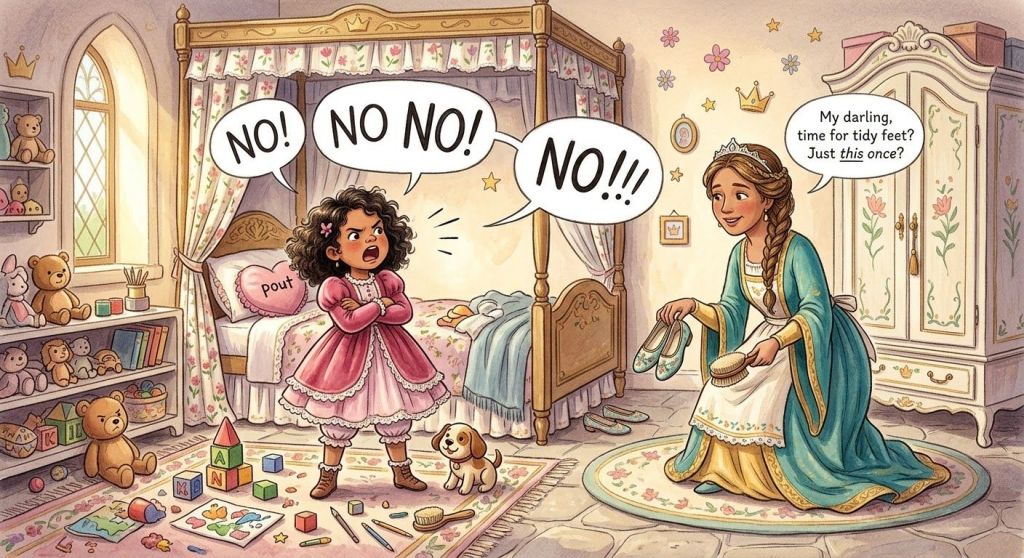
Princess Nola repeatedly saying “NO”

One morning, the palace cook brought her favourite pancakes.

“Princess Nola, your pancakes are ready!”

Nola looked at them.

They had strawberries.

“NO!”

They had honey.

They even had a tiny smiley face made from blueberries.

The cook blinked.

“But Princess, these are your favourite.”

“I know.”

“So… why no?”

Nola shrugged.

“Because I like saying no.”

That afternoon, something important happened.

The king and queen were preparing for a special garden celebration.

There would be music, games, food, flowers, and plenty of children.

Queen Mother asked Nola to help arrange some flowers.

“Nola, please put these flowers in the basket.”

“NO!”

“Would you help me carry these cushions?”

“NO!”

“Can you please stay away from the pond while the workers prepare the garden?”

“NO!”

Nola marched away.
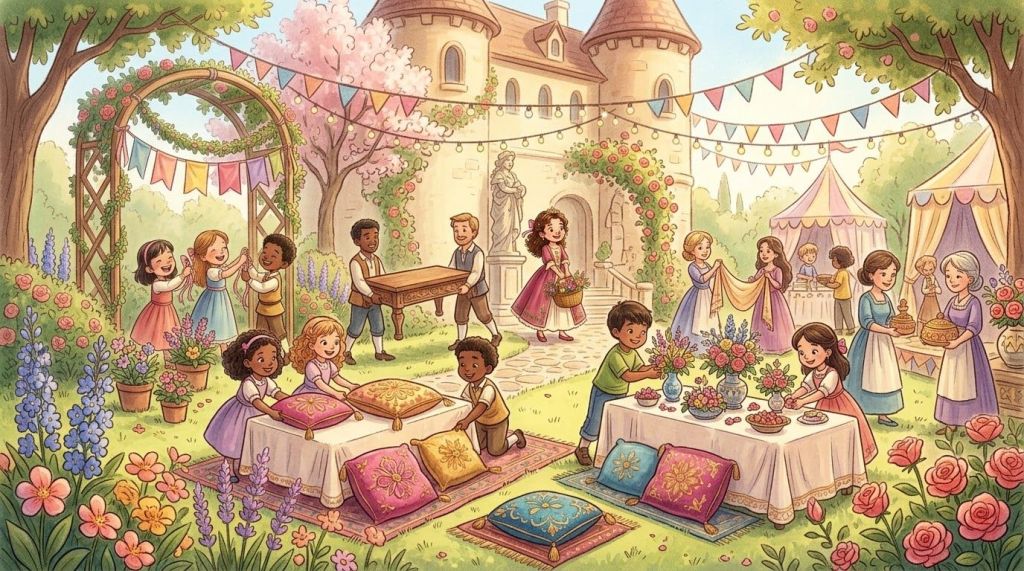
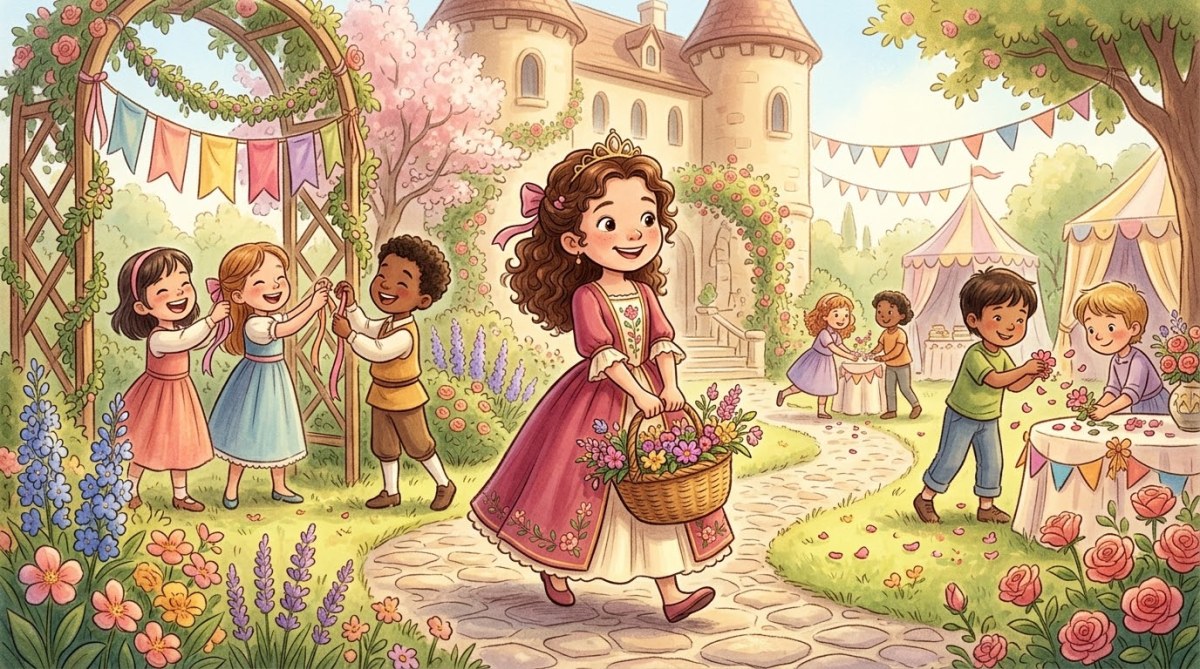
The busy palace garden

She wanted to do things her own way.

But soon she discovered something.

When everyone has to stop and argue about every little instruction, very little gets done.

The flowers were still on the ground.

The cushions were still outside.

And the celebration was getting closer.

Then Nola saw a little boy carrying a basket of flowers.

“Why are you helping?” she asked.

“Because everyone is working together,” he replied.

Nola looked around.

Everyone was busy.

Everyone except her.

Just then, she heard her mother call.

“Nola, please come here.”

Nola opened her mouth.

Her favourite word was ready.

“NO…”

She stopped.

She remembered the busy garden.

She remembered the boy carrying flowers.

She remembered how frustrating it was when nobody cooperated.

Nola took a breath.

“Yes, Mummy.”

Her mother smiled.

“Thank you, Nola.”

Nola helped arrange the flowers.
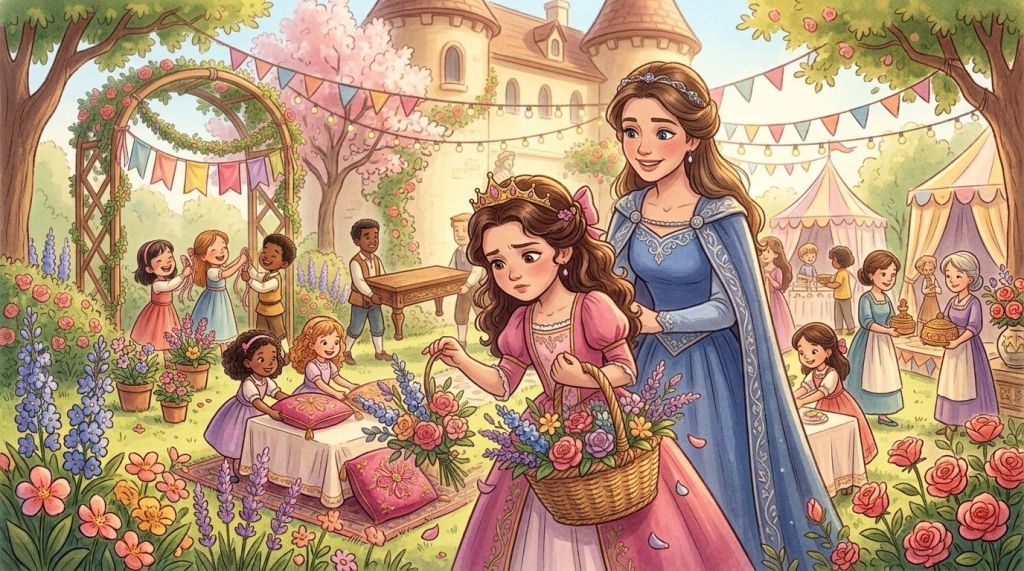
Nola deciding to help

Then she carried the cushions.

She helped prepare the tables.

And when the celebration finally began, Nola looked at the beautiful garden and smiled.

“I helped make this happen!”
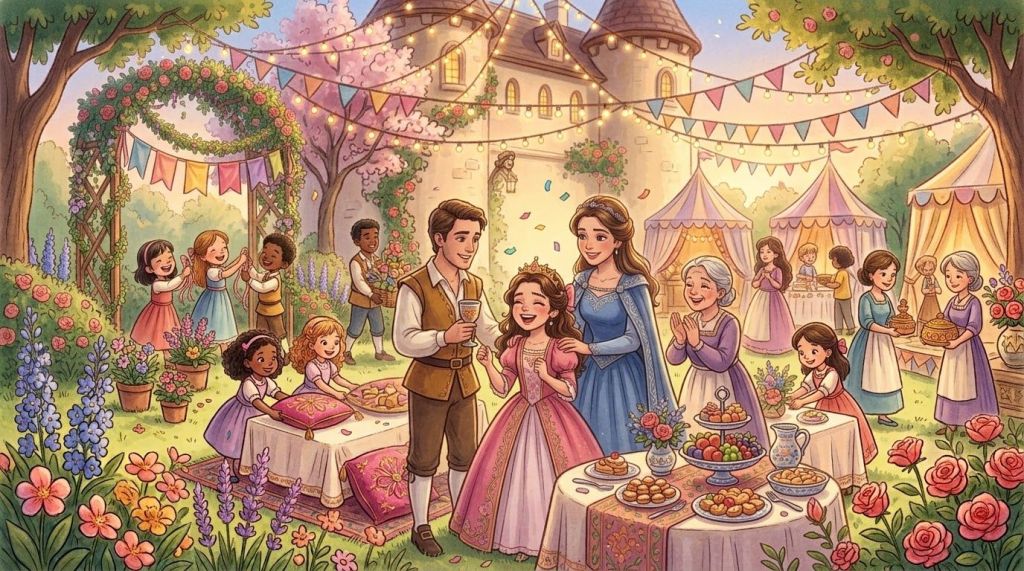
The completed garden celebration

Her mother nodded.

“Yes, you did.”

Nola thought about her little word.

She still knew how to say “no.”

And she learned that sometimes saying no is important.

But she also learned that saying no simply because she did not want to listen could keep her from helping, learning, and enjoying something wonderful.

From that day forward, Princess Nola became known for something new.

Not for saying “NO” to everything…

but for knowing when to say “Yes, I will.”

And always remember Jesus Loves You.

What We Can Learn

Princess Nola learned that obedience and cooperation are important parts of growing in character.

We do not have to agree with everything we are told, and there are times when saying no is the right thing to do. But when a parent gives a good and appropriate instruction, refusing simply because we do not feel like obeying can create unnecessary problems.

Learning to listen, cooperate, and respond appropriately helps us become more responsible and considerate of others.

A Teaching Point for Parents

Sometimes what looks like stubbornness is a child’s desire for independence. Children are learning that they have choices, and part of parenting is teaching them how to use those choices wisely.

Instead of turning every instruction into a battle, give children appropriate choices where possible. For example: “Would you like to brush your teeth before putting on your pajamas or after?”

At the same time, make clear that some instructions are not optional, especially when they involve safety, respect, or responsibility.

The goal is not to raise children who blindly obey every voice. It is to raise children who learn to recognize good instruction, respond appropriately, and develop wisdom and self-control.

Scripture to Remember

Colossians 3:20

“Children, obey your parents in everything, for this pleases the Lord.”

Obedience is one way children can honor God as they respond to the guidance of their parents.

Bedtime Prayer

Dear God, Thank You for giving me parents and people who guide me. Please help me to listen carefully and obey good instructions. Give me wisdom to know when to speak up and when I need to listen and cooperate. Help me to grow in self-control, wisdom, and respect.

In Jesus’ name, amen.

Talk About It

  • What word did Princess Nola love saying?
  • Why did she keep saying “NO”?
  • What happened when she refused to help?
  • What made Nola change her attitude?
  • Why is cooperation important?
  • Can you think of a time when listening and obeying helped you?

One Little Thing to Remember

Not every instruction is a battle. Listen, think, and choose what is right.

More Stories for Children

Looking for more stories that nurture faith and build godly character?

Explore more Stories for Children

God’s Word, Foundation for Shaping Tomorrow
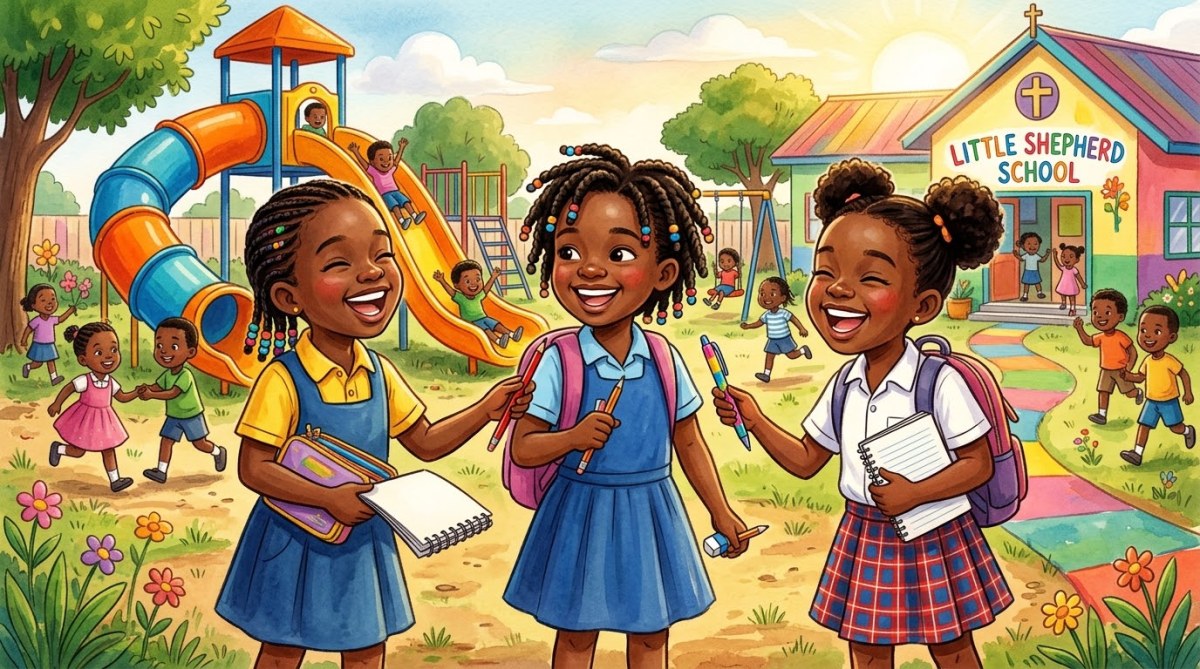
JAM: The Three Girls Who Learned to Be Friends

Jemima, Abigail and Matilda learn kindness, sharing, patience and friendship after too many arguments in this fun Christian children’s story.

The Story

In a lively neighbourhood called Sunny Street lived three girls named Jemima, Abigail, and Matilda.

They lived close to one another.

They went to the same school.

They even played in the same playground.

But there was one tiny problem.

They did not get along.

Not a little bit.

They argued about almost everything.

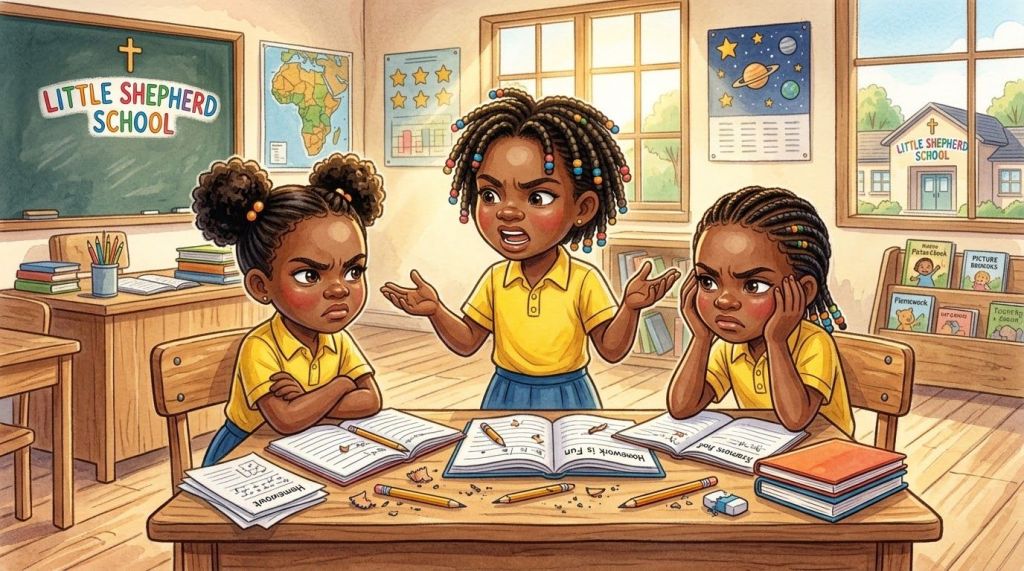
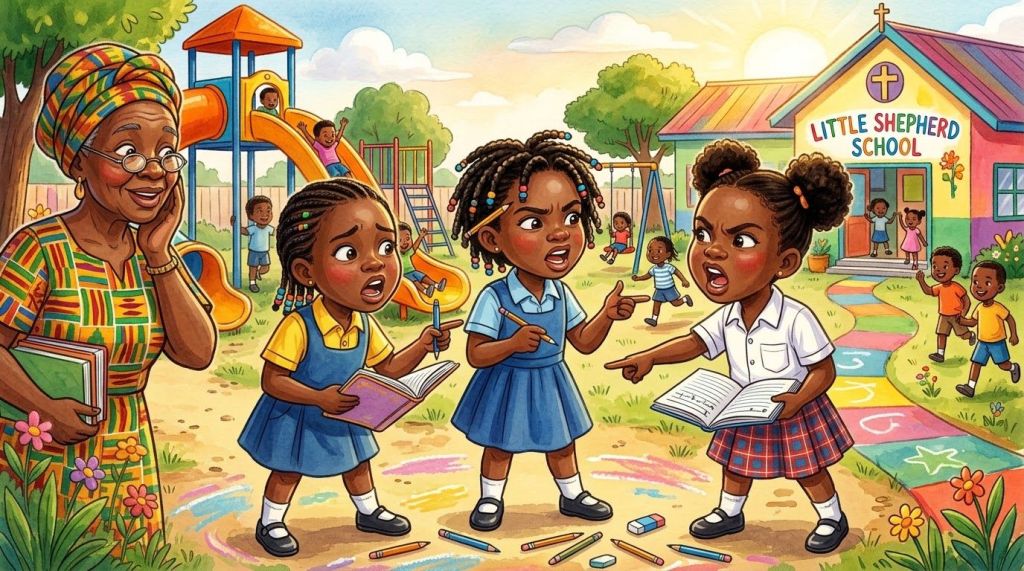
Three young schoolgirls arguing humorously

“The answer is twelve!” Jemima would say.

“No, it’s fourteen!” Matilda would reply.

“Both of you are wrong!” Abigail would announce.

Then Jemima and Matilda would turn to her.

“What is your answer?”

Abigail would blink.

“I haven’t done the question yet.”

“ABIGAIL!”

Abigail had a special talent.

She loved knowing everybody else’s business.

If Jemima whispered to Matilda, Abigail wanted to know what they were whispering about.

If Matilda opened her schoolbag, Abigail wanted to know what was inside.

And if someone said, “This is a secret,” Abigail’s ears suddenly became bigger than two satellite dishes.

“What secret?” she would ask.

“Abigail, mind your business!” the girls would shout.

But that was not the only problem.

At school, they sometimes broke each other’s pencils during arguments.

Jemima impatiently talking to Abigail and Matilda who looked frustrated

At playtime, they argued over whose turn it was to use the slide.

“I was here first!”

“No, I was!”

“Move!”

“You move!”

Sometimes the teacher had to look over and say, “Girls!”

And immediately, all three would become as quiet as three sleeping kittens.

But one day, something different happened.

The teacher gave the class some difficult homework.

Matilda looked at the questions.

Then she looked at Jemima.

Jemima was very good at schoolwork. She was clever, but she never used her cleverness to make other children feel small.

Matilda walked over to her.

“Jemima, please, can you help me with this question?”

Abigail quickly joined them.

“Me too, please.”

Jemima smiled.

“Of course.”

Matilda looked at Abigail.

“You know, Jemima is actually the smartest of us.”

Abigail nodded.

“Yes. She’s a total nerd!”

Jemima laughed.

“Thank you… I think?”

They all laughed.

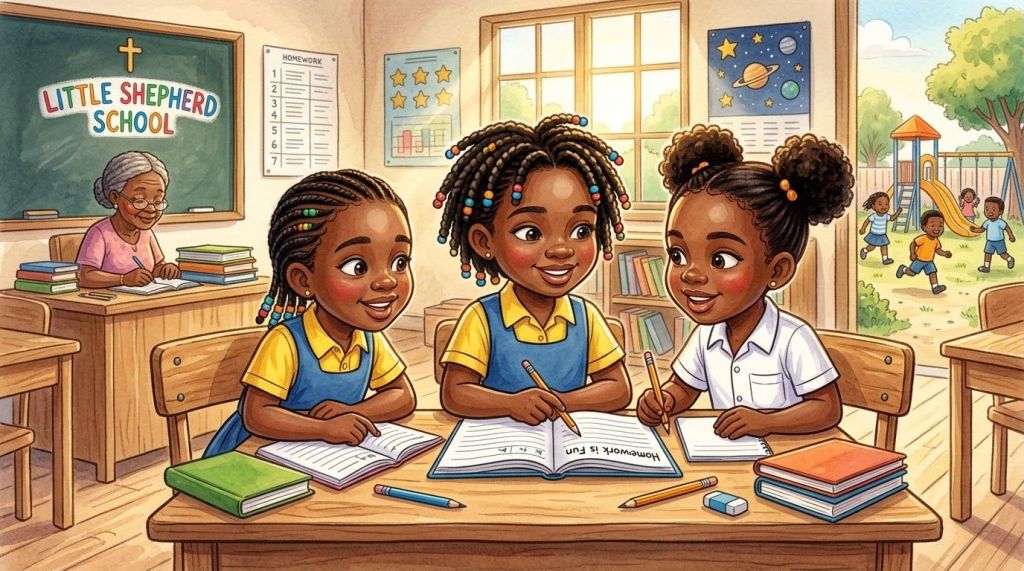
Jemima patiently explained the homework without showing off or making them feel silly.

Jemima patiently helping Abigail and Matilda with their homework at a school desk

For the first time in a long while, the three girls sat together without arguing.

They discovered something surprising.

They actually enjoyed being together.

A week later, the girls had a playdate.

They played games, shared snacks, told funny stories, and laughed until their cheeks hurt.

Abigail even tried to tell a joke and forgot the ending.

“Wait,” she said. “I know there was supposed to be something funny here.”

“Maybe the joke went on holiday,” Matilda said.

Everyone burst out laughing.

The next day at school, something had changed.

Jemima lent Matilda a pencil.

Matilda shared her ruler with Abigail.

Abigail gave Jemima some of her coloured pencils.

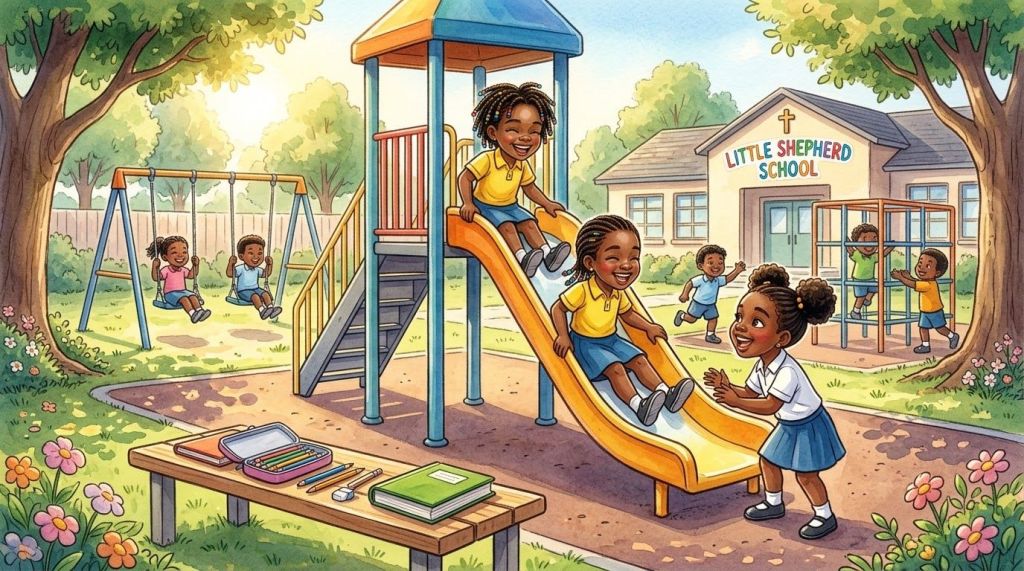
At playtime, they took turns on the slide.

Jemima, Abigail and Matilda happily taking turns on a playground slide.

“Your turn.”

“Then my turn.”

“Then Abigail’s turn.”

“Finally!” Abigail shouted. “A slide schedule!”

They laughed and played together.

There were no more broken pencils from angry arguments.

No more fighting over every little thing.

And Abigail learned that sometimes it was better to let other people’s matters remain their matters.

Of course, she still liked asking questions.

But now she was learning when to ask and when to simply mind her own business.

Jemima, Abigail, and Matilda soon became known as JAM.

J for Jemima.

A for Abigail.

M for Matilda.

Three girls.

Three different personalities.

One wonderful friendship.

And always remember Jesus Love You.

What We Can Learn

  • Kindness helps friendships grow.
  • We do not have to agree about everything to be friends.
  • Taking turns and sharing help everyone enjoy playing together.
  • Being clever is wonderful, but helping others without showing off is even better.
  • We should learn when something is our business and when it is better to give others space.

A Teaching Point for Parents

Friendships among children can sometimes involve arguments, teasing, competition, or difficulty taking turns. These moments can become opportunities to teach children practical kindness.

Help children learn simple habits such as listening, apologising when they hurt someone, taking turns, sharing appropriately, and respecting other people’s personal space and conversations.

Also remind children that being good at something is not a reason to look down on others. True knowledge should make us willing to help, not eager to show off.

Scripture to Remember

“And be ye kind one to another, tenderhearted, forgiving one another, even as God for Christ’s sake hath forgiven you.” Ephesians 4:32, KJV

Kindness, forgiveness, and a caring heart can help us build healthier friendships and relationships with others.

Bedtime Prayer

Dear Jesus,
Thank You for my friends and the people around me. Help me to be kind, patient, helpful, and willing to forgive. Teach me to share, take turns, listen to others, and know when to give people space. Help me to use what I know to help others and never to make them feel small. In Jesus’ name, Amen.

Talk About It

  • Why did Jemima, Abigail, and Matilda argue so much?
  • How did Jemima help the other girls?
  • What changed after their playdate?
  • Why is taking turns important?
  • What does it mean to mind your own business?
  • How can you show kindness to a friend this week?

One Little Thing to Remember

Kindness turns ordinary friendships into beautiful ones.

More Stories for Children

Enjoy more fun, faith-filled stories that help children grow in godly character.

Explore More Stories for Children →

God’s Word, Foundation for Shaping Tomorrow
Create your own website, free on WordPress.com.Create your own website.
Start free