The Sneaky Sock Thief

Sammy the puppy learns an important lesson about obedience after stealing a red sock. A funny Christian children’s story about listening and self-control.

Age Guide: 5–9 years
Type: Character-Building Story
Theme: Obedience & Respecting Boundaries
Reading Time: 5–7 minutes

The Story

Sammy was a little puppy with a very big love for socks.

Clean socks.

Dirty socks.

Big socks.

Tiny socks.

If it was a sock, Sammy wanted it!

Every morning, Sammy waited beside the laundry basket.

As soon as someone looked away…

ZOOM!

Sammy would grab a sock and run.
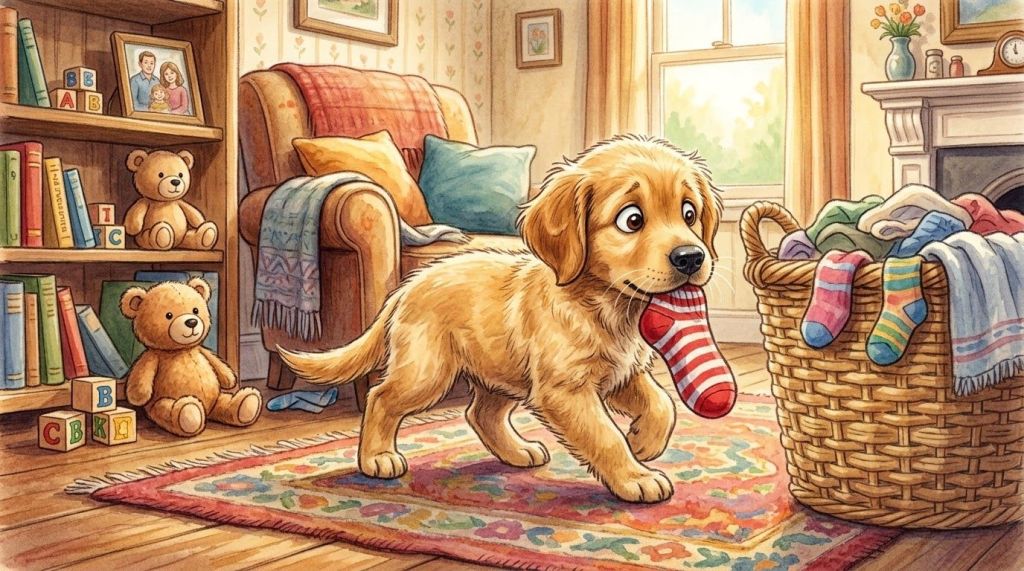
Sammy sneaking toward the laundry basket

“Sammy!” Mum would call. “Leave the socks alone!”

Sammy would stop.

He would drop the sock.

Then he would look at Mum with his biggest, most innocent puppy eyes.

But the moment Mum turned around…

ZOOM!

There went another sock.

One afternoon, Sammy spotted something very interesting.

It was a bright red sock lying on the floor.

Sammy’s tail began to wag.

“Don’t even think about it,” Mum said.

Sammy looked at the sock.

Then he looked at Mum.

Then he looked at the sock again.

His nose twitched.

His ears stood up.

His paws moved closer.

“Sammy…” Mum warned.
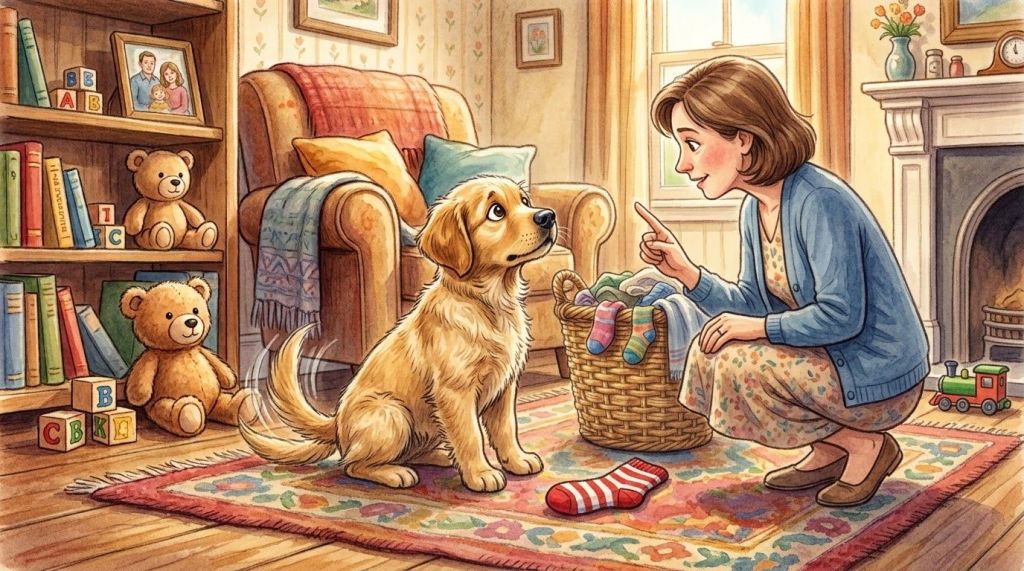
Mum telling Sammy to leave the red sock

Sammy froze.

For once, he walked away.

“Good boy!” Mum said.

Sammy’s tail wagged proudly.

But that evening, he saw the red sock again.

There was nobody around.

Sammy looked left.

He looked right.

Then he whispered to himself, “Just one little sock.”

CHOMP!

Off he ran.

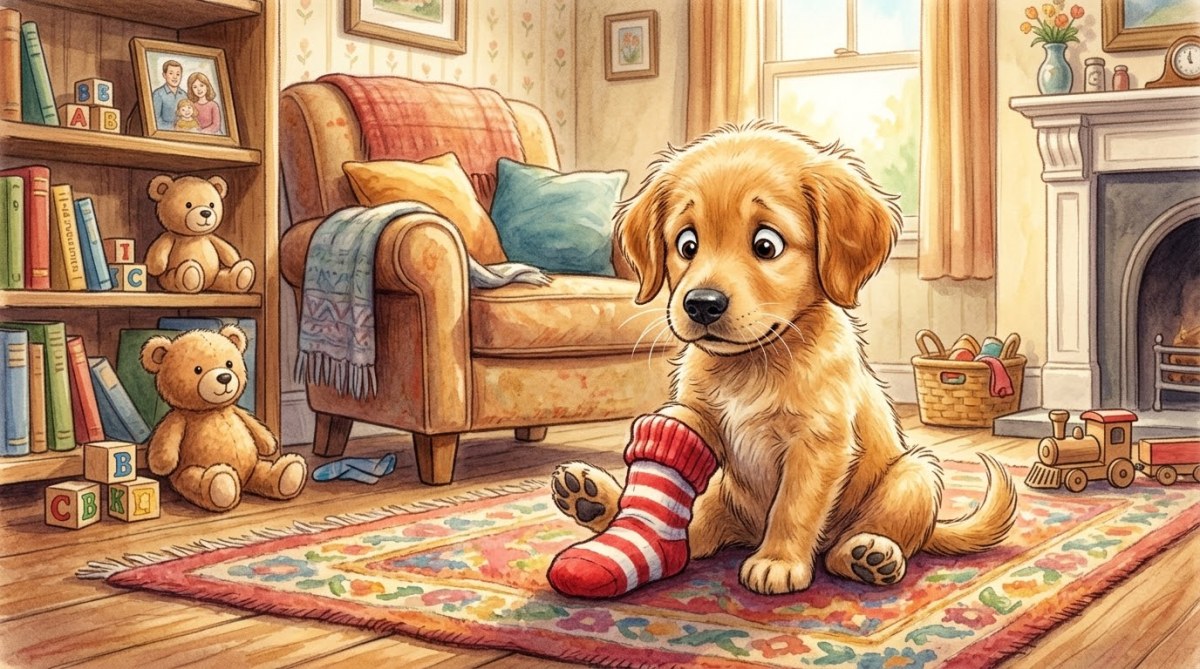
But this time, the sock got stuck.

It wrapped around his paw.

Sammy pulled.

Nothing.

He pulled harder.

Still nothing.

He tried to run.

THUMP!

Down he went.

“YIP!”

Mum came running.

She carefully removed the sock.
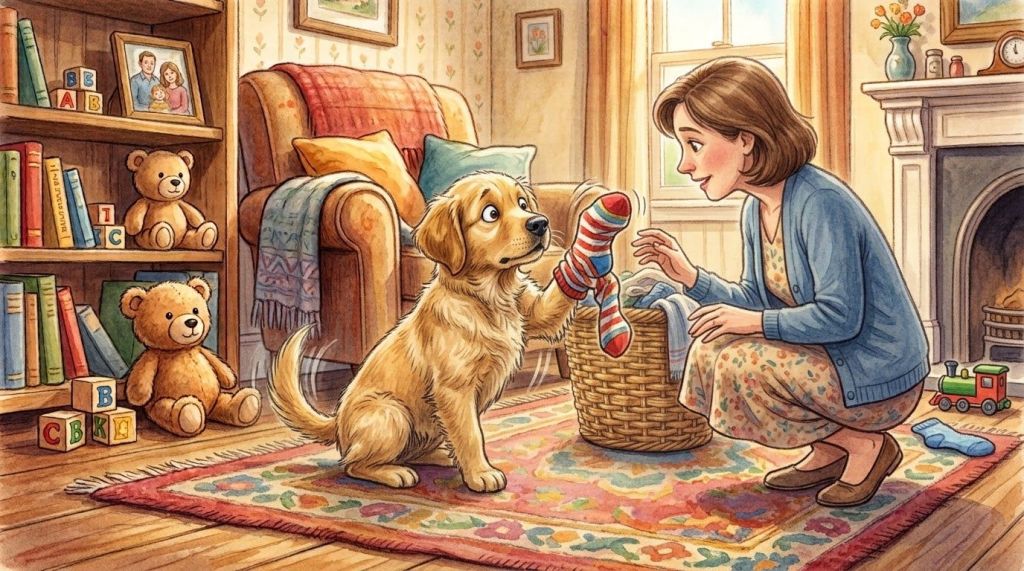
Sammy discovering the sock stuck around his paw,

Sammy sat quietly.

He knew exactly what had happened.

Mum had told him not to take the sock.

He had known the rule.

He had simply chosen not to obey it.

Mum gently patted his head.
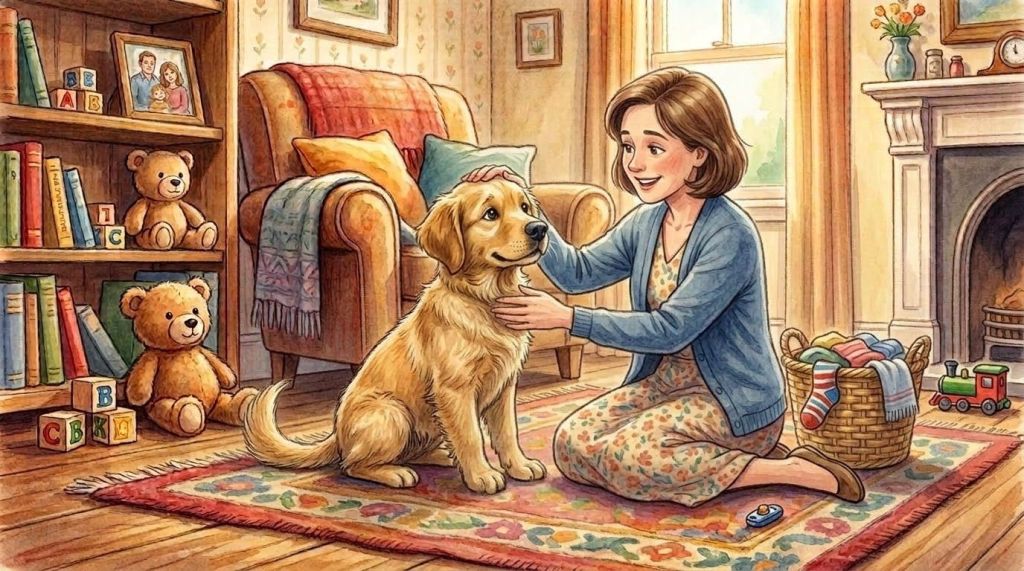
Sammy peacefully leaving the socks alone

“Sammy, rules are not always there to spoil your fun. Sometimes they are there to protect you, protect others, or help things work properly.”

Sammy lowered his head.

He looked at the red sock.

It suddenly didn’t seem nearly as exciting.

From that day on, Sammy still loved socks.

But he learned to leave them where they belonged.

And whenever he felt tempted to disobey, he remembered the day his favourite red sock became his very own paw trap.

And always remember Jesus Loves You.

What We Can Learn

Sammy learned that knowing the right thing is not enough. We must also choose to do it.

Obedience means listening to instructions and following them, especially when we understand that those instructions are meant for our good.

Sometimes we may not understand why a parent gives us a particular instruction. But learning to obey appropriate instructions helps us develop self-control, responsibility, and respect.

A Teaching Point for Parents

Children often understand a rule before they are willing to follow it. That makes obedience an important character skill to teach, not simply a behavior to demand.

Where appropriate, explain the reason behind an instruction. This helps children gradually understand that boundaries are not merely about control. They can provide safety, order, and guidance.

When correcting disobedience, remain firm without humiliating the child. The goal is not simply to make the child afraid of breaking a rule, but to help them develop a heart that chooses what is right.

Scripture to Remember

Colossians 3:20

“Children, obey your parents in everything, for this pleases the Lord.”

God cares about obedience. Learning to respond rightly to godly instruction is part of growing in character and learning to please Him.

Bedtime Prayer

Dear God,

Thank You for the people You have placed around me to guide and protect me.

Please help me to listen carefully and obey good instructions.

Give me self-control when I want to do something I have been told not to do.

Help me to grow into a wise, responsible, and obedient child.

In Jesus’ name, amen.

Talk About It

  • What did Sammy love taking?
  • What did Mum tell Sammy to do?
  • Why did Sammy take the red sock even after being warned?
  • What happened when Sammy disobeyed?
  • Why are some rules important?
  • What can you do when you really want to do something you have been told not to do?

One Little Thing to Remember

Knowing what is right is good. Choosing to do what is right is better.

More Stories for Children

Looking for more stories that nurture faith and build godly character?

Explore more Stories for Children

God’s Word, Foundation for Shaping Tomorrow
The Boy Who Swallowed a Whopper

A funny Christian children’s story about Leo, a boy whose little lies become a giant Whopper. A lesson in honesty, truthfulness and taking responsibility.

Age Guide: 5–9 years
Type: Character-Building Story
Theme: Honesty & Telling the Truth
Reading Time: 5–7 minutes

The Story

Leo was a champion liar.

Not the big, dramatic kind of liar. Mostly, Leo told little lies.

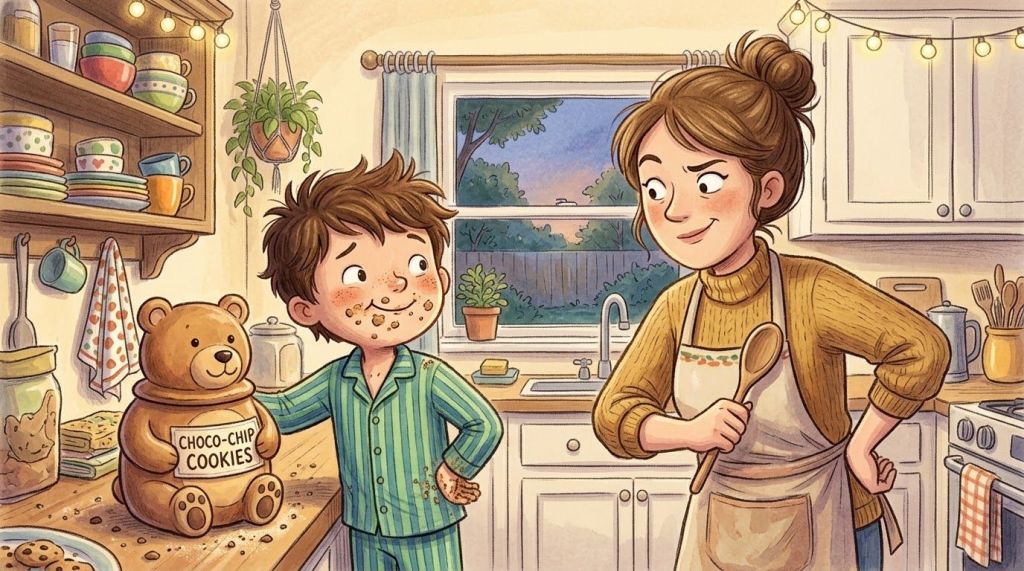
One morning, Mum walked into the kitchen and found Leo standing beside the cookie jar.

Leo beside the cookie jar


“Leo, did you take the cookies?” she asked.

Leo shook his head.

“No, Mum.”

Mum looked at the crumbs around his mouth.

“What are these?”

Leo quickly wiped his face.

“I have no idea.”

Mum raised an eyebrow.

Leo smiled.

That was one little lie.

Later that afternoon, Mum asked, “Leo, have you finished your homework?”

“Of course!”

But his exercise book was still blank.

“The dog ate it,” Leo explained.

“We don’t have a dog,” Mum replied.

“The neighbour’s dog ate it.”

“Through the wall?”

Leo thought for a moment.

“Yes.”

Mum sighed.

Leo thought little lies were harmless.

But he was about to discover something very strange.

That night, Leo went to bed as usual.

Sometime after midnight, he woke up.

Something felt strange in his throat.

He swallowed.

Gulp.

He swallowed again.

GULP!

Then he felt a huge lump moving inside his throat.

“What is that?” Leo whispered.

He ran to the mirror.

His eyes grew wide.

There was a giant bump in his throat!

“MUM!”

Mum rushed into the room.

“What happened?”

“My throat! Something is stuck in there!”

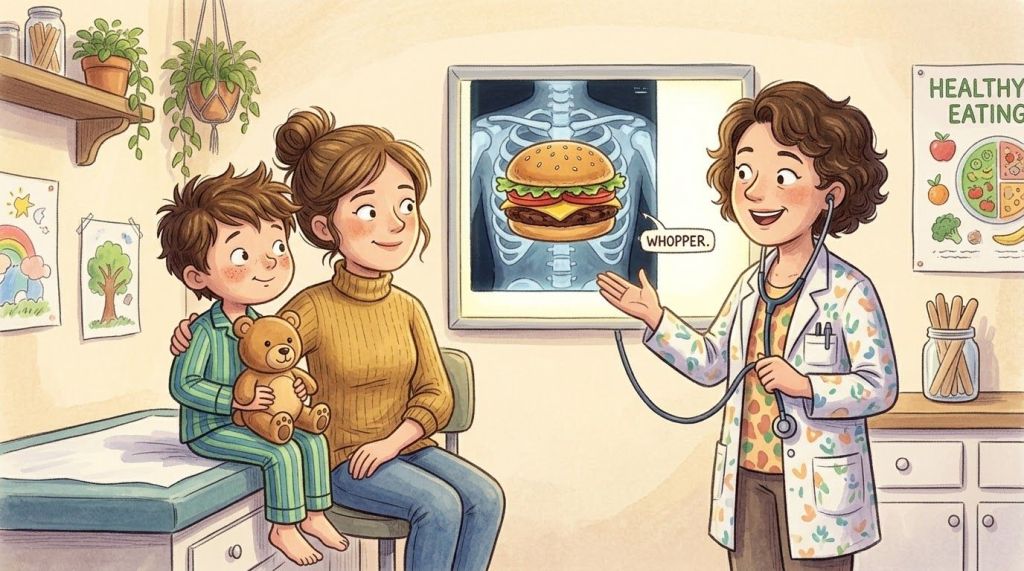
The next morning, Mum took Leo to the doctor.

The doctor discovering the Whopper


“Oh my!” he exclaimed.

“What is it?” Mum asked.

The doctor pointed at the screen.

“You have a Whopper.”

“A what?”

“A Whopper,” the doctor explained. “It is what happens when little lies pile up and become one very big problem.”

Leo gulped.

“Can you get it out?”

“Maybe,” said the doctor. “But there is only one way to make it smaller.”

“How?”

“Tell the truth.”

Leo looked at Mum.

He took a deep breath.

“Okay.”

He started with the cookies.

“I ate the cookies.”

POP!

The lump became smaller.

Mum blinked.

Leo continued.

“I didn’t finish my homework.”

POP!

Smaller again.

“I lied about the dog.”

POP!

Leo’s eyes widened.

“I also said I brushed my teeth this morning, but I only licked the toothbrush.”

POP!

Mum covered her mouth.

Leo continued.

“I blamed my sister for breaking the cup.”

POP!

“I blamed the squirrel for taking my pencil.”

POP!

“I’m pretty sure the squirrel didn’t do it.”

POP!

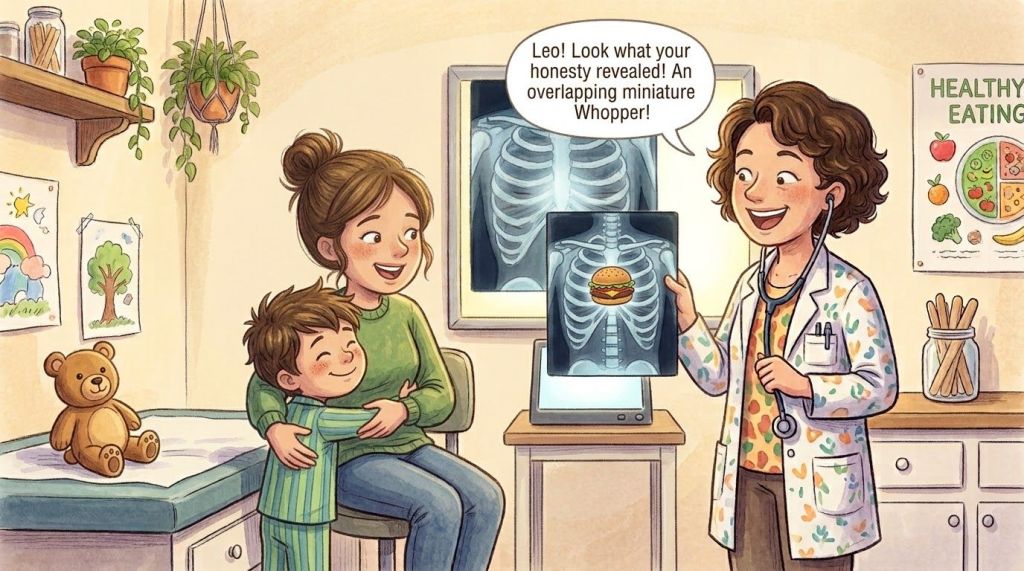
With every honest confession, the Whopper became smaller and smaller.

Finally…

POP!

The Whopper shrinking


The Whopper disappeared!

Leo took a huge breath.

His throat felt completely clear.

The doctor smiled.

“There you are. Much better.”

Leo nodded.

“I don’t want another Whopper.”

“Then remember,” said the doctor, “when you make a mistake, telling the truth is much better than piling one lie on top of another.”

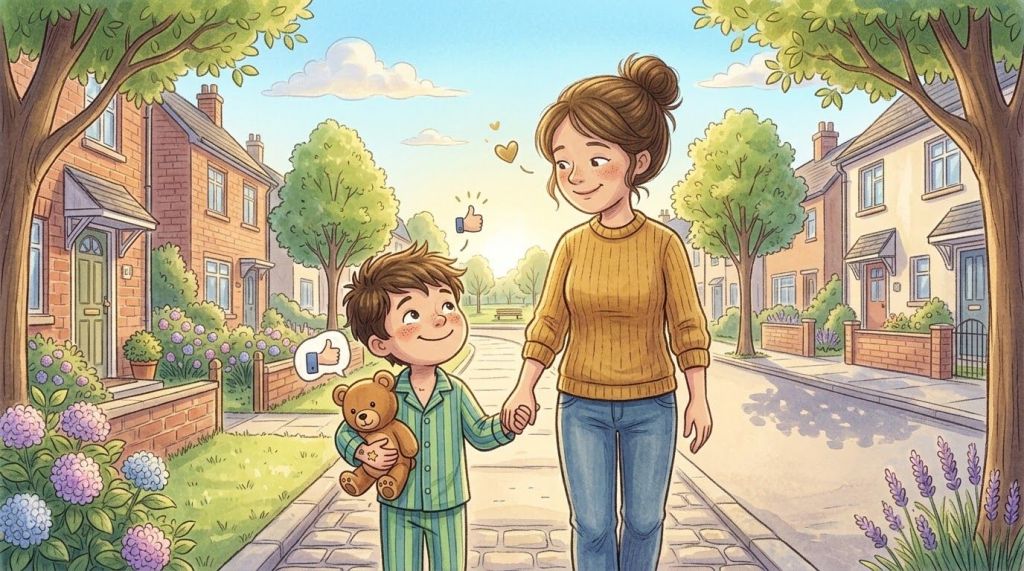
On the way home, Leo was quiet.

“Mum?”

“Yes?”

“I think I understand now.”

“Understand what?”

“Little lies may seem small, but they can grow into big problems.”

Mum smiled.

“And what will you do next time?”

Leo thought for a moment.

“Tell the truth, even when it’s difficult.”

Mum hugged him.

Leo and Mum walking home


“That’s a good choice.”

Leo smiled.

And from that day on, whenever he was tempted to tell a little lie, he remembered the giant Whopper in his throat.

He never wanted to swallow another one!

And Always remember that Jesus Loves you.

💛 What We Can Learn

Leo discovered that a lie does not become harmless simply because it is small.

One little lie can lead to another, and soon we may have to tell even more lies to cover up the first one.

Honesty helps us take responsibility for our choices, build trust, and keep our hearts free from the burden of pretending.

Telling the truth may sometimes feel difficult, especially when we have done something wrong. But admitting the truth gives us the opportunity to make things right and learn from our mistakes.

Most importantly, God wants us to become people who love truth and can be trusted.

👨‍👩‍👧 A Teaching Point for Parents

Children may sometimes lie because they are afraid of punishment, embarrassed by a mistake, trying to avoid consequences, or simply testing boundaries.

When a child tells the truth about something wrong they have done, acknowledge the courage it took to be honest before addressing the behavior itself.

You can say:

«“I’m proud of you for telling me the truth. That took courage. Now let’s talk about what happened and how we can make it right.”»

This does not mean ignoring the wrong behavior. It means teaching the child that honesty is always welcome, while wrong choices still have appropriate consequences.

A home where children can safely tell the truth gives them room to learn responsibility instead of becoming experts at hiding mistakes.

📖 Scripture to Remember

Proverbs 12:22

«“The LORD detests lying lips, but he delights in people who are trustworthy.”»

God cares about truthfulness. He wants us to become people whose words can be trusted.

🙏 Bedtime Prayer

Dear God,

Thank You for loving me and teaching me what is right.

Please help me to tell the truth, even when it is difficult.

When I make a mistake, give me courage to admit it and wisdom to make things right.

Help me to become someone others can trust.

In Jesus’ name, amen.

💬 Talk About It

1. Why did Leo’s little lies become a big Whopper?
2. What happened every time Leo told the truth?
3. Why do you think Leo was afraid to tell the truth?
4. How did telling the truth help him?
5. What should you do when you make a mistake?

✨ One Little Thing to Remember

Little lies can grow into big problems.
Choose truth, even when it is difficult.

🌙 More Stories for Children

Looking for more stories that nurture faith and build godly character?

Explore more: “Stories For Children” (https://godlyparentingtips.family.blog/stories-for-children/)

God’s Word, Foundation for Shaping Tomorrow.

The Grumpy Grizzly Who Lost His Growl

A funny character-building bedtime story about Boris the grizzly bear, helping children understand anger, emotions, self-control, and the importance of pausing before reacting.

Age: 5–9 years
Type: Character-Building Story
Theme: Anger, Self-Control & Emotional Awareness
Reading Time: 5–7 minutes


The Story

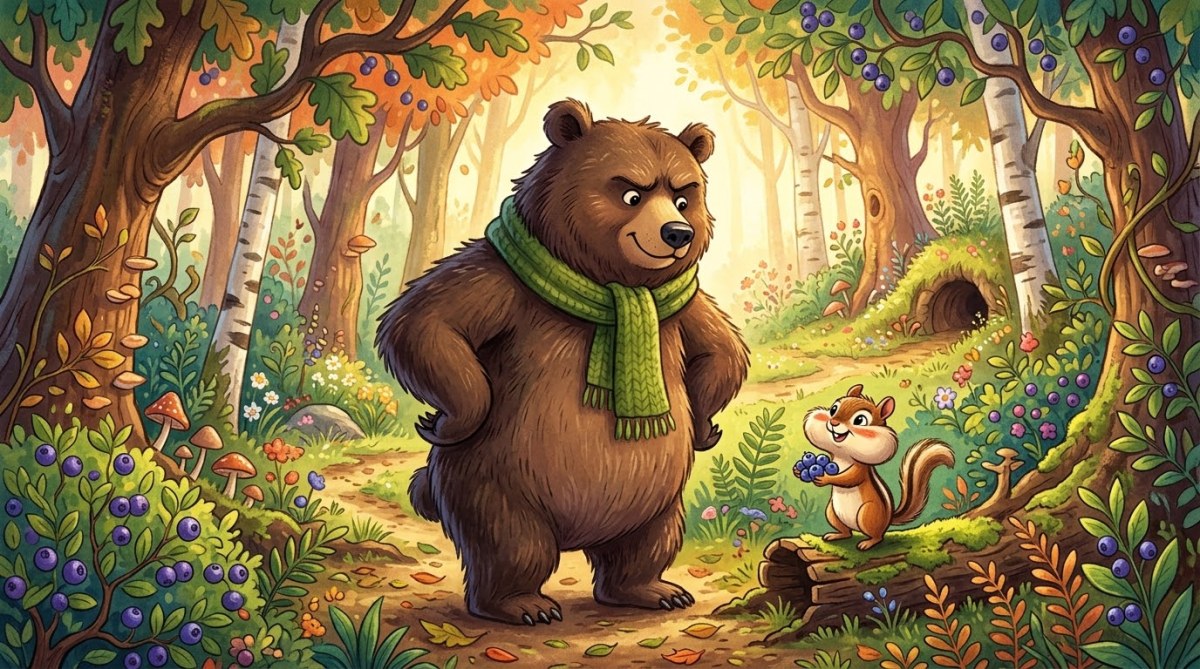
Deep in the Forest of Frowns lived Boris, a grizzly bear with the worst temper in the woods.

He growled at squirrels, roared at rabbits, and once frightened a family of raccoons so badly that they forgot how to wash their food!

Every morning, Boris woke up angry. Every night, he went to bed even grumpier.

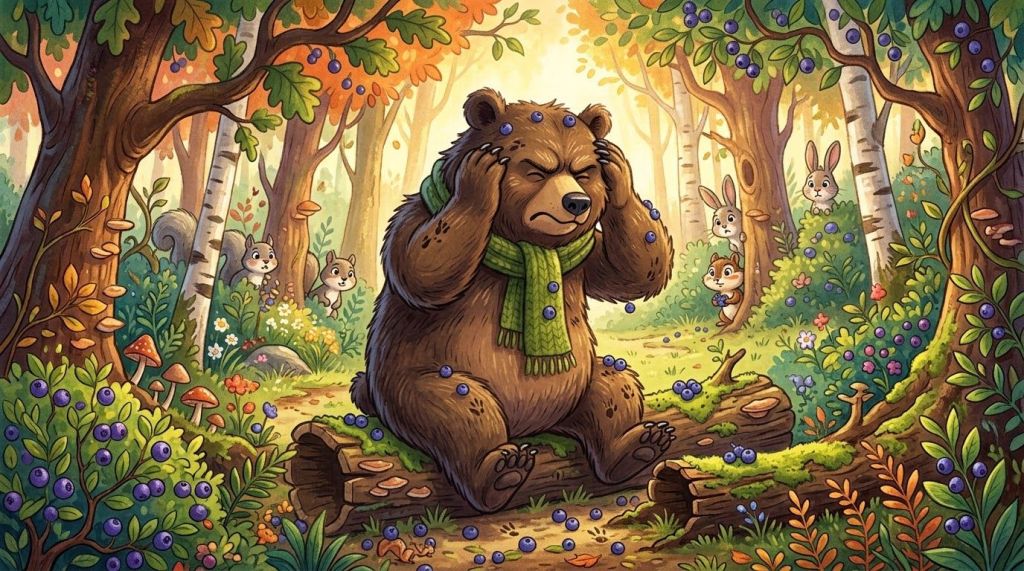
Grumpy grizzly bear Boris looking frustrated in the forest

“Why is everyone so annoying?” he would bellow, shaking the trees with his fury.

Then came Pip, a little chipmunk with cheeks full of nuts and a heart full of nonsense.

One day, Pip watched Boris chase his own tail in a rage because he had accidentally stepped on his paw.

Pip squeaked, “You know, Mr. Bear, you might be less angry if you ate more berries.”

Boris stopped.

“What?”

“My grandma says anger is sometimes just hunger wearing a grumpy face.”

Boris stared at him.

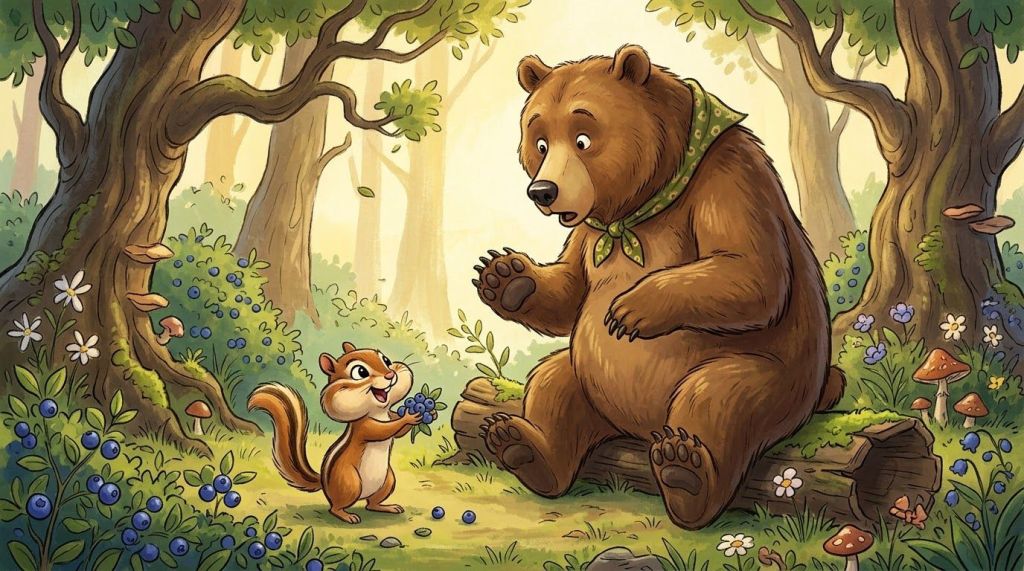
Pip tossed him a handful of wild blueberries.

Pip the chipmunk offering blueberries to Boris the grizzly bear

“Try these instead of eating loggers. They’re much sweeter!”

Boris grumbled, but he popped a blueberry into his mouth.

His eyes widened.

“More,” he mumbled.

Pip laughed and handed him another handful.

Before long, Boris and Pip became berry-picking buddies.

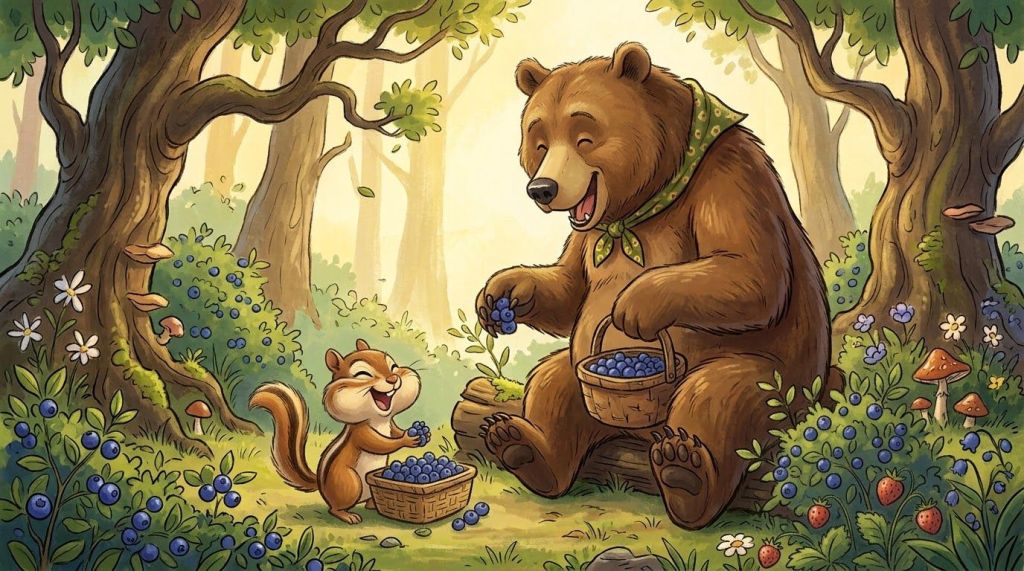
As they spent time together, Boris discovered something surprising: laughing at his own clumsiness was much more enjoyable than growling at everyone around him.

Boris and Pip laughing together

His fierce roar became a gentle, chuckling rumble.

His claws relaxed.

Even his fur seemed fluffier.

Boris was still a bear. He still got frustrated sometimes. But now he was learning to pause, understand what he was feeling, and choose a better response.

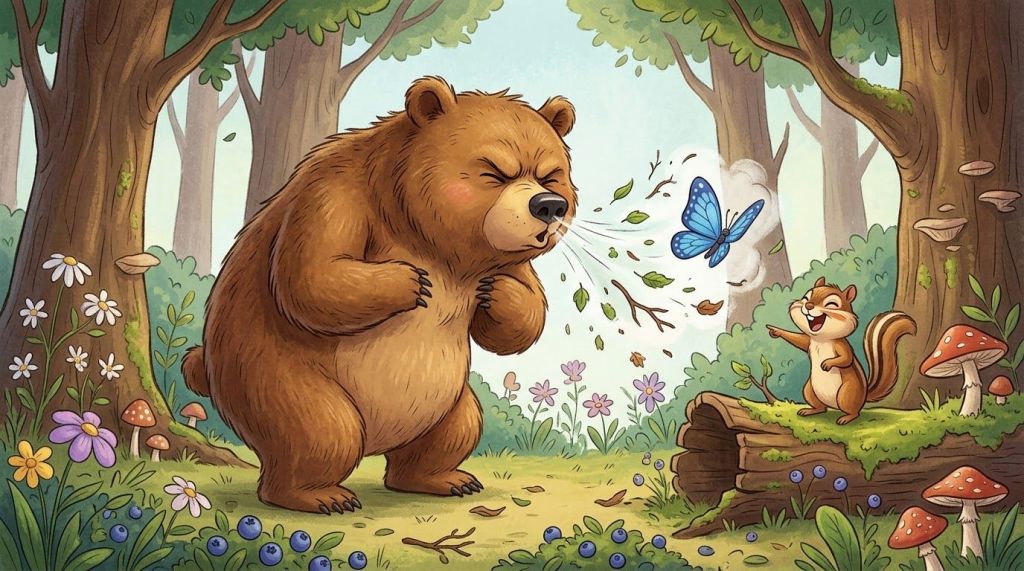
Then, one morning, Boris woke up feeling so light and joyful that he sneezed.

“Achoo!”

Boris sneezing as a blue butterfly flies from his nose

A beautiful blue butterfly flew out of his nose.

Pip stared.

Then he burst out laughing.

“You’re welcome!” he chirped.

Boris laughed too.

And for the first time in a very long while, the Forest of Frowns heard something other than a growl.

It heard a bear laughing.

And Always remember that “Jesus Loves You”.


What We Can Learn

Sometimes anger is not really about anger.

We may be hungry, tired, frightened, frustrated, or overwhelmed, and those feelings can come out as anger.

Learning to pause and understand what is happening inside us can help us respond more wisely.

And sometimes, a little food, rest, laughter, or kindness can change the whole moment.

A Teaching Point for Parents

Children do not always have the words to explain what they are feeling.

A child who is hungry may become irritable. A tired child may suddenly become difficult. A frightened child may become angry. An overwhelmed child may have a meltdown.

This does not mean we should ignore wrong behaviour. It means we should learn to look beyond the behaviour and ask, “What might be happening underneath this reaction?”

Correction may sometimes be necessary, but wisdom knows when a child first needs food, rest, reassurance, a hug, or simply a moment to calm down.

Before we respond to the anger, let’s learn to understand the child.

Scripture to Remember

“A cheerful heart is good medicine, but a crushed spirit dries up the bones.”

Proverbs 17:22

Boris discovered that joy could change the way he responded to frustrating situations. This verse reminds us that a cheerful heart can bring strength and healing.

Bedtime Prayer

Dear Lord,

Please help me understand my feelings and respond wisely when I am angry or upset.

Help my parents and other grown-ups understand me too.

Give us patience, kindness, and wisdom to know what we need in difficult moments.

Fill our hearts with Your joy, In Name of Jesus the Christ.

Amen.

Talk About It

  • Why was Boris always so grumpy?
  • What did Pip do that helped Boris?
  • Can you think of a time when you were hungry, tired, scared, or upset and became angry?
  • What can you do when you feel angry?

One Little Thing to Remember

Before you roar, pause and ask: “What am I really feeling?”


More Stories for Children

Looking for more stories that nurture faith and build godly character?

Explore more Stories for Children from Godly Parenting Insights.

Whether you’re reading at bedtime, during family devotion, or simply enjoying a quiet moment together, may every story become an opportunity to plant God’s Word in your child’s heart.

The Story That Taught Me a Lesson

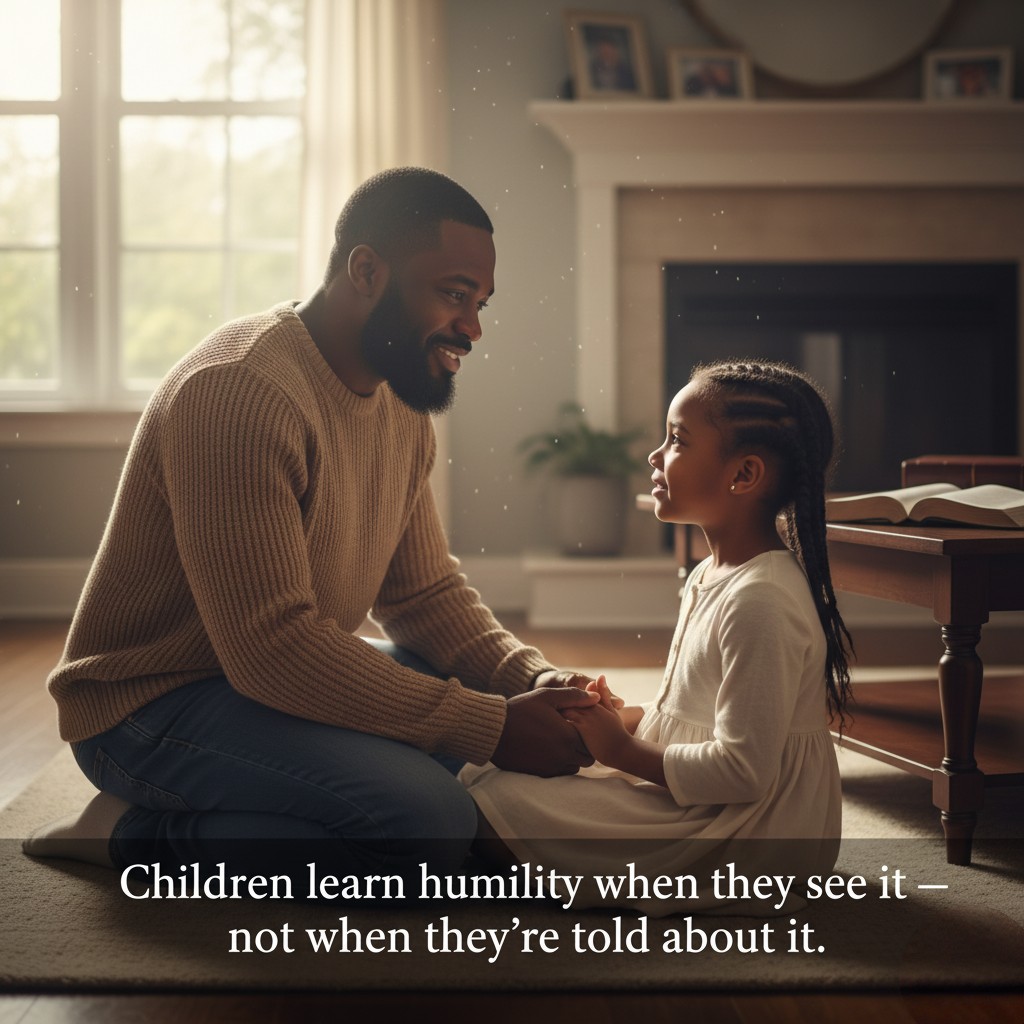
“Every apology plants a seed of grace in a young heart. That moment humbled me deeply. I realized that children watch how we handle our own faults, not just theirs. That little moment between us became a mirror, showing me that parenting isn’t just about correcting a child; it’s about modeling humility.”

One day, I visited my sister’s house. Her daughter, my little niece, had done something that upset me.
Out of reflex, I raised my voice at her.
Almost immediately, I knew I had gone too far. I saw the worry in her eyes, not fear, but confusion.

Later that day, I went back to her, gently called her name, and said, “Tofumi, I’m sorry. What you did was wrong, but I shouldn’t have yelled.”

She looked surprised.
Then she said something that stopped me in my tracks:
My mummy never says sorry even when she’s wrong.

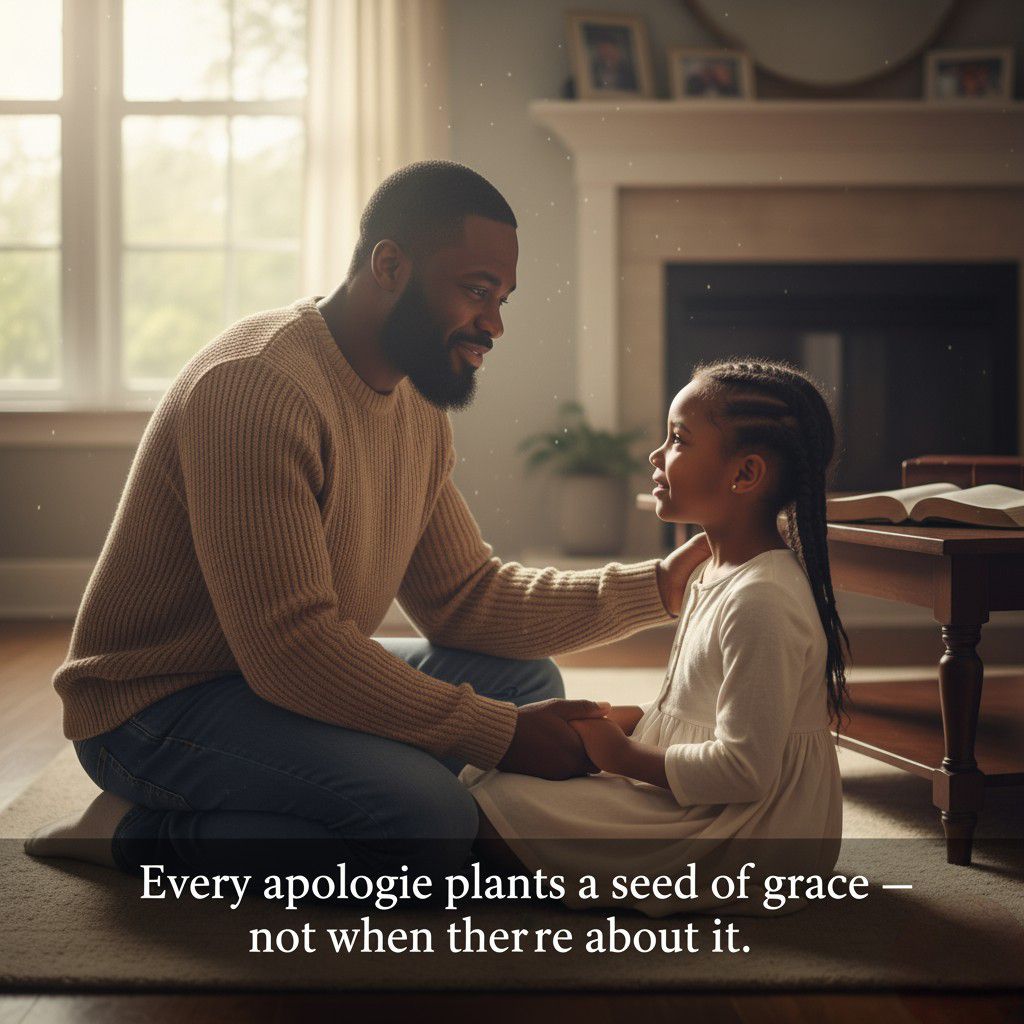
Every apology plants a seed of grace in a young heart.

That moment humbled me deeply. I realized that children watch how we handle our own faults, not just theirs.
That little moment between us became a mirror, showing me that parenting isn’t just about correcting a child; it’s about modeling humility.

When I told my niece, “I’m sorry,” I didn’t realize I was teaching her something far more powerful than words, that love, humility, and grace begin with example.

The Lesson Behind the Story

Sometimes, we think we teach best when we correct.
But I’ve learned that the most powerful lessons children learn are not through correction, but through our humility.

That day, my niece looked at me with surprise.
She wasn’t used to hearing an adult say, “I’m sorry.”

Earlier, I had reacted too sharply. The Holy Spirit gently nudged my heart:
Go and make it right.

So, I did. I went back, looked into her eyes, and said softly,
“I’m sorry.”

Her expression changed.
It wasn’t just a child hearing an apology; it was a young heart witnessing humility.
And in that moment, I realized, I wasn’t only making peace, I was modeling grace.

The Parenting Lesson

Parents, teachers, and mentors, saying “I’m sorry” doesn’t make you weak.
It makes you Christlike. It teaches a child that even adults can admit when they’re wrong, and that’s where love grows.

Children don’t just listen to our instructions; they imitate our examples.
When they see humility in us, they learn empathy, forgiveness, and strength.

If you’ve ever reacted too harshly or spoken too soon, remember this:
Your humility can heal what your authority wounded.

Reflection

What is your child, or the young ones around you, learning from your example today? Pride or grace?

Scripture Meditation

“God opposes the proud but gives grace to the humble.” James 4:6

Open Bible beside two hands holding in reconciliation, symbolic of grace and forgiveness, warm light, Christian parenting concept
Authority that humbles itself reflects the heart of Christ.

Call to Salvation

True humility begins with Christ.
If you haven’t yet surrendered your heart to Him, today is the best day to say,
“Lord, I’m sorry. Come into my life.”

He is ever ready to forgive, restore, and teach us to love like Him.

Design a site like this with WordPress.com
Get started