

Dedicated with gratitude to Mrs. Hilda and my precious friend, Mrs. Etua, whose lives have shown me the wisdom and power of looking beyond a child’s expression and responding with patience, love, and godly understanding.
“A man’s confession is often his condition; a man’s expression is mostly his experience.”
I woke up with this thought in my heart, and the more I reflected on it, the more I began to see how deeply it can speak to parenting, especially parenting older children.
There are seasons when a child who once seemed open, affectionate, and easy to communicate with begins to say things that leave a parent wondering:
“Where did this come from?”
“Why is my child talking like this?”
“After everything I have done for you, how can you say that?”
Sometimes children say things in anger that they may not fully mean. Sometimes they do mean what they say. Sometimes their words are simply wrong and need correction.
But sometimes, behind the expression is an experience.
And behind the experience may be a condition of the heart that the parent needs to understand.
This does not mean parents should excuse disrespectful speech. It means we should learn to listen beyond the words.
Words Can Reveal What Is Happening Within
Jesus gave us an important principle:
“For out of the abundance of the heart the mouth speaketh.”
Matthew 12:34
Our words often provide a window into what is happening inside us.
A child who repeatedly says, “Nobody cares about me,” may be expressing more than dissatisfaction.
A child who says, “You never listen to me,” may be communicating a genuine feeling of being unheard.
A child who says, “I don’t want anything to do with church,” may be expressing frustration, disappointment, confusion, influence from others, or a struggle that the parent has not yet discovered.
And sometimes the statement may simply be a wrong response that requires loving correction.
The point is not to assume that every troubling statement has a hidden meaning.
The point is to investigate before we conclude.
Instead of hearing only the words, a wise parent asks:
“What is happening inside my child that is producing this expression?”
That question can open a door that anger would have closed.
A Child’s Expression May Be Carrying an Experience
Children are constantly being shaped by what they see, hear, and experience.
Their environment speaks.
Their relationships speak.
Their friendships speak.
Their disappointments speak.
Their parents speak.
Their teachers speak.
Social media speaks.
And eventually, some of these experiences find their way into their expressions.
This is particularly important as children grow older.
An older child may not always come to a parent and say:
- “Mum, I feel rejected.”
- “Dad, I am struggling with comparison.”
- “I feel like you don’t understand me anymore.”
Instead, the pain may come out as anger.
The confusion may come out as withdrawal.
The insecurity may come out as arrogance.
The disappointment may come out as disrespect.
The parent sees the expression, but there may be an experience underneath it.
This is why godly parenting requires more than correcting behaviour.
It requires discernment.
Understanding Is Not the Same as Excusing
This distinction is extremely important.
If a child is disrespectful, the parent should not simply say:
“Well, he must be hurting, so let him talk anyhow.”
No.
Godly parenting does not remove boundaries because we have discovered emotions.
A child can be hurting and still need correction.
A child can be frustrated and still need to learn respect.
A child can have a legitimate complaint and still communicate it wrongly.
Understanding the condition behind an expression does not mean approving the expression.
It simply helps the parent respond more wisely.
Instead of:
“How dare you speak to me like that!”
A parent might say:
“I will not accept disrespectful words, but I also want to understand why you feel this way. Tell me what happened.”
That sentence carries both authority and compassion.
It corrects the behaviour without rejecting the child.
Before Correcting the Mouth, Listen to the Heart
Sometimes parents are so focused on stopping the wrong words that they miss the opportunity to discover what produced them.
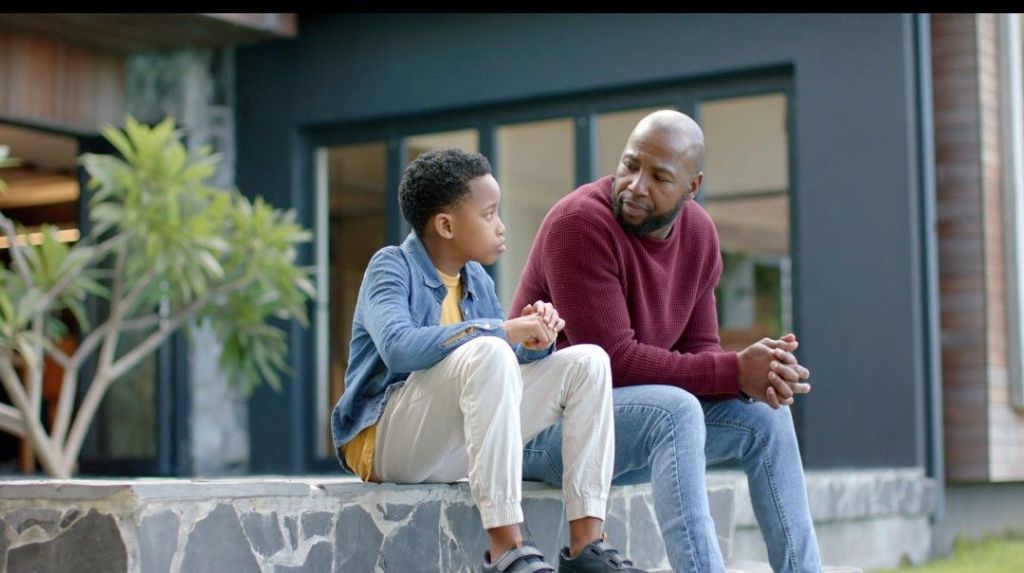
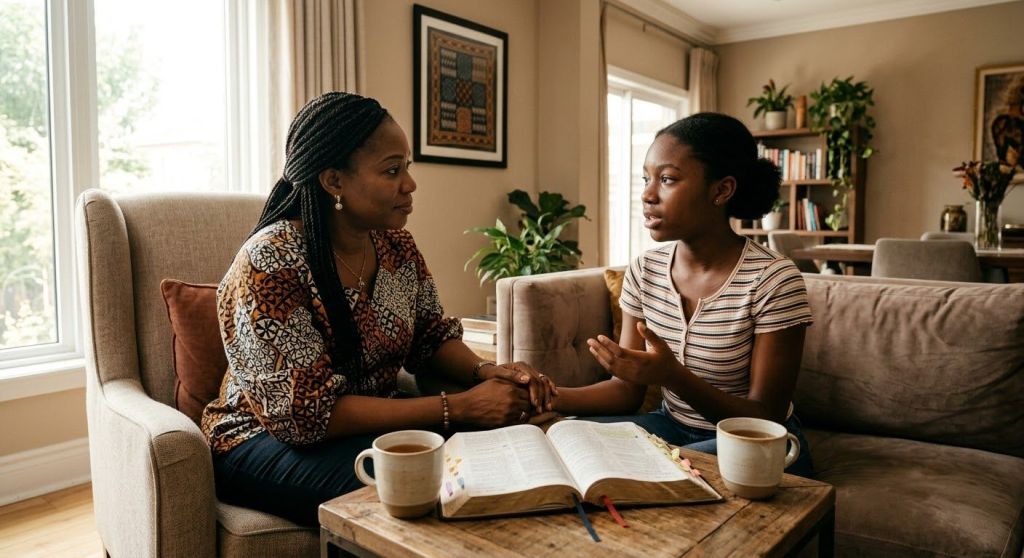
Imagine an older child suddenly saying:
“I hate this house. Nobody understands me.”
The immediate parental response might be:
“You hate this house? After everything we have done for you?”
The conversation can quickly become a battle.
But what if the parent paused?
What if the parent responded:
“Those words are hurtful and we need to address them. But I also want to understand what has made you feel this way. What happened?”
Now the conversation has somewhere to go.
Perhaps the child has been carrying a disappointment.
Perhaps there has been a misunderstanding.
Perhaps the child feels compared with a sibling.
Perhaps the child has been influenced by something outside the home.
Perhaps the parent has unknowingly created an environment where the child feels unable to speak honestly.
Or perhaps the child simply needs correction.
We cannot know until we listen.
What Are Our Children Experiencing at Home?
This brings us to a deeper question for every parent:
“What experiences am I creating in my child’s life?”
If expression is influenced by experience, then parenting becomes more than telling children what to say.
It becomes intentional about what we are depositing into their lives.
What does your child experience when they make a mistake?
Do they experience only criticism?
Or do they experience correction accompanied by patience?
What happens when they disagree with you?
Do they experience rejection?
Or do they learn that disagreement can be handled respectfully?
What happens when they fail?
Do they hear:
“You can never do anything right.”
Or:
“You made a mistake. Let’s learn from it and try again.”
These experiences matter.
Because one day, the child may express what has repeatedly been experienced.

The Home Is a Training Ground for the Heart
The Bible says:
“Train up a child in the way he should go: and when he is old, he will not depart from it.”
Proverbs 22:6
Training involves more than instruction.
It involves repetition.
It involves modelling.
It involves correction.
It involves environment.
It involves conversations.
It involves what a child repeatedly sees and experiences.
Children are not simply listening to what we teach them.
They are also learning from how we live before them.
If we want children who know how to apologise, they should see us apologise.
If we want children who speak respectfully, they should hear respectful communication.
If we want children who forgive, they should experience forgiveness.
If we want children who trust God, they should see us trusting God.
If we want children who respond to difficult situations with faith, they need to see faith lived out in the home.
The home is not merely where children sleep.
The home is one of the classrooms where their character is being formed.
What If the Parent Is Part of the Experience?
This may be the most uncomfortable question, but it may also be one of the most productive.
Sometimes we ask:
“What is wrong with my child?”
when we should also ask:
“Is there anything in our relationship that needs attention?”
This is not an invitation for parents to blame themselves for every difficulty.
Children make their own choices. Friends influence children. Culture influences children. The internet influences children. And children have their own personalities and struggles.
But parents should remain humble enough to examine themselves.
- Could my child feel unheard?
- Have I been correcting more than connecting?
- Have I compared this child with another child?
- Have I made achievement more important than character?
- Have I created an atmosphere where my child is afraid to tell me the truth?
- Have I been physically present but emotionally unavailable?
- Have I been teaching God’s Word without consistently demonstrating God’s love?
These questions are not accusations.
They are invitations to growth.
God’s Word Can Change Both Condition and Expression
Here is where godly parenting becomes more than behavioural management.
We do not merely want children who know how to sound Christian.
We want children whose hearts are being shaped by God’s Word.
The Bible says:
“Thy word have I hid in mine heart, that I might not sin against thee.”
Psalm 119:11
The goal is not simply to put Scripture into a child’s memory.
It is to allow God’s Word to take root in the heart.
Because when the heart is transformed, expression can change.
- Fear can begin to give way to faith.
- Bitterness can give way to forgiveness.
- Selfishness can give way to generosity.
- Anger can give way to self-control.
- Hopelessness can give way to hope.
And a child who once expressed pain through destructive words can gradually learn healthier ways to communicate what is happening inside.
This is why parents must not abandon their children in difficult seasons.
Keep teaching. Keep praying. Keep listening. Keep correcting. Keep loving.
Galatians 6:9 reminds us:
“And let us not be weary in well doing: for in due season we shall reap, if we faint not.”
Galatians 6:9
Parents, Don’t Let One Statement Become Your Child’s Identity
One of the greatest mistakes a parent can make is turning a child’s temporary expression into a permanent identity.
Your child may say:
“I can’t do anything.”
Don’t respond:
“You’re lazy.”
A child may say:
“Nobody loves me.”
Don’t respond:
“You’re always complaining.”
A child may behave rebelliously. Don’t conclude:
“You will never amount to anything.”
Correction should address what the child did, not pronounce a hopeless verdict over who the child is.
There is a profound difference between:
“What you did was wrong.”
and:
“You are a bad child.”
The first corrects behaviour.
The second attacks identity.
Godly parenting should help children understand:
- “You did wrong, but you are not beyond redemption.”
- “Your words were wrong, but you can learn to communicate differently.”
- “You made a mistake, but your mistake does not have to define your future.”
Listen Beyond the Expression
Perhaps this is the challenge for parents today:
The next time your older child says something that hurts you, don’t respond only to the sound of the words.
Pause.
Listen.
Pray.
Discern.
Then respond.
Ask:
- What did my child say?
- What might my child be feeling?
- What experience could be influencing this expression?
- What needs correction?
- What needs conversation?
- What needs prayer?
- What needs to change in me?
- What does God’s Word say about how I should respond?
Sometimes the answer will be discipline.
Sometimes it will be a conversation.
Sometimes it will be an apology.
Sometimes it will be a boundary.
Sometimes it will be prayer.
Sometimes it will be all of them.
But the goal is not simply to silence the child.
The goal is to help shape the heart from which the expression comes.
A Prayer for Parents
Father, give us wisdom to understand our children beyond their words.
Help us to recognize when an expression is revealing pain, confusion, frustration, or a wrong attitude.
Give us the grace to correct what is wrong without rejecting the child.
Teach us to listen before we judge, to understand before we condemn, and to discipline with love and wisdom.
Help us examine our own lives and make our homes places where Your Word, love, truth, patience, and godly character are continually experienced.
May the seeds we plant today become a harvest of godly character tomorrow.
And when our children’s words concern us, remind us that You are still working in their hearts.
In the Jesusname,
Amen.
Final Thought
A child’s words can tell us where something may be happening.
A child’s expressions can tell us what experiences may have shaped them.
But neither should make us give up on the child.
A condition can change.
An experience can be healed.
An expression can be retrained.
And a heart can be transformed by the Word of God.
So when your child’s words hurt, don’t listen only to the expression.
Listen for the condition.
Look at the experience.
Correct what is wrong.
Heal what is wounded.
Teach what is missing.
And keep planting God’s Word.
Because godly parenting is not merely about raising children who know what to say.
It is about raising children whose hearts have been shaped by what is true.
“Keep thy heart with all diligence; for out of it are the issues of life.”
Proverbs 4:23
Godly parenting doesn’t just change what a child says. It helps shape what eventually comes out of the heart.
Growing children in God’s Word, character and purpose.
If this article encouraged you, explore more practical biblical insights for raising children in God’s Word, character and purpose at Godly Parenting Insights.
