Many parents expect the results of good parenting without doing the work. Learn from Eli and Hannah, and four reasons the urgency cannot be ignored.
This is Part 2 of the “Parenting Cannot Wait” series. In Part 1, we saw that the greatest deception in parenting is believing there will be time later. Now let us look at what Scripture says about why the time is now.
“A little sleep, a little slumber…” (Proverbs 6:10, 24:33)
A parent asleep on a sofa in a quiet living room, a closed Bible on the armrest.
This scripture comes to my mind so often when I see how many parents take their responsibility for granted and still expect the best results in their children. The Bible puts it this way: “Woe to you who are at ease in Zion” (Amos 6:1).
Salvation Comes with a Duty
Salvation is God’s free gift to all. However, it is accessible only to whoever makes the choice to believe and confess Jesus as their Lord and Savior (Romans 10:8-10).
Here is the parallel. Salvation is a free gift that must be received, and children are a free gift that must be raised. God hands us both with an instruction attached, and for parents that instruction is clear: every redeemed child of God has a covenant duty to train up their household in the fear of God (Proverbs 22:6; Deuteronomy 6:1-9).
If we claim to be children of the promise, seeds of Abraham and joint heirs with Christ, we must be ready to do the works of Abraham so that we can enjoy the benefits of Abraham (Galatians 3:26-29; Genesis 18:19). And as we saw in Part 1, God always gives us something to do before we receive His benefits.
Therefore, the question for all parents and future parents is: “What is required of me?”
Parenting Starts Now
“Jotham became mighty, because he prepared his ways before the Lord his God.” (2 Chronicles 27:6)
That describes someone who has resolved to change and is ready for a new beginning. His faith was in the now, not later. Scripture says, “Behold, now is the day of salvation” (2 Corinthians 6:2), and “This is the day the Lord has made” (Psalm 118:24; Isaiah 25:9).
God’s way of solving problems is now. He desires our salvation now, and He wants our response to parenting to be now. Not when we are free, not when we have more money, a better job or a bigger house, and not when we have run out of excuses.
The old proverbs say the same thing: “A stitch in time saves nine,” and “Don’t put off until tomorrow what can be done today.” The best time to start is now.
Why the Urgency?
A wooden hourglass on a table with a young child’s hands reaching toward it.
1. The days are evil (Ephesians 5:16)
Paul urges us to redeem the time because the days are evil. That is not a small warning. Evil is almost predominant in our society today, and it is no longer hiding. It is loud, attractive and everywhere our children look. If we refuse to take responsibility, and we do not consciously and deliberately shape our children, the ways and culture of the world will do it for us. The world will dominate them and infect them. Parenting is not optional in an evil age. It is the shield.
2. The world needs righteous people, and our children are the answer (Romans 8:19)
“For the earnest expectation of the creation eagerly waits for the revealing of the sons of God.” The world is waiting, and God’s answer is a generation of righteous sons and daughters. Parenting is one of the platforms through which the world is filled with righteousness. When we train children from a tender age and ground them well in the Word of God, they grow up to rise and shine. The righteous people the world is waiting for are not going to fall from the sky. They are sitting at our dinner tables today.
3. We must understand the season we are in (Proverbs 10:5; 1 Chronicles 12:32)
“He who gathers in summer is a wise son; he who sleeps in harvest is a son who causes shame.” Every season has its work. The sons of Issachar are remembered because they “had understanding of the times, to know what Israel ought to do.” They knew the season, so they knew the action. The season for parenting is now, while our children are young, teachable and still within our reach. A parent who sleeps through this season will face a very different harvest later.
4. Obedience is the proof of our allegiance
Obedience is the only proof of our allegiance to the commandment of parenting. We cannot claim to love God and ignore what He has told us to do with the children He gave us. Deuteronomy 6:6-7 does not say to teach our children when it is convenient. It says to teach them diligently, when we sit, when we walk, when we lie down and when we rise. Obeying that command now is how we show whose side we are on.
These are just a few of the many reasons urgency is required of us.
The Lesson of Eli
A woman’s hands folding a child-sized linen robe.
Whatever we leave untended today soon demands our attention tomorrow. Consider Eli the priest, who failed to correct his sons (1 Samuel 2:12-34). Perhaps he felt too busy to attend to them. In the end, he lost both his sons and the priestly grace on his family. His story shows that no one is exempt from parental duty. The highest calling of a parent is their own children, their own house.
Hannah makes a striking contrast. Having dedicated her son Samuel to God, she did not stop there. She came every year to bring him a little robe and to guide him in how he ought to live (1 Samuel 2:19). She understood that dedicating a child is only the beginning of the work.
Take Responsibility Through God’s Word
Let us learn from Eli’s mistake and be willing to take responsibility, so we avoid the same fate. Romans 15:4 reminds us, “Whatever things were written before were written for our learning.”
God’s Word is the only true source of godly parenting. According to 2 Timothy 3:16, it is profitable for:
Doctrine (teaching us what is true and what to believe)
Reproof (showing us where we are wrong)
Correction (putting us back on the right path)
Instruction in righteousness (training us for right living, day by day)
With these four, we have what we need to fulfill our parenting duties. Let us therefore take hold of the grace for responsibility.
Grace is the benefit of the redeemed. If you haven’t yet accepted Jesus, or you are unsure of your salvation, please say this prayer:
Lord Jesus, I come to You today. I believe that You died for my sins and that God raised You from the dead. I confess You as my Lord and Savior. Forgive me of my sins and make me a new creation. Give me the grace to live for You and to raise my family in Your ways. Thank You for saving me. In Jesus’ name, Amen.
One of the greatest deceptions in parenting is believing there will be time later. Here is why the window is small and why we must train now.
“Yet a little sleep, a little slumber, a little folding of the hands to sleep: so shall thy poverty come as one that travelleth…” (Proverbs 6:10-11)
“Train up a child in the way he should go…” (Proverbs 22:6)
One of the greatest deceptions in parenting is that there will be time later.
We say, “Let him grow a little.” “Let her be small for now, we will correct it later.” “I am busy now, I will teach them when I have time.”
A young sapling tied to a wooden stake beside an old tree.
But Scripture warns us: a little sleep, a little slumber, and poverty comes.
In parenting, poverty does not first come as lack of money. It comes as lack of character, lack of discipline and lack of reverence for God. It comes as a child who grows up without instruction, and later we wonder why.
Why Parenting Cannot Wait
1. The Window Is Small
The heart of a child is most tender in the early years. What you put in at 3, you will harvest at 13 and at 30. If you wait until they are grown to start training, you will be trying to bend a tree that has already hardened.
2. Nature Abhors a Vacuum
If you do not train your child, someone else will. Culture will. Social media will. Friends will. “A child left to himself brings shame to his mother” (Proverbs 29:15). There is no neutral ground.
3. Instruction Precedes Blessing
In the Kingdom, God never blesses what He has not instructed. Before the benefit, there is always a responsibility. Our children are a heritage from the Lord, but stewardship is required before enjoyment.
Parenting is not a casual assignment. It is warfare. It is discipleship. It is destiny shaping.
We must understand the times we are in. This is not a time to sleep. The world is not sleeping on our children, so why should we?
A child’s face lit by a phone screen in a dark bedroom, a parent’s shadow in the doorway.
Do not postpone what God has put in your hands today.
Train now. Correct now. Pray now. Model Christ now.
Because tomorrow, that child will be gone, and what you did not do today will speak louder than what you try to do then.
Continue the series: In Part 2 (coming soon), we look at Eli, Hannah and four reasons the urgency cannot be ignored.
Words can wound or heal. Discover what Scripture teaches about anger, discipline, and gentleness, and how to build a home where every family member feels safe and valued.
Psychological Abuse and Godly Parenting: Creating Homes Where Children and Spouses Feel Safe
“With all lowliness and gentleness, with longsuffering, bearing with one another in love.” (Ephesians 4:2)
The Bible does not use the modern expression “psychological abuse,” but Scripture is full of principles that teach us to treat one another with dignity, gentleness, and respect.
God cares not only about what we do to people physically, but also about how our words and attitudes affect them emotionally and spiritually. The home should be a place of safety, love, and acceptance. Sadly, it can become a place where emotional wounds are inflicted.
Godly parenting therefore asks more than what we provide for our families. It asks how we speak to, and treat, the people God has entrusted to us.
It Can Begin at Home
A good place to begin is marriage. Peter instructs husbands:
“Husbands, likewise, dwell with them with understanding, giving honour to the wife…” (1 Peter 3:7)
Marriage calls for understanding, honour, patience, and respect. Constant insults, humiliation, threats, ridicule, belittling, or deliberately degrading a spouse can cause deep emotional harm.
Such behaviour is often dismissed as “just words” or blamed on anger. But anger does not make hurtful behaviour acceptable. Our emotions may explain why we reacted as we did, but they do not excuse behaviour that damages another person.
How We Treat Our Children Matters
Children are especially vulnerable to emotional harm. Needless threats, constant name-calling, humiliation, negative comparisons with others, insults, and degrading language can deeply affect how a child sees themselves and relates to others.
“Fathers, do not provoke your children to anger, lest they become discouraged.” (Colossians 3:21)
Genesis 33 gives us a picture of what this looks like in practice. When Esau urged Jacob to hurry on with the journey, Jacob refused to push his household beyond what they could bear:
“But Jacob said to him, ‘My lord knows that the children are frail, and that the flocks and herds, which are nursing, are a care to me; and if they are overdriven for one day, all the flocks will die.'” (Genesis 33:13)
Jacob understood that the young and tender cannot be driven at any pace, and that pushing them too hard, even for a day, can do lasting damage. The same is true of our children. Harsh words, unrealistic demands, and constant pressure can overdrive a child’s heart. A wise parent, like Jacob, considers what the child can bear and sets the pace with care.
Discipline is an important part of parenting, but discipline must never become humiliation or cruelty. There is a difference between correcting a child’s behaviour and attacking a child’s identity.
A parent can say, “What you did was wrong, and there are consequences,” without saying, “You are useless,” or “You will never amount to anything.” The first corrects. The second wounds the child’s sense of worth.
Our children need correction. They also need reassurance, affection, guidance, and the knowledge that they are loved.
Anger Is Not an Excuse
Many hurtful words are spoken in anger. Parents may regret them quickly, but the impact can stay with a child for years. That is why Scripture calls us to self-control and gentleness:
“A soft answer turns away wrath, but a harsh word stirs up anger.” (Proverbs 15:1)
“Let no corrupt word proceed out of your mouth, but what is good for necessary edification, that it may impart grace to the hearers.” (Ephesians 4:29)
Godly parenting does not mean parents never get angry. Parents are human. It means learning to handle anger in ways that do not crush the dignity and emotional wellbeing of our families.
And when we get it wrong, we should apologise. Saying, “I was wrong to speak to you that way; please forgive me,” does not weaken parental authority. It teaches children humility, accountability, and the value of reconciliation.
Everyone Has a Responsibility
Conversations about abuse should never become a chance to blame one gender while excusing another. Scripture gives specific instructions to husbands, wives, parents, and children, but the wider call to love, respect, self-control, and kindness applies to all of us.
Men can be perpetrators. Women can be perpetrators. Children can be deeply affected by harmful patterns in the home. Our goal is a home where every member is treated with dignity.
Building Emotionally Healthy, Godly Homes
Godly parenting involves more than taking children to church or teaching them Bible verses. It means showing the character of Christ in everyday relationships.
Our children are watching how we speak to our spouses. They hear how we respond when we are angry. They learn from how we handle conflict, apologise, forgive, and show affection. If we want them to become loving, respectful adults, we must give them examples worth following.
Let our homes be places where truth is spoken in love, discipline is given with wisdom, correction comes with compassion, and every family member knows they are valued.
A godly home is not a perfect home. It is a home where people are continually learning to love, forgive, grow, and reflect the character of Christ.
A note for readers: if you are living with ongoing verbal or emotional abuse, or you fear for your safety, please speak to a trusted pastor, counsellor, or a local support service. Seeking help is not a lack of faith.
Where It All Begins: A Relationship with Christ
Everything in this series rests on one foundation: every gift and calling of God begins at salvation. We cannot lead our children to a Saviour we have not received ourselves. Godly parenting begins not with technique, but with a relationship with Christ.
“For by grace you have been saved through faith, and that not of yourselves; it is the gift of God.”
Ephesians 2:8
“If you confess with your mouth the Lord Jesus and believe in your heart that God has raised Him from the dead, you will be saved.”
Romans 10:9
You cannot earn this by being a perfect parent, and no past mistake disqualifies you. Salvation is a free gift.
If you have never given your life to Jesus, or you want to come back to Him, pray this from your heart:
Lord Jesus, I come to You just as I am. I confess that I am a sinner, and I believe You died for my sins and rose again. Today I turn from my sins and receive You as my Lord and Saviour. Make me new, fill me with Your Holy Spirit, and help me raise my household in Your ways. Thank You for saving me. In Jesus’ name, Amen.
“Therefore, if anyone is in Christ, he is a new creation; old things have passed away; behold, all things have become new.”
2 Corinthians 5:17
If you prayed this prayer, welcome to the family of God. Tell a trusted Christian friend or pastor, find a Bible-believing church, and begin reading the Gospel of John.
A child’s troubling words may be more than an attitude to correct. They may reveal a condition within or an experience behind the expression. Learn how godly parents can listen, discern, correct, and respond with wisdom and love.
Dedicated with gratitude to Mrs. Hilda and my precious friend, Mrs. Etua, whose lives have shown me the wisdom and power of looking beyond a child’s expression and responding with patience, love, and godly understanding.
“A man’s confession is often his condition; a man’s expression is mostly his experience.”
I woke up with this thought in my heart, and the more I reflected on it, the more I began to see how deeply it can speak to parenting, especially parenting older children.
There are seasons when a child who once seemed open, affectionate, and easy to communicate with begins to say things that leave a parent wondering:
“Where did this come from?”
“Why is my child talking like this?”
“After everything I have done for you, how can you say that?”
Sometimes children say things in anger that they may not fully mean. Sometimes they do mean what they say. Sometimes their words are simply wrong and need correction.
But sometimes, behind the expression is an experience.
And behind the experience may be a condition of the heart that the parent needs to understand.
This does not mean parents should excuse disrespectful speech. It means we should learn to listen beyond the words.
Words Can Reveal What Is Happening Within
Jesus gave us an important principle:
“For out of the abundance of the heart the mouth speaketh.”
Matthew 12:34
Our words often provide a window into what is happening inside us.
A child who repeatedly says, “Nobody cares about me,” may be expressing more than dissatisfaction.
A child who says, “You never listen to me,” may be communicating a genuine feeling of being unheard.
A child who says, “I don’t want anything to do with church,” may be expressing frustration, disappointment, confusion, influence from others, or a struggle that the parent has not yet discovered.
And sometimes the statement may simply be a wrong response that requires loving correction.
The point is not to assume that every troubling statement has a hidden meaning.
The point is to investigate before we conclude.
Instead of hearing only the words, a wise parent asks:
“What is happening inside my child that is producing this expression?”
That question can open a door that anger would have closed.
A Child’s Expression May Be Carrying an Experience
Children are constantly being shaped by what they see, hear, and experience.
Their environment speaks.
Their relationships speak.
Their friendships speak.
Their disappointments speak.
Their parents speak.
Their teachers speak.
Social media speaks.
And eventually, some of these experiences find their way into their expressions.
This is particularly important as children grow older.
An older child may not always come to a parent and say:
“Mum, I feel rejected.”
“Dad, I am struggling with comparison.”
“I feel like you don’t understand me anymore.”
Instead, the pain may come out as anger.
The confusion may come out as withdrawal.
The insecurity may come out as arrogance.
The disappointment may come out as disrespect.
The parent sees the expression, but there may be an experience underneath it.
This is why godly parenting requires more than correcting behaviour.
It requires discernment.
Understanding Is Not the Same as Excusing
This distinction is extremely important.
If a child is disrespectful, the parent should not simply say:
“Well, he must be hurting, so let him talk anyhow.”
No.
Godly parenting does not remove boundaries because we have discovered emotions.
A child can be hurting and still need correction.
A child can be frustrated and still need to learn respect.
A child can have a legitimate complaint and still communicate it wrongly.
Understanding the condition behind an expression does not mean approving the expression.
It simply helps the parent respond more wisely.
Instead of:
“How dare you speak to me like that!”
A parent might say:
“I will not accept disrespectful words, but I also want to understand why you feel this way. Tell me what happened.”
That sentence carries both authority and compassion.
It corrects the behaviour without rejecting the child.
Before Correcting the Mouth, Listen to the Heart
Sometimes parents are so focused on stopping the wrong words that they miss the opportunity to discover what produced them.
Imagine an older child suddenly saying:
“I hate this house. Nobody understands me.”
The immediate parental response might be:
“You hate this house? After everything we have done for you?”
The conversation can quickly become a battle.
But what if the parent paused?
What if the parent responded:
“Those words are hurtful and we need to address them. But I also want to understand what has made you feel this way. What happened?”
Now the conversation has somewhere to go.
Perhaps the child has been carrying a disappointment.
Perhaps there has been a misunderstanding.
Perhaps the child feels compared with a sibling.
Perhaps the child has been influenced by something outside the home.
Perhaps the parent has unknowingly created an environment where the child feels unable to speak honestly.
Or perhaps the child simply needs correction.
We cannot know until we listen.
What Are Our Children Experiencing at Home?
This brings us to a deeper question for every parent:
“What experiences am I creating in my child’s life?”
If expression is influenced by experience, then parenting becomes more than telling children what to say.
It becomes intentional about what we are depositing into their lives.
What does your child experience when they make a mistake?
Do they experience only criticism?
Or do they experience correction accompanied by patience?
What happens when they disagree with you?
Do they experience rejection?
Or do they learn that disagreement can be handled respectfully?
What happens when they fail?
Do they hear:
“You can never do anything right.”
Or:
“You made a mistake. Let’s learn from it and try again.”
These experiences matter.
Because one day, the child may express what has repeatedly been experienced.
The Home Is a Training Ground for the Heart
The Bible says:
“Train up a child in the way he should go: and when he is old, he will not depart from it.”
Proverbs 22:6
Training involves more than instruction.
It involves repetition.
It involves modelling.
It involves correction.
It involves environment.
It involves conversations.
It involves what a child repeatedly sees and experiences.
Children are not simply listening to what we teach them.
They are also learning from how we live before them.
If we want children who know how to apologise, they should see us apologise.
If we want children who speak respectfully, they should hear respectful communication.
If we want children who forgive, they should experience forgiveness.
If we want children who trust God, they should see us trusting God.
If we want children who respond to difficult situations with faith, they need to see faith lived out in the home.
The home is not merely where children sleep.
The home is one of the classrooms where their character is being formed.
What If the Parent Is Part of the Experience?
This may be the most uncomfortable question, but it may also be one of the most productive.
Sometimes we ask:
“What is wrong with my child?”
when we should also ask:
“Is there anything in our relationship that needs attention?”
This is not an invitation for parents to blame themselves for every difficulty.
Children make their own choices. Friends influence children. Culture influences children. The internet influences children. And children have their own personalities and struggles.
But parents should remain humble enough to examine themselves.
Could my child feel unheard?
Have I been correcting more than connecting?
Have I compared this child with another child?
Have I made achievement more important than character?
Have I created an atmosphere where my child is afraid to tell me the truth?
Have I been physically present but emotionally unavailable?
Have I been teaching God’s Word without consistently demonstrating God’s love?
These questions are not accusations.
They are invitations to growth.
God’s Word Can Change Both Condition and Expression
Here is where godly parenting becomes more than behavioural management.
We do not merely want children who know how to sound Christian.
We want children whose hearts are being shaped by God’s Word.
The Bible says:
“Thy word have I hid in mine heart, that I might not sin against thee.”
Psalm 119:11
The goal is not simply to put Scripture into a child’s memory.
It is to allow God’s Word to take root in the heart.
Because when the heart is transformed, expression can change.
Fear can begin to give way to faith.
Bitterness can give way to forgiveness.
Selfishness can give way to generosity.
Anger can give way to self-control.
Hopelessness can give way to hope.
And a child who once expressed pain through destructive words can gradually learn healthier ways to communicate what is happening inside.
This is why parents must not abandon their children in difficult seasons.
“And let us not be weary in well doing: for in due season we shall reap, if we faint not.”
Galatians 6:9
Parents, Don’t Let One Statement Become Your Child’s Identity
One of the greatest mistakes a parent can make is turning a child’s temporary expression into a permanent identity.
Your child may say:
“I can’t do anything.”
Don’t respond:
“You’re lazy.”
A child may say:
“Nobody loves me.”
Don’t respond:
“You’re always complaining.”
A child may behave rebelliously. Don’t conclude:
“You will never amount to anything.”
Correction should address what the child did, not pronounce a hopeless verdict over who the child is.
There is a profound difference between:
“What you did was wrong.”
and:
“You are a bad child.”
The first corrects behaviour.
The second attacks identity.
Godly parenting should help children understand:
“You did wrong, but you are not beyond redemption.”
“Your words were wrong, but you can learn to communicate differently.”
“You made a mistake, but your mistake does not have to define your future.”
Listen Beyond the Expression
Perhaps this is the challenge for parents today:
The next time your older child says something that hurts you, don’t respond only to the sound of the words.
Pause.
Listen.
Pray.
Discern.
Then respond.
Ask:
What did my child say?
What might my child be feeling?
What experience could be influencing this expression?
What needs correction?
What needs conversation?
What needs prayer?
What needs to change in me?
What does God’s Word say about how I should respond?
Sometimes the answer will be discipline.
Sometimes it will be a conversation.
Sometimes it will be an apology.
Sometimes it will be a boundary.
Sometimes it will be prayer.
Sometimes it will be all of them.
But the goal is not simply to silence the child.
The goal is to help shape the heart from which the expression comes.
A Prayer for Parents
Father, give us wisdom to understand our children beyond their words.
Help us to recognize when an expression is revealing pain, confusion, frustration, or a wrong attitude.
Give us the grace to correct what is wrong without rejecting the child.
Teach us to listen before we judge, to understand before we condemn, and to discipline with love and wisdom.
Help us examine our own lives and make our homes places where Your Word, love, truth, patience, and godly character are continually experienced.
May the seeds we plant today become a harvest of godly character tomorrow.
And when our children’s words concern us, remind us that You are still working in their hearts.
In the Jesusname, Amen.
Final Thought
A child’s words can tell us where something may be happening.
A child’s expressions can tell us what experiences may have shaped them.
But neither should make us give up on the child.
A condition can change.
An experience can be healed.
An expression can be retrained.
And a heart can be transformed by the Word of God.
So when your child’s words hurt, don’t listen only to the expression.
Listen for the condition.
Look at the experience.
Correct what is wrong.
Heal what is wounded.
Teach what is missing.
And keep planting God’s Word.
Because godly parenting is not merely about raising children who know what to say.
It is about raising children whose hearts have been shaped by what is true.
“Keep thy heart with all diligence; for out of it are the issues of life.”
Proverbs 4:23
Godly parenting doesn’t just change what a child says. It helps shape what eventually comes out of the heart.
Growing children in God’s Word, character and purpose.
If this article encouraged you, explore more practical biblical insights for raising children in God’s Word, character and purpose at Godly Parenting Insights.
Godly correction is not rejection. Discover how loving, biblical discipline builds character, protects your child’s future, and brings lasting peace to the home.
Every loving parent will eventually face moments when correction becomes necessary. Although it may seem easier to overlook wrong behaviour or avoid difficult conversations, God’s Word teaches us that loving correction is part of faithful parenting. Correction is not rejection. It is an expression of genuine love.
God’s Correction Is an Expression of Love
Hebrews 12:6 (KJV)
“For whom the Lord loveth he chasteneth, and scourgeth every son whom he receiveth.”
Our Heavenly Father lovingly corrects His children because He desires their growth, maturity, and holiness. Likewise, parents should never correct out of anger, frustration, or revenge, but out of love, wisdom, and genuine concern for the child’s future.
True correction does not destroy a child. It builds character, develops self-control, and teaches reverence for God.
Correct Today, Protect Tomorrow
When wrong behaviour is ignored, unhealthy habits begin to grow. But when children are lovingly corrected according to God’s Word, they learn responsibility, honesty, integrity, and respect for others.
Correction may bring temporary discomfort, but it produces lifelong benefits. Every loving instruction today is an investment in tomorrow’s peace.
Proverbs 29:17 (KJV)
“Correct thy son, and he shall give thee rest; yea, he shall give delight unto thy soul.”
Godly correction is never about winning an argument. It is about winning a heart.
Prayer
Heavenly Father, give me wisdom to correct my children with love, patience, and grace. Help me to reflect Your heart in every instruction and every conversation. Let my home be filled with truth, compassion, and Your presence. In Jesus’ name, Amen.
Key Takeaway: Loving correction today protects tomorrow. Parents who faithfully guide their children according to God’s Word are building lives that will honour God for generations.
I pray that God empowers every parent, every guardian, every teacher, and everyone entrusted with the responsibility of raising children to faithfully train them in the way of the Lord. May He grant us wisdom, patience, discernment, and love as we shape the next generation for His glory.
May God help every parent in the mighty name of Jesus.
Grace and peace. Keep building godly homes, one Scripture at a time. Remain ever blessed.
A father once excused his daughter’s bad habits until they embarrassed him in public. That moment revealed a powerful truth: correction delayed is correction denied. This article explores the Christian principle of withdrawal privilege, a loving, biblical approach to discipline that teaches responsibility, restores respect, and mirrors the way God trains His own children with grace and boundaries.
A Lesson from My Uncle’s Story
I remember once when one of my uncles would always refuse to correct his daughter about slapping adults as a way of playing. Whenever anyone cautioned him, he would shrug it off and say, “She’s just a child.” For a while, it seemed harmless, just innocent fun.
But one day, during a family gathering, that same little girl playfully slapped her father in public. This time, it was no longer funny. He felt deeply embarrassed. Sadly, it was too late to correct her in that moment, because what he had once excused had now become her habit.
That experience taught me something vital: correction delayed is correction denied. In our effort to be loving and gentle, we sometimes forget that godly love includes discipline. Parenting is not only about showing affection, it’s also about guiding behavior with firmness and grace.
“Love without correction breeds destruction; correction without love breeds rebellion.”
Understanding Withdrawal Privilege
In Christian parenting, withdrawal privilege means temporarily removing certain benefits or freedoms when a child disobeys or fails to take responsibility. It’s not done in anger, but as a gentle lesson in accountability and growth.
For example, if a teenager neglects their homework, they may lose screen time until they complete it. If a younger child disrespects instructions, they might lose playtime or a favorite treat. The goal isn’t to hurt them, but to help them understand that privileges are earned through responsibility, just as blessings often follow obedience in our relationship with God.
A beautiful example is seen in Jesus’ early life. When He stayed behind in the temple at age twelve (Luke 2:41–52), His parents, Joseph and Mary, were worried and searched for Him for three days. When they finally found Him, Mary lovingly corrected Him, saying,
“Son, why have You done this to us? Look, Your father and I have sought You anxiously.” — Luke 2:48 (NKJV)
Jesus’ response was respectful, yet Scripture notes something significant afterward:
“Then He went down with them and came to Nazareth, and was subject to them.” — Luke 2:51
That gentle correction restored understanding and order. The Bible never recorded Him repeating such an act. It shows us that even in love, parents must teach boundaries, and that loving correction can prevent future errors.
The Biblical Foundation for Discipline
In the Bible, discipline means doing what is right, not what we like. It’s not about punishment but about training, helping children build habits that please God and strengthen character.
“For whom the Lord loves He disciplines, and He scourges every son whom He receives.” — Hebrews 12:6 (NKJV)
God’s discipline is an expression of love, not rejection. Sometimes, He allows us to experience the consequences of our actions so we can grow in wisdom. When we drift from His will, He may withhold certain blessings, not out of anger, but to draw us back to the right path.
Think of the Prodigal Son (Luke 15:11–24). The father allowed his son to leave and experience the loss of privileges that came with rebellion. Yet, when the son repented, the father restored him completely. That’s divine discipline, correction with the goal of restoration.
The Purpose Behind Withdrawing Privileges
Every act of godly discipline should aim to heal, not to hurt. When parents withdraw privileges, it should be done prayerfully, with a heart focused on growth, not frustration.
Withdrawal of privileges teaches:
Responsibility: Children learn that actions have consequences.
Respect: They begin to honor rules and authority.
Restoration: They realize that obedience restores lost privileges, just as repentance restores relationship with God.
“Withdrawal privilege should never say ‘You’re unloved,’ but ‘I love you too much to let you continue in this behavior.’”
Practical Ways to Apply Withdrawal Privilege (with Scripture)
1. Be Clear and Consistent — Proverbs 29:15
“The rod and rebuke give wisdom, but a child left to himself brings shame to his mother.”
Children thrive when expectations are clear. Define rules and link them to privileges. For instance: “If you complete your homework, you can watch your favorite show. If not, that privilege will be paused.” Consistency helps children understand that obedience brings reward, and disobedience brings consequence.
2. Stay Calm and Prayerful — James 1:19–20
“Everyone should be quick to listen, slow to speak and slow to become angry, because human anger does not produce the righteousness that God desires.”
Parenting under pressure can test your patience. But correction done in anger can damage trust. Before reacting, take a moment to pray. Ask the Holy Spirit for peace and self-control. Let your discipline reflect God’s calm firmness, not human frustration.
3. Communicate with Love — Proverbs 15:1
“A gentle answer turns away wrath, but a harsh word stirs up anger.”
After withdrawing a privilege, explain why it happened. Let your child understand the connection between their action and the consequence. Always reassure them of your love: “I’m correcting you because I love you, and I want you to learn what’s right.” This builds security, not resentment.
4. Restore Gracefully — Galatians 6:1
“Brothers and sisters, if someone is caught in a sin, you who live by the Spirit should restore that person gently.”
When your child takes responsibility or shows repentance, restore their privilege with warmth. Celebrate their growth. Just as God restores us when we turn back to Him, let restoration be a moment of joy and encouragement, not pride or guilt.
Balancing Grace and Discipline
Godly parenting means balancing grace and truth. Too much leniency can lead to entitlement; too much harshness can lead to rebellion.
“Fathers, do not provoke your children to wrath, but bring them up in the training and admonition of the Lord.” — Ephesians 6:4
Parenting isn’t about control, it’s about cultivating character. The goal is not perfection but partnership with God in shaping hearts. Each child is unique, so rely on the Holy Spirit for wisdom on when and how to apply discipline.
“God never withdraws His love, even when He withdraws a privilege.”
A Call to Godly Parents
Parenting will always stretch our patience, wisdom, and humility. But as we mirror God’s nature, firm in truth, rich in mercy, steadfast in love, we reflect His heart to our children.
When correction is guided by love, it strengthens relationship, not weakens it. Withdrawal privilege, when done rightly, becomes a bridge to maturity, not a barrier to connection.
A Short Prayer for Parents
Heavenly Father, thank You for the gift of parenting. Teach us to correct our children with wisdom and love. Help us to reflect Your nature in discipline, firm yet full of grace. May our homes be places of learning, joy, and righteousness. In Jesus’ name, Amen.
Final Thoughts
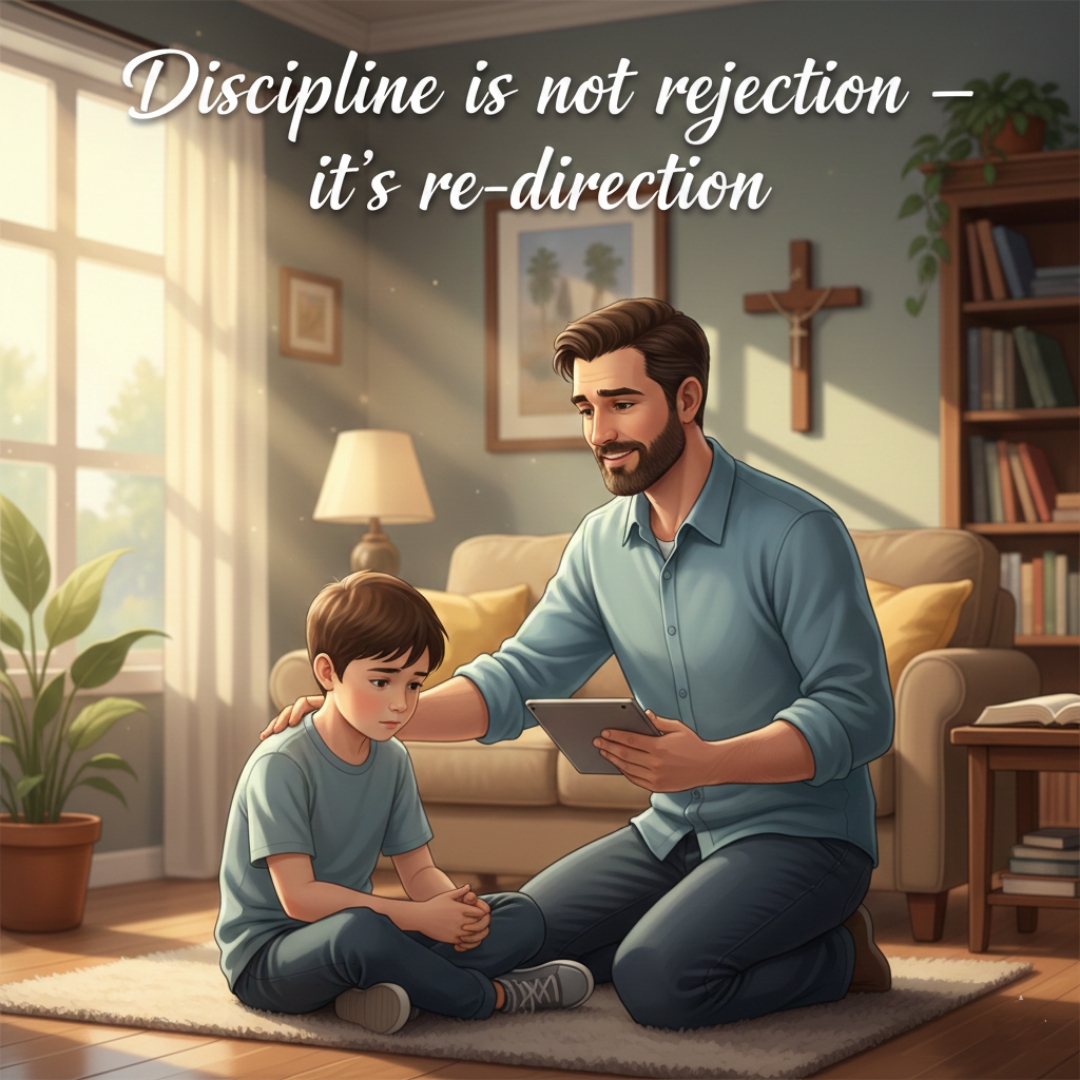
Parenting is one of the most sacred ministries on earth. As we guide our children, let us remember: discipline is not rejection, it’s redirection. And just as God lovingly shapes us, so we are called to shape our children with patience, purpose, and prayer.
A gentle story that teaches children emotional calmness and parents the power of soft answers. Discover how anger melts into joy, just like butterflies.
Do you have a child who struggles with anger, quick temper, or arrogance? This simple story may be exactly what you need to teach emotional calm, gentleness, and self-control in a way a child will never forget.
Today’s parenting lesson comes wrapped in a tale, soft, simple, but powerful.
The Last Thousand Dragons
Long ago, the peaceful kingdom of Maruva was troubled by fire-breathing dragons. They were angry all the time, and whenever their temper rose, flames burst from their mouths, burning crops, scaring villagers, and darkening the skies.
But everything changed the day Sir Emmanuel, a brave but unusually kind knight, arrived.
Unlike others, he carried no sword, no spear, no shield.
Instead, he brought something strange:
A bag full of jokes… a handful of ice cream… and baskets of fruit.
When the first dragon roared at him, Emmanuel did the unexpected, he told the silliest joke he knew. The dragon blinked… then burst into uncontrollable laughter.
And as it laughed, the fire in its mouth went out.
Then he handed the dragon an ice cream cone.
“Try this,” he said softly, “instead of burning cows.”
The dragon tasted it, and sighed with delight.
“Mmm… this is better than fire!”
Soon, every dragon had traded their flames for joy. Their anger melted like ice under the sun… and one by one, each angry dragon transformed into a joyful, colorful butterfly.
And so the kingdom of Maruva was saved, not by violence, not by shouting, but by kindness, gentleness, and joy.
Teaching Point for Parents
This story is more than fantasy. It captures a powerful truth:
Joy can melt anger. Gentleness can break stubbornness. Kindness can tame arrogance.
Many times, our children don’t need fire-for-fire responses. They need “Sir Emmanuel moments”, calm words, warmth, humor, connection, and grace.
Just as Sir Emmanuel replaced fire with laughter, parents can replace tension with gentleness.
Scriptural Anchor — Proverbs 15:1
“A gentle answer turns away wrath, but a harsh word stirs up anger.”
This is God’s parenting wisdom in one sentence.
Prayer for Parents & Children
Lord, teach us to speak gently, to respond with peace instead of pressure, and to carry joy like a weapon of grace. Help our children learn emotional calmness and help us model it first. Amen.
Feed Talk (Questions to Ask Your Child)
How did Sir Emmanuel defeat the dragons without fighting?
What can you do instead of getting angry?
What gentle phrase can you use when you feel upset?
Call to Action for Parents
Today, teach your child just one gentle phrase: ✔ “I’m sorry.” ✔ “Let’s talk.” ✔ “Can we be friends again?” ✔ “I need a moment, please.”
Show them exactly how to use it.
Model it yourself, just like Sir Emmanuel.
Bedtime Close
And that’s how Sir Emmanuel turned fire into butterflies. Rest well tonight, and may God fill your home with peace, gentleness, and joy.
“Thus saith the LORD, thy Redeemer, the Holy One of Israel; I am the LORD thy God which teacheth thee to profit, which leadeth thee by the way that thou shouldest go.” – Isaiah 48:17 (KJV)
God, the Perfect Teacher
In Isaiah 48:17, God reminds His people that He is not only their Redeemer but also their Teacher and Guide. The Hebrew word translated “teacheth” (limmēd) carries the sense of training, disciplining, and correcting. It’s more than sharing information; it’s about shaping character.
That is why some old Bible notes explain it as “the rod being an oriental incentive.” In biblical (Eastern) culture, the rod was a recognized symbol of discipline, not merely for punishment, but as a tool of guidance and correction. Shepherds used rods to guide sheep, and parents used them to train children. Discipline was seen as a loving way to lead toward maturity.
God’s Teaching Includes Correction
God’s method of teaching His children mirrors this principle. He instructs us through His Word (2 Timothy 3:16), but He also corrects us when we go astray. Hebrews 12:6 puts it plainly:
“For whom the Lord loveth He chasteneth, and scourgeth every son whom He receiveth.”
Just as earthly fathers discipline their children out of love (Proverbs 13:24), God disciplines us so we can profit, so our lives reflect His purpose. His correction is never to destroy, but to restore.
Parenting in Light of God’s Example
As parents, we are called to follow God’s model:
Instruction with Love: “And these words, which I command thee this day, shall be in thine heart: And thou shalt teach them diligently unto thy children…” (Deuteronomy 6:6–7).
Correction with Consistency: “Foolishness is bound in the heart of a child; but the rod of correction shall drive it far from him.” (Proverbs 22:15).
Guidance with Patience: “Train up a child in the way he should go: and when he is old, he will not depart from it.” (Proverbs 22:6).
The “rod” in modern parenting may not always be physical; it can also be firm boundaries, consistent discipline, or consequences that lovingly guide a child back to the right path.
A Shepherd’s Example
The Psalmist says: “Thy rod and thy staff they comfort me.” (Psalm 23:4). Notice that the rod brings comfort, not fear. A shepherd uses the rod to correct, defend, and protect the sheep. In the same way, godly parenting involves both nurturing and correcting.
Discipline, when done in love, provides security and clarity. It tells a child: “I love you enough not to leave you in your error.”
A Simple Illustration
A father once walked with his little son near a busy road. The child, excited by the sight of cars, tried to run ahead. The father quickly pulled him back by the hand and firmly said, “Stay beside me.” The boy frowned at first, but later, when he saw how fast the cars zoomed by, he understood his father’s correction was for his safety.
That’s how God’s rod works. His correction may feel restrictive in the moment, but it is always for our protection and profit. Parents must mirror this, guiding children firmly yet lovingly, for their good.
Key Takeaway for Parents
Godly parenting requires a balance: words that instruct and actions that correct.To truly teach a child, we must combine guidance with discipline, love with correction, and truth with grace.
The First Step to Godly Parenting
Before you can raise godly children, you must first be a child of God yourself. The first step to godly parenting is surrendering your life to Jesus, the Great Shepherd, and allowing Him to guide you.
If you have not yet given your life to Christ, you can do so right now. Pray this simple prayer from your heart:
🙏 Salvation Prayer
Lord Jesus, I come to You today. I know that I am a sinner, but I believe You died for me and rose again. I ask You to forgive me of all my sins and come into my heart. Be my Lord and Savior. From today, I choose to follow You. Thank You for saving me. Amen.If you prayed that prayer sincerely, you are now a child of God. Let Him lead you as you lead your children, and He will teach you the way to go.
If you prayed that prayer sincerely, you are now a child of God. Let Him lead you as you lead your children, and He will teach you the way to go.
✨ Closing Thought
God’s rod is not for destruction, but for direction. Jesus Himself is the Rod of correction: “And there shall come forth a rod out of the stem of Jesse…” (Isaiah 11:1). He is also the Word of God made flesh: “In the beginning was the Word, and the Word was with God, and the Word was God. The same was in the beginning with God… In Him was life; and the life was the light of men.” (John 1:1–5).
For parents, this means that Jesus, the living Word, is the divine standard and guide for shepherding children in God’s way. The Bible is not just a book of advice; it is the Word of God in print, required for godly parenting. As we allow Christ, the Rod and the Word, to shape us, we will be equipped to shape our children for His glory.
“Death and life are in the power of the tongue: and they that love it shall eat the fruit thereof.” – Proverbs 18:21 (KJV)
Have you ever said something to your child or grandchild, only to realize later that it cut deeper than you intended? Words shape hearts, and in parenting, they carry eternal weight.
Ten-year-old Sheyi dreaded each time his mother sent him to his grandmother’s house. Though his grandmother loved him, her sharp tongue left wounds that her hugs couldn’t heal.
“Get your bum off that couch and play soccer, ya sack of taters,” she once said. She thought Sheyi was too young to understand her lingo—but he understood every word, and it pierced his heart.
This story is a reminder that, as parents and caregivers, the words we speak can either build up or tear down. Godly parenting calls us to be intentional with our words, to nurture with grace, and to guide with wisdom rooted in Scripture.
The Power of Words in Godly Parenting
God’s Word makes it clear: our tongue has power. Sheyi’s grandmother didn’t mean to harm him, but her careless words created insecurity. Similarly, when parents or caregivers speak harshly, they unknowingly plant seeds of rejection, fear, or self-doubt.
“Pleasant words are as an honeycomb, sweet to the soul, and health to the bones.” – Proverbs 16:24
“Let no corrupt communication proceed out of your mouth, but that which is good to the use of edifying, that it may minister grace unto the hearers.” – Ephesians 4:29
As godly parents, we are called to choose uplifting language that shapes a child’s heart in truth, love, and encouragement.
Bridging the Generational Gap with Grace
Grandparents often raise children differently than parents do today. Each generation has its values, struggles, and blind spots. But Scripture reminds us to honor our parents:
“Honour thy father and thy mother: that thy days may be long upon the land which the Lord thy God giveth thee.” – Exodus 20:12
Parents play a bridge role between children and grandparents:
Teaching children to respect elders.
Guiding grandparents to understand today’s challenges.
Creating a culture of open, gracious communication.
This ensures children grow up with both roots of tradition and wings of understanding.
Teaching Children Their Identity in Christ
Sheyi’s mother gave him the phrase “metabolically challenged” to help him cope. While creative, Scripture gives us an even stronger identity to stand on. A child’s worth is not in size, looks, or abilities but in being fearfully and wonderfully made by God.
“I will praise thee; for I am fearfully and wonderfully made: marvellous are thy works; and that my soul knoweth right well.” – Psalm 139:14
“For we are his workmanship, created in Christ Jesus unto good works…” – Ephesians 2:10
Parents must constantly affirm children’s God-given identity. When children know who they are in Christ, negative words lose their power.
Practical Biblical Parenting Tips for Encouraging Speech
Pray before you speak: Ask God for wisdom (James 1:5).
Replace criticism with correction in love: Instead of saying, “You’re lazy,” say, “I believe you can do better because God has given you strength.”
Affirm daily: Speak blessings over your children every morning (Numbers 6:24–26).
Teach empathy: Help children understand how their words affect others (Matthew 7:12).
Creating a Home of Edification
Godly parenting isn’t about perfection—it’s about intention. A Christ-centered home must be a haven of encouragement, not a battlefield of harsh words.
“Fathers, provoke not your children to wrath: but bring them up in the nurture and admonition of the Lord.” – Ephesians 6:4
“But speaking the truth in love, may grow up into him in all things, which is the head, even Christ.” – Ephesians 4:15
When children feel valued, loved, and heard, they will thrive not just emotionally, but spiritually.
Conclusion & Encouragement
Sheyi’s story reminds us that words weigh more than we realize. As godly parents, grandparents, and caregivers, let us lean on the wisdom of God’s Word to speak life into our children. May our homes be filled with words of hope, encouragement, and truth that reflect the heart of Christ.
Prayer for Parents
“Lord, set a guard over my lips. Let my words be seasoned with grace, full of truth, and rich in love. Help me speak life into my children and guide them in the way they should go. In Jesus’ name, Amen.”
Call to Action
💬 What are some words of encouragement you speak over your children?
Share them in the comments—I’d love to hear from you!
📢 If this post blessed you, share it with another parent, grandparent, or caregiver who needs encouragement today.
Remain Ever Blessed
Loading Comments...
Create your own website, free on WordPress.com.Create your own website.




 Children are especially vulnerable to emotional harm. Needless threats, constant name-calling, humiliation, negative comparisons with others, insults, and degrading language can deeply affect how a child sees themselves and relates to others.
 Godly parenting involves more than taking children to church or teaching them Bible verses. It means showing the character of Christ in everyday relationships.