
The Story
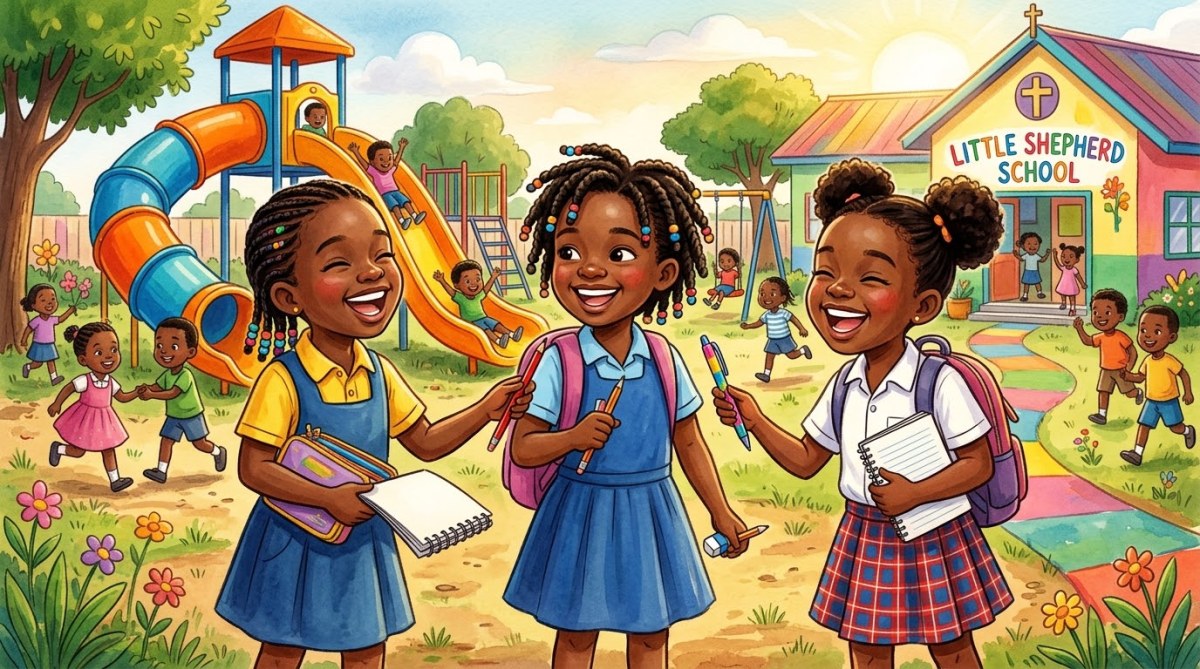
In a lively neighbourhood called Sunny Street lived three girls named Jemima, Abigail, and Matilda.
They lived close to one another.
They went to the same school.
They even played in the same playground.
But there was one tiny problem.
They did not get along.
Not a little bit.
They argued about almost everything.
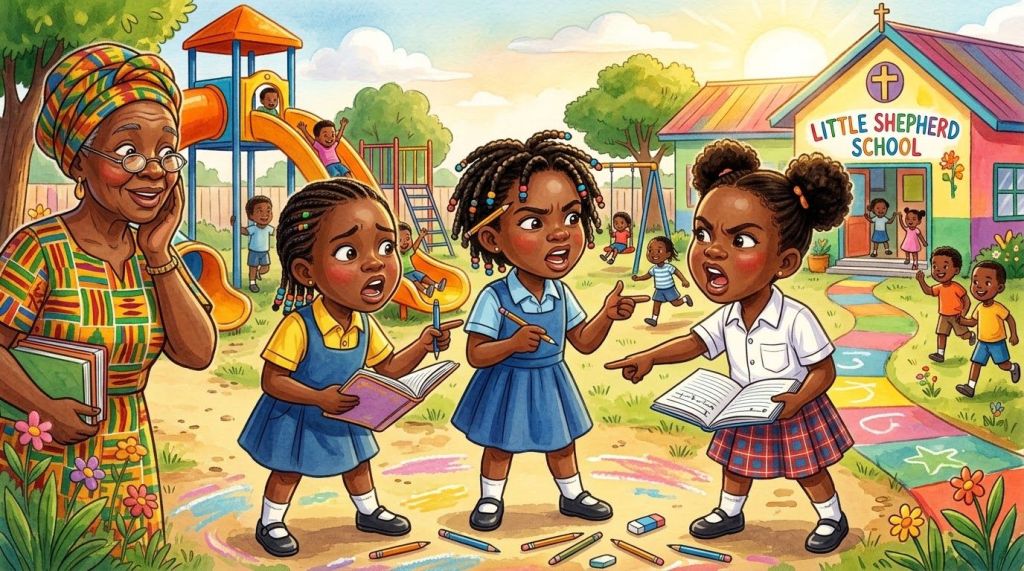
“The answer is twelve!” Jemima would say.
“No, it’s fourteen!” Matilda would reply.
“Both of you are wrong!” Abigail would announce.
Then Jemima and Matilda would turn to her.
“What is your answer?”
Abigail would blink.
“I haven’t done the question yet.”
“ABIGAIL!”
Abigail had a special talent.
She loved knowing everybody else’s business.
If Jemima whispered to Matilda, Abigail wanted to know what they were whispering about.
If Matilda opened her schoolbag, Abigail wanted to know what was inside.
And if someone said, “This is a secret,” Abigail’s ears suddenly became bigger than two satellite dishes.
“What secret?” she would ask.
“Abigail, mind your business!” the girls would shout.
But that was not the only problem.
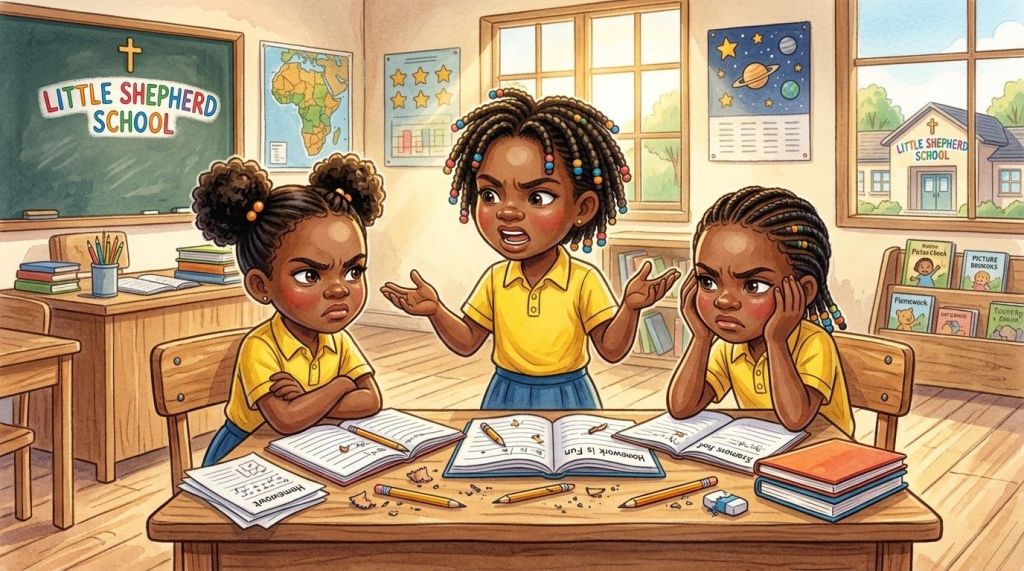
At school, they sometimes broke each other’s pencils during arguments.
At playtime, they argued over whose turn it was to use the slide.
“I was here first!”
“No, I was!”
“Move!”
“You move!”
Sometimes the teacher had to look over and say, “Girls!”
And immediately, all three would become as quiet as three sleeping kittens.
But one day, something different happened.
The teacher gave the class some difficult homework.
Matilda looked at the questions.
Then she looked at Jemima.
Jemima was very good at schoolwork. She was clever, but she never used her cleverness to make other children feel small.
Matilda walked over to her.
“Jemima, please, can you help me with this question?”
Abigail quickly joined them.
“Me too, please.”
Jemima smiled.
“Of course.”
Matilda looked at Abigail.
“You know, Jemima is actually the smartest of us.”
Abigail nodded.
“Yes. She’s a total nerd!”
Jemima laughed.
“Thank you… I think?”
They all laughed.
Jemima patiently explained the homework without showing off or making them feel silly.
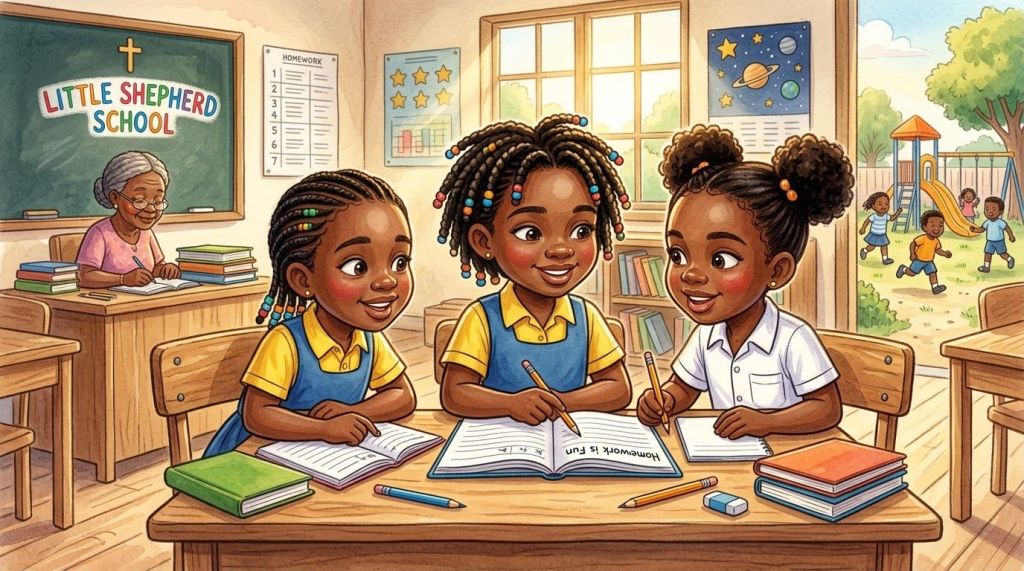
For the first time in a long while, the three girls sat together without arguing.
They discovered something surprising.
They actually enjoyed being together.
A week later, the girls had a playdate.
They played games, shared snacks, told funny stories, and laughed until their cheeks hurt.
Abigail even tried to tell a joke and forgot the ending.
“Wait,” she said. “I know there was supposed to be something funny here.”
“Maybe the joke went on holiday,” Matilda said.
Everyone burst out laughing.
The next day at school, something had changed.
Jemima lent Matilda a pencil.
Matilda shared her ruler with Abigail.
Abigail gave Jemima some of her coloured pencils.
At playtime, they took turns on the slide.
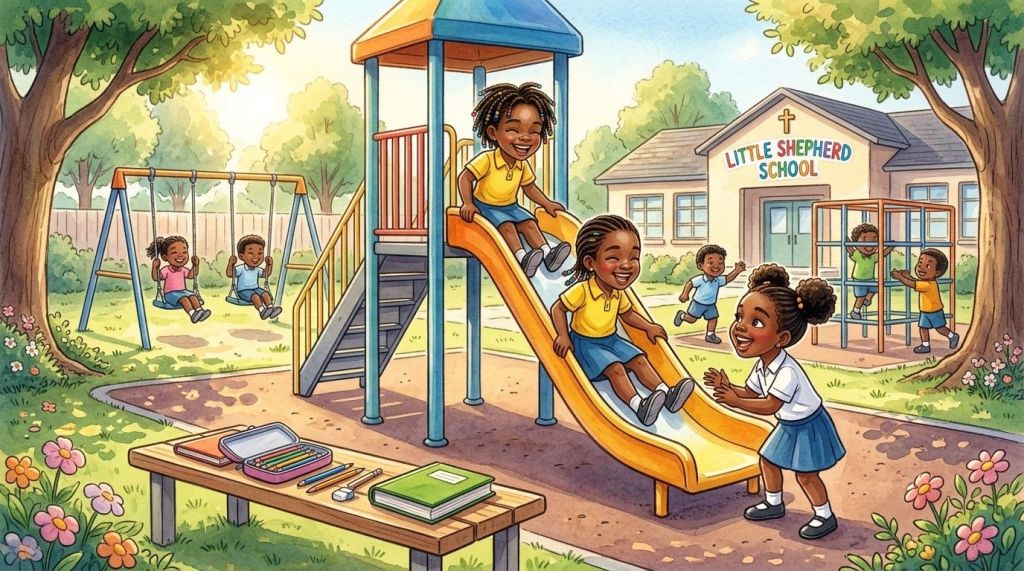
“Your turn.”
“Then my turn.”
“Then Abigail’s turn.”
“Finally!” Abigail shouted. “A slide schedule!”
They laughed and played together.
There were no more broken pencils from angry arguments.
No more fighting over every little thing.
And Abigail learned that sometimes it was better to let other people’s matters remain their matters.
Of course, she still liked asking questions.
But now she was learning when to ask and when to simply mind her own business.
Jemima, Abigail, and Matilda soon became known as JAM.
J for Jemima.
A for Abigail.
M for Matilda.
Three girls.
Three different personalities.
One wonderful friendship.
And always remember Jesus Love You.
What We Can Learn
- Kindness helps friendships grow.
- We do not have to agree about everything to be friends.
- Taking turns and sharing help everyone enjoy playing together.
- Being clever is wonderful, but helping others without showing off is even better.
- We should learn when something is our business and when it is better to give others space.
A Teaching Point for Parents
Friendships among children can sometimes involve arguments, teasing, competition, or difficulty taking turns. These moments can become opportunities to teach children practical kindness.
Help children learn simple habits such as listening, apologising when they hurt someone, taking turns, sharing appropriately, and respecting other people’s personal space and conversations.
Also remind children that being good at something is not a reason to look down on others. True knowledge should make us willing to help, not eager to show off.
Scripture to Remember
“And be ye kind one to another, tenderhearted, forgiving one another, even as God for Christ’s sake hath forgiven you.” Ephesians 4:32, KJV
Kindness, forgiveness, and a caring heart can help us build healthier friendships and relationships with others.
Bedtime Prayer
Dear Jesus,
Thank You for my friends and the people around me. Help me to be kind, patient, helpful, and willing to forgive. Teach me to share, take turns, listen to others, and know when to give people space. Help me to use what I know to help others and never to make them feel small. In Jesus’ name, Amen.
Talk About It
- Why did Jemima, Abigail, and Matilda argue so much?
- How did Jemima help the other girls?
- What changed after their playdate?
- Why is taking turns important?
- What does it mean to mind your own business?
- How can you show kindness to a friend this week?
One Little Thing to Remember
Kindness turns ordinary friendships into beautiful ones.
More Stories for Children
Enjoy more fun, faith-filled stories that help children grow in godly character.
Explore More Stories for Children →
God’s Word, Foundation for Shaping Tomorrow

