The Rod as an Oriental Incentive: God’s Model for Parenting

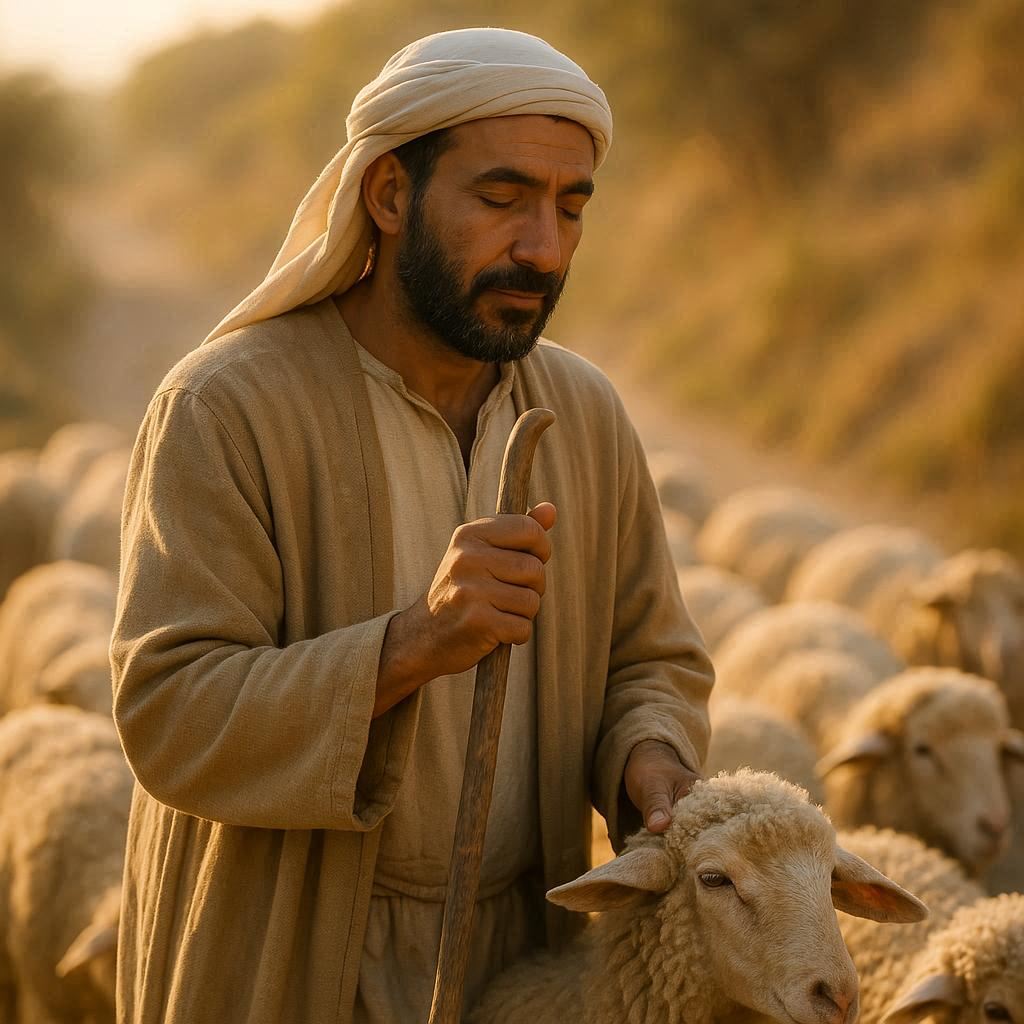
A peaceful Middle Eastern shepherd holding a rod, gently guiding sheep along a safe path.

“Thus saith the LORD, thy Redeemer, the Holy One of Israel; I am the LORD thy God which teacheth thee to profit, which leadeth thee by the way that thou shouldest go.” – Isaiah 48:17 (KJV)

God, the Perfect Teacher

In Isaiah 48:17, God reminds His people that He is not only their Redeemer but also their Teacher and Guide. The Hebrew word translated “teacheth” (limmēd) carries the sense of training, disciplining, and correcting. It’s more than sharing information; it’s about shaping character.

That is why some old Bible notes explain it as “the rod being an oriental incentive.” In biblical (Eastern) culture, the rod was a recognized symbol of discipline, not merely for punishment, but as a tool of guidance and correction. Shepherds used rods to guide sheep, and parents used them to train children. Discipline was seen as a loving way to lead toward maturity.

God’s Teaching Includes Correction

God’s method of teaching His children mirrors this principle. He instructs us through His Word (2 Timothy 3:16), but He also corrects us when we go astray. Hebrews 12:6 puts it plainly:

“For whom the Lord loveth He chasteneth, and scourgeth every son whom He receiveth.”

Just as earthly fathers discipline their children out of love (Proverbs 13:24), God disciplines us so we can profit, so our lives reflect His purpose. His correction is never to destroy, but to restore.

Parenting in Light of God’s Example

As parents, we are called to follow God’s model:

  • Instruction with Love: “And these words, which I command thee this day, shall be in thine heart: And thou shalt teach them diligently unto thy children…” (Deuteronomy 6:6–7).
  • Correction with Consistency: “Foolishness is bound in the heart of a child; but the rod of correction shall drive it far from him.” (Proverbs 22:15).
  • Guidance with Patience: “Train up a child in the way he should go: and when he is old, he will not depart from it.” (Proverbs 22:6).

The “rod” in modern parenting may not always be physical; it can also be firm boundaries, consistent discipline, or consequences that lovingly guide a child back to the right path.

A Shepherd’s Example

The Psalmist says: Thy rod and thy staff they comfort me.” (Psalm 23:4). Notice that the rod brings comfort, not fear. A shepherd uses the rod to correct, defend, and protect the sheep. In the same way, godly parenting involves both nurturing and correcting.

Discipline, when done in love, provides security and clarity. It tells a child: “I love you enough not to leave you in your error.”

A Simple Illustration

A father once walked with his little son near a busy road. The child, excited by the sight of cars, tried to run ahead. The father quickly pulled him back by the hand and firmly said, “Stay beside me.” The boy frowned at first, but later, when he saw how fast the cars zoomed by, he understood his father’s correction was for his safety.

That’s how God’s rod works. His correction may feel restrictive in the moment, but it is always for our protection and profit. Parents must mirror this, guiding children firmly yet lovingly, for their good.

Key Takeaway for Parents

Godly parenting requires a balance: words that instruct and actions that correct.To truly teach a child, we must combine guidance with discipline, love with correction, and truth with grace.

The First Step to Godly Parenting

Before you can raise godly children, you must first be a child of God yourself. The first step to godly parenting is surrendering your life to Jesus, the Great Shepherd, and allowing Him to guide you.

If you have not yet given your life to Christ, you can do so right now. Pray this simple prayer from your heart:

🙏 Salvation Prayer

Lord Jesus, I come to You today. I know that I am a sinner, but I believe You died for me and rose again. I ask You to forgive me of all my sins and come into my heart. Be my Lord and Savior. From today, I choose to follow You. Thank You for saving me. Amen.If you prayed that prayer sincerely, you are now a child of God. Let Him lead you as you lead your children, and He will teach you the way to go.

If you prayed that prayer sincerely, you are now a child of God. Let Him lead you as you lead your children, and He will teach you the way to go.

✨ Closing Thought

God’s rod is not for destruction, but for direction. Jesus Himself is the Rod of correction: “And there shall come forth a rod out of the stem of Jesse…” (Isaiah 11:1). He is also the Word of God made flesh: “In the beginning was the Word, and the Word was with God, and the Word was God. The same was in the beginning with God… In Him was life; and the life was the light of men.” (John 1:1–5).

For parents, this means that Jesus, the living Word, is the divine standard and guide for shepherding children in God’s way. The Bible is not just a book of advice; it is the Word of God in print, required for godly parenting. As we allow Christ, the Rod and the Word, to shape us, we will be equipped to shape our children for His glory.

The Weight of Words: Godly Parenting and the Power of Speech

“Death and life are in the power of the tongue: and they that love it shall eat the fruit thereof.” – Proverbs 18:21 (KJV)

Have you ever said something to your child or grandchild, only to realize later that it cut deeper than you intended? Words shape hearts, and in parenting, they carry eternal weight.

Grandma's sharp tongue left wounds on her grandson-- godly parenting blog

Ten-year-old Sheyi dreaded each time his mother sent him to his grandmother’s house. Though his grandmother loved him, her sharp tongue left wounds that her hugs couldn’t heal.

“Get your bum off that couch and play soccer, ya sack of taters,” she once said. She thought Sheyi was too young to understand her lingo—but he understood every word, and it pierced his heart.

This story is a reminder that, as parents and caregivers, the words we speak can either build up or tear down. Godly parenting calls us to be intentional with our words, to nurture with grace, and to guide with wisdom rooted in Scripture.

The Power of Words in Godly Parenting

God’s Word makes it clear: our tongue has power. Sheyi’s grandmother didn’t mean to harm him, but her careless words created insecurity. Similarly, when parents or caregivers speak harshly, they unknowingly plant seeds of rejection, fear, or self-doubt.

“Pleasant words are as an honeycomb, sweet to the soul, and health to the bones.” – Proverbs 16:24

“Let no corrupt communication proceed out of your mouth, but that which is good to the use of edifying, that it may minister grace unto the hearers.” – Ephesians 4:29

As godly parents, we are called to choose uplifting language that shapes a child’s heart in truth, love, and encouragement.

Bridging the Generational Gap with Grace

Grandparents often raise children differently than parents do today. Each generation has its values, struggles, and blind spots. But Scripture reminds us to honor our parents:

“Honour thy father and thy mother: that thy days may be long upon the land which the Lord thy God giveth thee.” – Exodus 20:12

Parents play a bridge role between children and grandparents:

  • Teaching children to respect elders.
  • Guiding grandparents to understand today’s challenges.
  • Creating a culture of open, gracious communication.

This ensures children grow up with both roots of tradition and wings of understanding.

Teaching Children Their Identity in Christ

Sheyi’s mother gave him the phrase “metabolically challenged” to help him cope. While creative, Scripture gives us an even stronger identity to stand on. A child’s worth is not in size, looks, or abilities but in being fearfully and wonderfully made by God.

“I will praise thee; for I am fearfully and wonderfully made: marvellous are thy works; and that my soul knoweth right well.” – Psalm 139:14

“For we are his workmanship, created in Christ Jesus unto good works…” – Ephesians 2:10

Parents must constantly affirm children’s God-given identity. When children know who they are in Christ, negative words lose their power.

Practical Biblical Parenting Tips for Encouraging Speech

  • Pray before you speak: Ask God for wisdom (James 1:5).
  • Replace criticism with correction in love: Instead of saying, “You’re lazy,” say, “I believe you can do better because God has given you strength.”
  • Affirm daily: Speak blessings over your children every morning (Numbers 6:24–26).
  • Teach empathy: Help children understand how their words affect others (Matthew 7:12).

Creating a Home of Edification

Godly parenting isn’t about perfection—it’s about intention. A Christ-centered home must be a haven of encouragement, not a battlefield of harsh words.

“Fathers, provoke not your children to wrath: but bring them up in the nurture and admonition of the Lord.” – Ephesians 6:4

“But speaking the truth in love, may grow up into him in all things, which is the head, even Christ.” – Ephesians 4:15

When children feel valued, loved, and heard, they will thrive not just emotionally, but spiritually.

Conclusion & Encouragement

Sheyi’s story reminds us that words weigh more than we realize. As godly parents, grandparents, and caregivers, let us lean on the wisdom of God’s Word to speak life into our children. May our homes be filled with words of hope, encouragement, and truth that reflect the heart of Christ.

Prayer for Parents

“Lord, set a guard over my lips. Let my words be seasoned with grace, full of truth, and rich in love. Help me speak life into my children and guide them in the way they should go. In Jesus’ name, Amen.”

Call to Action

💬 What are some words of encouragement you speak over your children?

Share them in the comments—I’d love to hear from you!

📢 If this post blessed you, share it with another parent, grandparent, or caregiver who needs encouragement today.

Remain Ever Blessed

Design a site like this with WordPress.com
Get started