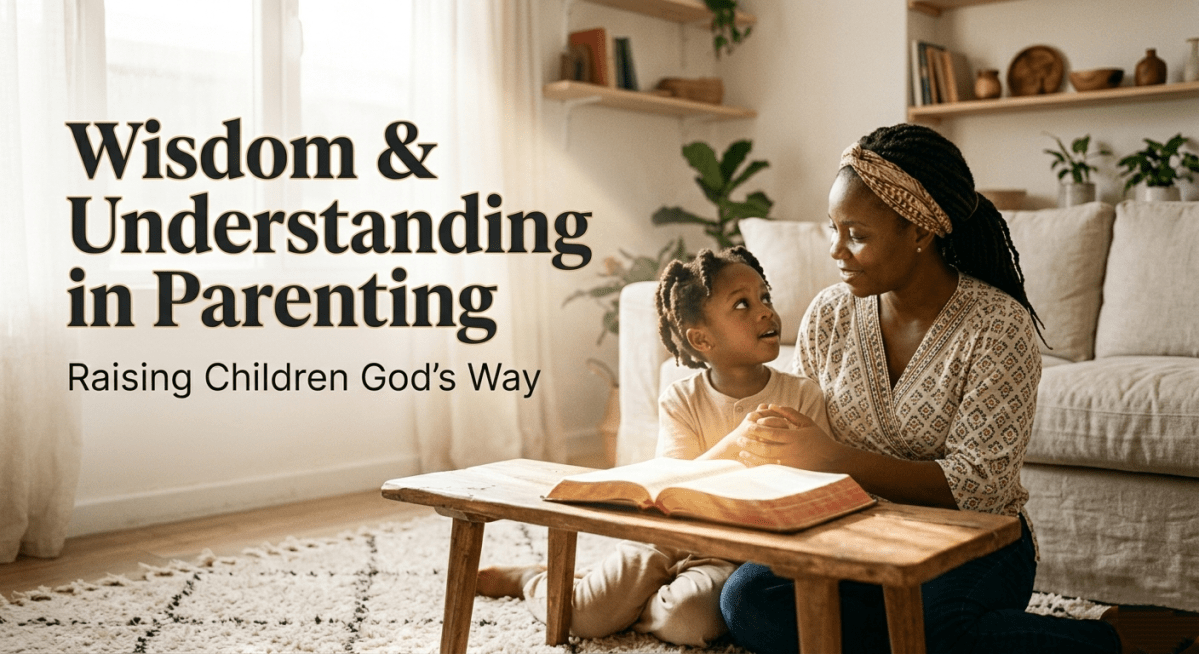
Learn practical, biblical ways to apply wisdom and understanding in godly parenting and raise children according to God’s design.
In a world full of parenting advice, opinions, and endless noise, one truth remains steady and unshaken: God’s way is still the best way.
But here’s the question many parents wrestle with quietly… How do I actually raise my child in a godly way?
The answer is found in two powerful companions that must never be separated: wisdom and understanding. If you’re navigating modern challenges, you may also find this helpful: Raising Godly Children in a Digital Age.
“Wisdom is the principal thing; therefore get wisdom: and with all thy getting get understanding.” — Proverbs 4:7
Wisdom: More Than Knowing—It’s Doing
Wisdom is knowing what to do and actually doing it. It is bringing God’s Word into everyday parenting moments—the noise, the mess, the discipline, and the love.
Knowledge is having a map. Wisdom is walking the road. And sometimes, that journey is shaped by what we say—see The Power of Words in Parenting.
“Wisdom in parenting is intentional obedience to God’s Word.”
Wisdom Makes a Demand
Wisdom calls for action. God does not give wisdom for decoration, but for application.
In parenting, this means choosing consistency, doing what is right even when it is hard, and seeking God daily. This connects closely with raising children through intentional discipleship, not just discipline.
“Do what God says, the way God says it, no matter how you feel.”
“Wisdom is proven by action, not knowledge alone.”
Understanding: The Missing Link
If wisdom tells you what to do, understanding teaches you how to do it.
Understanding helps you apply wisdom correctly, especially when dealing with different children and situations. It also plays a vital role in shaping how children receive correction and guidance.
“Understanding helps you apply wisdom correctly and effectively.”
Putting It Into Practice
Teach God’s Word daily
Live what you teach
Discipline with love
Know your child
Pray always
Be patient
Build a godly environment
“Wisdom shows you what to do. Understanding shows you how to do it. Consistency makes it fruitful.”
Parenting requires wisdom, grace, and God’s help. This prayer invites parents to seek God’s strength while praying for their children to discover His purpose and walk in His will.
Parenting is one of the greatest responsibilities God gives to us. It is a calling that requires patience, wisdom, grace, and constant dependence on God.
Many parents often wonder if they are doing enough or making the right decisions for their children. But the Bible reminds us that we are not meant to raise children by our own strength.
God invites us to seek His wisdom.
James 1:5
“If any of you lack wisdom, let him ask of God, that giveth to all men liberally, and upbraideth not; and it shall be given him.”
Jesus also assures us that when we seek God sincerely, He answers.
Matthew 7:7
“Ask, and it shall be given you; seek, and ye shall find; knock, and it shall be opened unto you.”
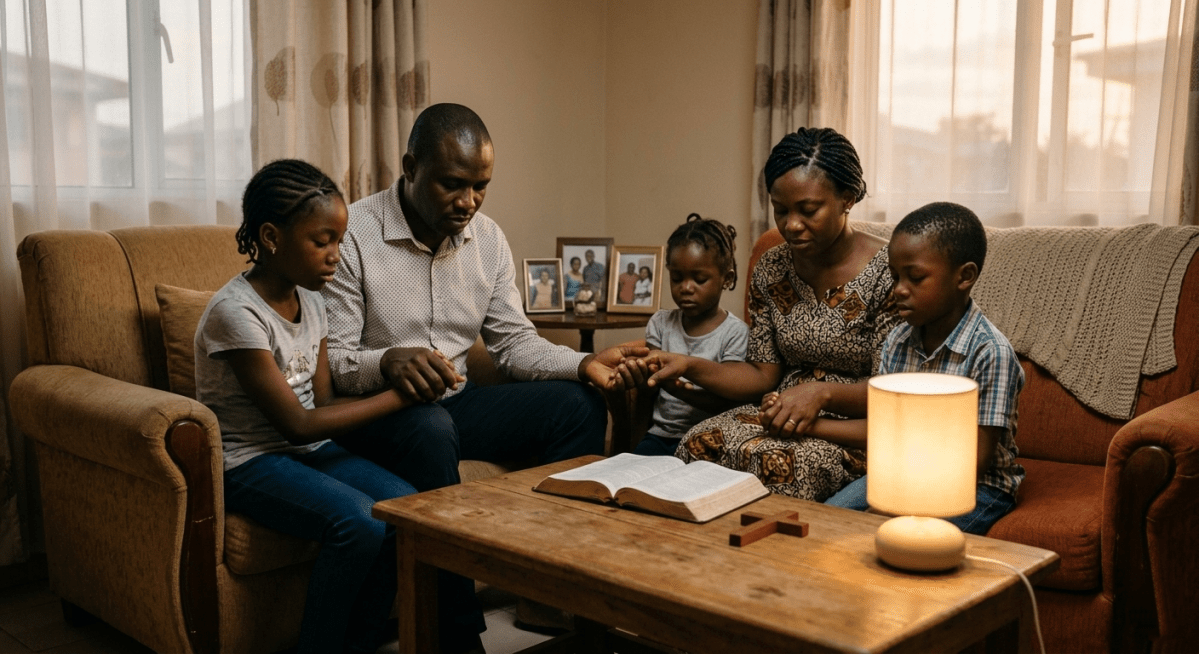
With this promise in mind, let us pray for ourselves as parents and for the precious children God has entrusted into our care.
Prayer for Parents: Grace and Empowerment
Heavenly Father,
We thank You for the gift of children. They are blessings from You and a responsibility we do not take lightly.
Lord, we acknowledge that raising godly children requires more than human wisdom. We need Your grace, Your strength, and Your guidance.
Give us patience when parenting becomes difficult. Grant us understanding hearts so we can guide our children with love and wisdom.
Help us to live as examples of faith, humility, kindness, and obedience to Your Word.
Let our homes be places where Your truth is taught, Your love is demonstrated, and Your presence is felt.
Empower us by Your Spirit to raise children who will love You and walk in Your ways.
Prayer for Our Children: Purpose and Direction
Father, we commit our children into Your hands.
You created them with a purpose, and we ask that their lives will unfold according to Your divine plan.
Help them grow to know You personally and develop a deep love for Your Word.
Give them the desire to read the Scriptures, understand Your truth, and practice Your will in their daily lives.
Protect their hearts and minds from harmful influences and lead them into paths of righteousness.
May they grow in wisdom, character, faith, and compassion.
Prayer for Wisdom in Parenting
Lord, Your Word tells us that if we lack wisdom, we should ask You.
Today we ask for wisdom in every parenting decision we make.
Teach us how to correct with love, instruct with patience, and guide our children in truth.
When we are confused or uncertain, remind us to seek You first.
Let our parenting reflect Your wisdom and not simply our emotions or fears.
Personal Supplication
Father, we also bring our personal needs before You.
You know every concern in our hearts, every challenge within our homes, and every silent prayer we carry.
We ask for Your help in every area of our lives.
Give us strength where we are weak, peace where there is worry, and hope where there is uncertainty.
We trust that as we ask, seek, and knock, You will answer according to Your perfect will.
Closing Prayer
Lord, we surrender our families into Your hands.
Guide us as parents.
Protect and direct our children.
Let our homes be places where Your Word is loved, Your presence is honored, and Your purpose is fulfilled.
In Jesus’ name, Amen.
Encouragement for Parents
If you are a parent reading this today, remember that you are not alone. God cares deeply about your family and is always ready to guide you.
Continue to pray for your children, teach them God’s Word, and trust God with their future.
Read More Christian Parenting Resources
If this prayer encouraged you, you can read more articles about raising godly children here:
Share this article with another parent who may need encouragement today.
A Short Prayer of Salvation
If you have not yet received Jesus Christ as your Lord and Savior, you can begin that relationship today.
Lord Jesus, I come to You today just as I am.
I believe You died for my sins and rose again.
Please forgive my sins and come into my life.
Be my Lord and Savior from today.
Help me walk in Your ways and live according to Your Word.
In Jesus’ name, Amen.
If you prayed this prayer sincerely, the Bible says:
2 Corinthians 5:17
“Therefore if any man be in Christ, he is a new creature: old things are passed away; behold, all things are become new.”
In a world that redefines love, Scripture provides a clear blueprint for parenting rooted in God’s unconditional love and obedience to His Word. Discover how Proverbs 22:6, John 14:15, and other key Scriptures guide parents to raise children in truth, grace, and Faith, beginning with a personal relationship with Christ.
The Foundation: God’s Unconditional Love
Scripture makes it clear that God’s love is not based on our performance. As it is written in Romans 5:8:
“But God commendeth his love toward us, in that, while we were yet sinners, Christ died for us.”
This is the model: a love that is given freely, not earned. It is a perfect love that, as 1 John 4:18 tells us:
“There is no fear in love; but perfect love casteth out fear: because fear hath torment. He that feareth is not made perfect in love.”
This truth directly addresses the anxieties of parenting. When we are gripped by fear and doubt about our children’s future or our own abilities, the answer is to place our absolute, unreserved trust in the God who loves us and our children perfectly. This trust in Him is the very evidence of that perfect love at work in us.
The Definition: Love is Obedience
Jesus gave us a clear definition of love in action. In John 14:15, He said:
“If ye love me, keep my commandments.”
This moves love from a sentiment to a commitment. Our love for God is proven by our willingness to follow His Word. This is the hinge upon which everything else swings. We cannot claim to love God while ignoring the instructions He has given us for every area of life, including the raising of our children. The Apostle John reiterates this in 1 John 5:3:
“For this is the love of God, that we keep his commandments: and his commandments are not grievous.”
The Command: Train Up a Child
So, if our love for God is shown by obeying His Word, we must ask: What does His Word command regarding our children? Proverbs 22:6 gives us the clear directive:
“Train up a child in the way he should go: and when he is old, he will not depart from it.”
This training is not merely academic instruction; it is the daily, intentional work of:
Imparting God’s Word: Teaching them Scripture, His commands, and His promises, as Deuteronomy 6:6-7 instructs:
“And these words, which I command thee this day, shall be in thine heart: And thou shalt teach them diligently unto thy children.”
Modeling God’s Ways: Living out that Word authentically in front of them—demonstrating forgiveness, grace, honesty, and kindness.
Guiding with Truth: Using God’s Word as the standard for right and wrong.
This active training is the tangible expression of our love for our children.
The Result: A Light Burden
The world offers countless methods, philosophies, and “software” for raising children. But these human systems are flawed and often leave parents exhausted, anxious, and burdened. In contrast, God’s way is simple and straightforward. As we read in Matthew 11:30:
“For my yoke is easy, and my burden is light.”
When we parent according to His Word, the impossible weight of being God to our children is lifted. We are responsible for our obedience—to train them in His love. He is responsible for the outcome.
The Promise: He is Faithful
Parenting can be daunting. The path is not always rosy. But there is no software or worldly philosophy that can produce godliness in a child. Godliness is the fruit of a relationship with God, cultivated in a home where parents love God by obeying His Word and love their children by training them in it.
Therefore, in this season of love and always, the call to every parent is clear:
Go to the Scriptures. As 2 Timothy 3:16-17 reminds us:
“All scripture is given by inspiration of God, and is profitable for doctrine, for reproof, for correction, for instruction in righteousness: That the man of God may be perfect, thoroughly furnished unto all good works.”
Meditate on God’s Word. Let it shape your heart and calm your fears, just as Joshua 1:8 commands:
“This book of the law shall not depart out of thy mouth; but thou shalt meditate therein day and night, that thou mayest observe to do according to all that is written therein: for then thou shalt make thy way prosperous, and then thou shalt have good success.”
Ask Him in prayer. As James 1:5 promises:
“If any of you lack wisdom, let him ask of God, that giveth to all men liberally, and upbraideth not; and it shall be given him.”
Pray:
“God, what do you want me to do concerning this child? Show me the way.”
When we do this—when we place our absolute trust in Him and parent the way He has commanded—we can rest in the promise that He is ever faithful. As Lamentations 3:22-23 declares:
“It is of the Lord’s mercies that we are not consumed, because his compassions fail not. They are new every morning: great is thy faithfulness.”
This is the easiest way to parent, not because it requires no work, but because we are no longer carrying the burden alone. We are walking in step with the God whose love never fails, and whose commandments lead to life.
The First Step: A Prayer for Salvation
Before we can parent in God’s love, we must first know His love personally. The foundation of everything we have discussed begins with a relationship with Jesus Christ. If you have never invited Him into your life, or if you want to recommit your heart to Him today, the first step is accepting Jesus Christ as your Lord and Savior. His Word assures us in Romans 10:9-10:
“That if thou shalt confess with thy mouth the Lord Jesus, and shalt believe in thine heart that God hath raised him from the dead, thou shalt be saved. For with the heart man believeth unto righteousness; and with the mouth confession is made unto salvation.”
If you want Jesus in your life, pray this prayer from your heart:
Lord Jesus, I come to You today just as I am. I believe that You died for me on the cross and rose again from the dead. I confess with my mouth that You are Lord, and I believe in my heart that God raised You from the dead. I ask You to forgive me of all my sins. Come into my heart and be my personal Lord and Savior. Take control of my life and help me to walk in Your ways from this day forward. Teach me to love You through obedience to Your Word, and guide me as I seek to raise my children in Your love. Thank You for Your unconditional love and Your faithfulness. In Jesus’ name, Amen.
If you prayed that prayer and meant it in your heart, welcome to the family of God! 2 Corinthians 5:17 says:
“Therefore if any man be in Christ, he is a new creature: old things are passed away; behold, all things are become new.”
You are now a child of God, and He will never leave you nor forsake you. Now, go forth and parent in the power of His perfect love.
May this truth bring freedom, peace, and salvation to every parent who reads it.
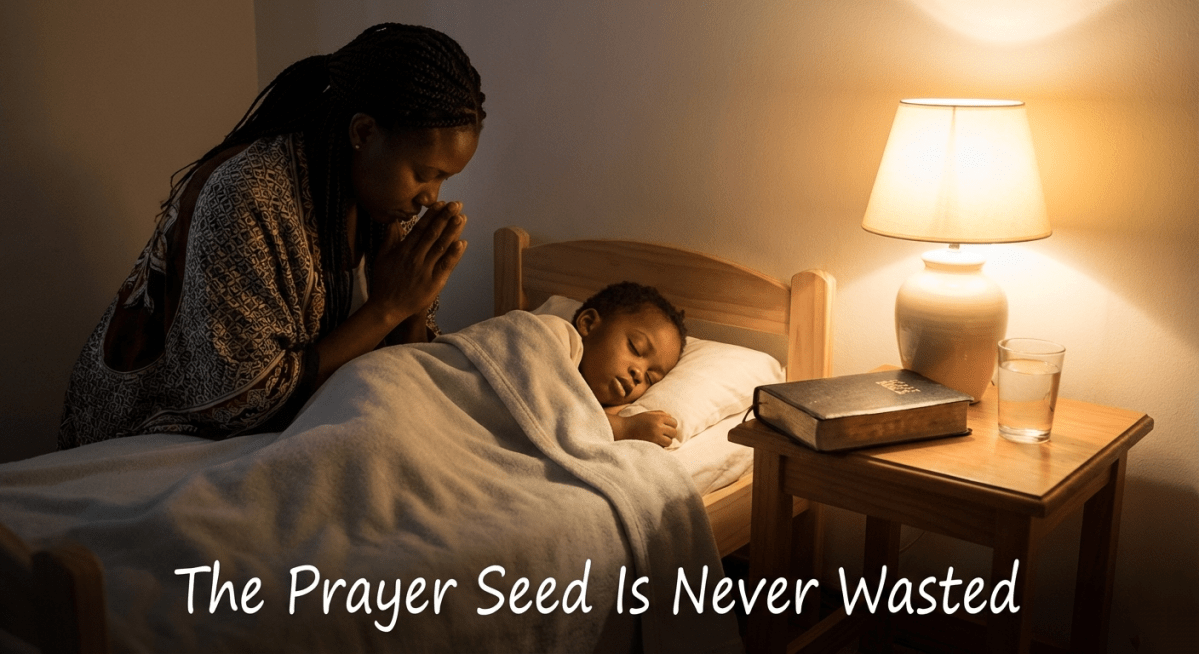
A mother prayed over her aggressive son when nothing seemed to change. Months later, transformation came. Discover why the prayer seed sown in the lives of children is never wasted and how Scripture assures parents that God’s Word always bears fruit.
Why Praying Parents Always Win in the End
A friend once shared her heart with me.
Her son had suddenly changed. He became aggressive. Disobedient. Restless. It felt like something had shifted overnight.
She was tired. Concerned. Confused.
I told her something simple:
“Pray. Keep praying. The seed of prayer is never wasted.”
So she did.
She prayed when she saw no change.
She prayed when his behavior seemed worse.
She prayed when discouragement whispered, “It’s not working.”
But something was happening beneath the surface.
Over time, that same boy transformed. His aggression softened. His heart changed. Peace returned.
The Word Is a Seed
Isaiah 55:11 says:
“So shall My word be that goeth forth out of My mouth: it shall not return unto Me void…”
God’s Word is never empty. When spoken in prayer, it becomes a seed planted in the soil of a child’s heart.
Even when we don’t see it sprouting immediately.
Jesus explained this mystery in Mark 4:26–27:
“The kingdom of God is as if a man should cast seed into the ground… and the seed should spring and grow up, he knoweth not how.”
Prayer works underground before it works outward.
Rooted Downward, Bearing Fruit Upward
When you pray Scripture over your child, you are planting:
Identity
Destiny
Spiritual protection
Godly character
It may look like nothing is happening.
But seeds do their best work in darkness.
Psalm 126:5 reminds us:
“They that sow in tears shall reap in joy.”
A Word to Every Parent
If your child is aggressive, disobedient, withdrawn, or confused — do not give up.
The seed you sow in prayer is not wasted. It is taking root.
A Short Prayer for Parents
Father, strengthen every weary parent. Let every prayer sown over our children take root. Cause righteousness to spring up. In Jesus’ name, Amen.
A Salvation Call
The first seed every parent must sow is their own surrender to Christ.
If you desire transformation in your home, begin with your heart.
Pray:
“Lord Jesus, I surrender my life to You. Forgive my sins. Teach me to walk in Your Word. Help me raise my children according to Your will. Be Lord over my home. In Jesus’ name, Amen.”
Keep praying. Keep sowing. The prayer seed is never wasted.
A father once excused his daughter’s bad habits until they embarrassed him in public. That moment revealed a powerful truth: correction delayed is correction denied. This article explores the Christian principle of withdrawal privilege, a loving, biblical approach to discipline that teaches responsibility, restores respect, and mirrors the way God trains His own children with grace and boundaries.
A Lesson from My Uncle’s Story
I remember once when one of my uncles would always refuse to correct his daughter about slapping adults as a way of playing. Whenever anyone cautioned him, he would shrug it off and say, “She’s just a child.” For a while, it seemed harmless, just innocent fun.
But one day, during a family gathering, that same little girl playfully slapped her father in public. This time, it was no longer funny. He felt deeply embarrassed. Sadly, it was too late to correct her in that moment, because what he had once excused had now become her habit.
That experience taught me something vital: correction delayed is correction denied. In our effort to be loving and gentle, we sometimes forget that godly love includes discipline. Parenting is not only about showing affection, it’s also about guiding behavior with firmness and grace.
“Love without correction breeds destruction; correction without love breeds rebellion.”
Understanding Withdrawal Privilege
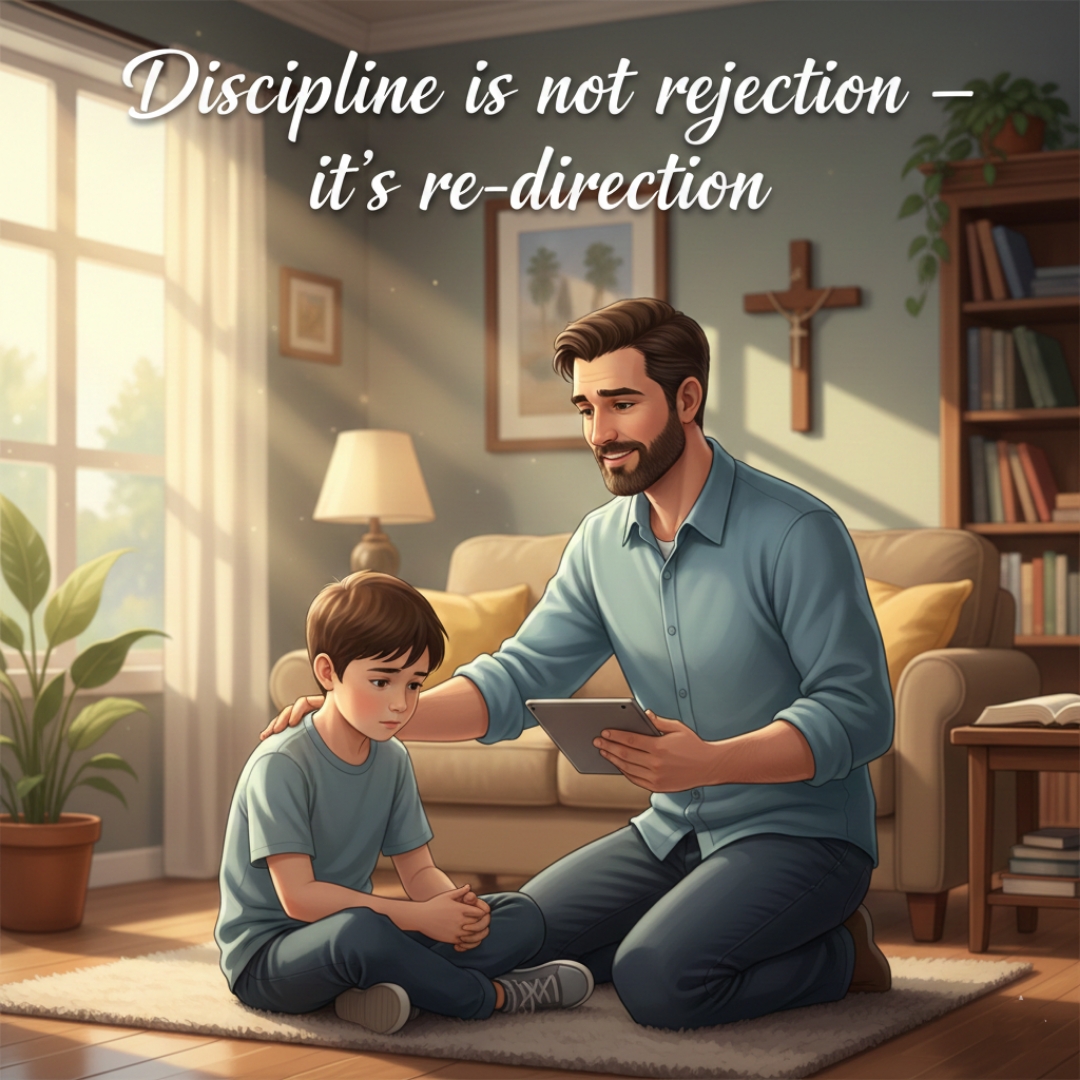
In Christian parenting, withdrawal privilege means temporarily removing certain benefits or freedoms when a child disobeys or fails to take responsibility. It’s not done in anger, but as a gentle lesson in accountability and growth.
For example, if a teenager neglects their homework, they may lose screen time until they complete it. If a younger child disrespects instructions, they might lose playtime or a favorite treat. The goal isn’t to hurt them, but to help them understand that privileges are earned through responsibility, just as blessings often follow obedience in our relationship with God.
A beautiful example is seen in Jesus’ early life. When He stayed behind in the temple at age twelve (Luke 2:41–52), His parents, Joseph and Mary, were worried and searched for Him for three days. When they finally found Him, Mary lovingly corrected Him, saying,
“Son, why have You done this to us? Look, Your father and I have sought You anxiously.” — Luke 2:48 (NKJV)
Jesus’ response was respectful, yet Scripture notes something significant afterward:
“Then He went down with them and came to Nazareth, and was subject to them.” — Luke 2:51
That gentle correction restored understanding and order. The Bible never recorded Him repeating such an act. It shows us that even in love, parents must teach boundaries, and that loving correction can prevent future errors.
The Biblical Foundation for Discipline
In the Bible, discipline means doing what is right, not what we like. It’s not about punishment but about training, helping children build habits that please God and strengthen character.
“For whom the Lord loves He disciplines, and He scourges every son whom He receives.” — Hebrews 12:6 (NKJV)
God’s discipline is an expression of love, not rejection. Sometimes, He allows us to experience the consequences of our actions so we can grow in wisdom. When we drift from His will, He may withhold certain blessings, not out of anger, but to draw us back to the right path.
Think of the Prodigal Son (Luke 15:11–24). The father allowed his son to leave and experience the loss of privileges that came with rebellion. Yet, when the son repented, the father restored him completely. That’s divine discipline, correction with the goal of restoration.
The Purpose Behind Withdrawing Privileges
Every act of godly discipline should aim to heal, not to hurt. When parents withdraw privileges, it should be done prayerfully, with a heart focused on growth, not frustration.
Withdrawal of privileges teaches:
Responsibility: Children learn that actions have consequences.
Respect: They begin to honor rules and authority.
Restoration: They realize that obedience restores lost privileges, just as repentance restores relationship with God.
“Withdrawal privilege should never say ‘You’re unloved,’ but ‘I love you too much to let you continue in this behavior.’”
Practical Ways to Apply Withdrawal Privilege (with Scripture)
1. Be Clear and Consistent — Proverbs 29:15
“The rod and rebuke give wisdom, but a child left to himself brings shame to his mother.”
Children thrive when expectations are clear. Define rules and link them to privileges. For instance: “If you complete your homework, you can watch your favorite show. If not, that privilege will be paused.” Consistency helps children understand that obedience brings reward, and disobedience brings consequence.
2. Stay Calm and Prayerful — James 1:19–20
“Everyone should be quick to listen, slow to speak and slow to become angry, because human anger does not produce the righteousness that God desires.”
Parenting under pressure can test your patience. But correction done in anger can damage trust. Before reacting, take a moment to pray. Ask the Holy Spirit for peace and self-control. Let your discipline reflect God’s calm firmness, not human frustration.
3. Communicate with Love — Proverbs 15:1
“A gentle answer turns away wrath, but a harsh word stirs up anger.”
After withdrawing a privilege, explain why it happened. Let your child understand the connection between their action and the consequence. Always reassure them of your love: “I’m correcting you because I love you, and I want you to learn what’s right.” This builds security, not resentment.
4. Restore Gracefully — Galatians 6:1
“Brothers and sisters, if someone is caught in a sin, you who live by the Spirit should restore that person gently.”
When your child takes responsibility or shows repentance, restore their privilege with warmth. Celebrate their growth. Just as God restores us when we turn back to Him, let restoration be a moment of joy and encouragement, not pride or guilt.
Balancing Grace and Discipline
Godly parenting means balancing grace and truth. Too much leniency can lead to entitlement; too much harshness can lead to rebellion.
“Fathers, do not provoke your children to wrath, but bring them up in the training and admonition of the Lord.” — Ephesians 6:4
Parenting isn’t about control, it’s about cultivating character. The goal is not perfection but partnership with God in shaping hearts. Each child is unique, so rely on the Holy Spirit for wisdom on when and how to apply discipline.
“God never withdraws His love, even when He withdraws a privilege.”
A Call to Godly Parents
Parenting will always stretch our patience, wisdom, and humility. But as we mirror God’s nature, firm in truth, rich in mercy, steadfast in love, we reflect His heart to our children.
When correction is guided by love, it strengthens relationship, not weakens it. Withdrawal privilege, when done rightly, becomes a bridge to maturity, not a barrier to connection.
A Short Prayer for Parents
Heavenly Father, thank You for the gift of parenting. Teach us to correct our children with wisdom and love. Help us to reflect Your nature in discipline, firm yet full of grace. May our homes be places of learning, joy, and righteousness. In Jesus’ name, Amen.
Final Thoughts
Parenting is one of the most sacred ministries on earth. As we guide our children, let us remember: discipline is not rejection, it’s redirection. And just as God lovingly shapes us, so we are called to shape our children with patience, purpose, and prayer.
A gentle story that teaches children emotional calmness and parents the power of soft answers. Discover how anger melts into joy, just like butterflies.
Do you have a child who struggles with anger, quick temper, or arrogance? This simple story may be exactly what you need to teach emotional calm, gentleness, and self-control in a way a child will never forget.
Today’s parenting lesson comes wrapped in a tale, soft, simple, but powerful.
The Last Thousand Dragons
Long ago, the peaceful kingdom of Maruva was troubled by fire-breathing dragons. They were angry all the time, and whenever their temper rose, flames burst from their mouths, burning crops, scaring villagers, and darkening the skies.
But everything changed the day Sir Emmanuel, a brave but unusually kind knight, arrived.
Unlike others, he carried no sword, no spear, no shield.
Instead, he brought something strange:
A bag full of jokes… a handful of ice cream… and baskets of fruit.
When the first dragon roared at him, Emmanuel did the unexpected, he told the silliest joke he knew. The dragon blinked… then burst into uncontrollable laughter.
And as it laughed, the fire in its mouth went out.
Then he handed the dragon an ice cream cone.
“Try this,” he said softly, “instead of burning cows.”
The dragon tasted it, and sighed with delight.
“Mmm… this is better than fire!”
Soon, every dragon had traded their flames for joy. Their anger melted like ice under the sun… and one by one, each angry dragon transformed into a joyful, colorful butterfly.
And so the kingdom of Maruva was saved, not by violence, not by shouting, but by kindness, gentleness, and joy.
Teaching Point for Parents
This story is more than fantasy. It captures a powerful truth:
Joy can melt anger. Gentleness can break stubbornness. Kindness can tame arrogance.
Many times, our children don’t need fire-for-fire responses. They need “Sir Emmanuel moments”, calm words, warmth, humor, connection, and grace.
Just as Sir Emmanuel replaced fire with laughter, parents can replace tension with gentleness.
Scriptural Anchor — Proverbs 15:1
“A gentle answer turns away wrath, but a harsh word stirs up anger.”
This is God’s parenting wisdom in one sentence.
Prayer for Parents & Children
Lord, teach us to speak gently, to respond with peace instead of pressure, and to carry joy like a weapon of grace. Help our children learn emotional calmness and help us model it first. Amen.
Feed Talk (Questions to Ask Your Child)
How did Sir Emmanuel defeat the dragons without fighting?
What can you do instead of getting angry?
What gentle phrase can you use when you feel upset?
Call to Action for Parents
Today, teach your child just one gentle phrase: ✔ “I’m sorry.” ✔ “Let’s talk.” ✔ “Can we be friends again?” ✔ “I need a moment, please.”
Show them exactly how to use it.
Model it yourself, just like Sir Emmanuel.
Bedtime Close
And that’s how Sir Emmanuel turned fire into butterflies. Rest well tonight, and may God fill your home with peace, gentleness, and joy.
In Genesis 18:19, God made a powerful statement about Abraham:
“For I know him, that he will command his children and his household after him, and they shall keep the way of the Lord…”
This was not a casual comment; God was testifying of Abraham’s parenting.
Abraham received God’s approval because he took responsibility for raising his household in the fear of God. He didn’t just love his children, he trained them.
So let’s reflect today:
If God examined your parenting, mentoring, or guidance:
Would He find:
Consistency?
Prayer?
Discipline with love?
Patience?
Example, not just instruction?
Or would He find:
Neglect?
Outsourcing parenting to schools and churches?
Silent hopes but no intentional training?
The Honest Question
On a scale of 1–10, how are you raising the children God placed in your care?
Not just feeding them. Not just clothing them. But forming their hearts.
You may not be a biological parent yet. You may be a teacher, youth leader, aunt, uncle, or mentor.
Still, the question stands.
Because every child around you is learning something from you.
A Gentle Call to Refocus
Growth begins with honesty.
Where you are is not where you have to remain.
Ask the Holy Spirit to strengthen your:
Consistency
Patience
Discipline
Example
Prayer life
Because the destiny of a child is shaped one seed at a time.
Reflection Question
On a scale of 1–10, how are you doing? Let your answer lead you to growth, not guilt.
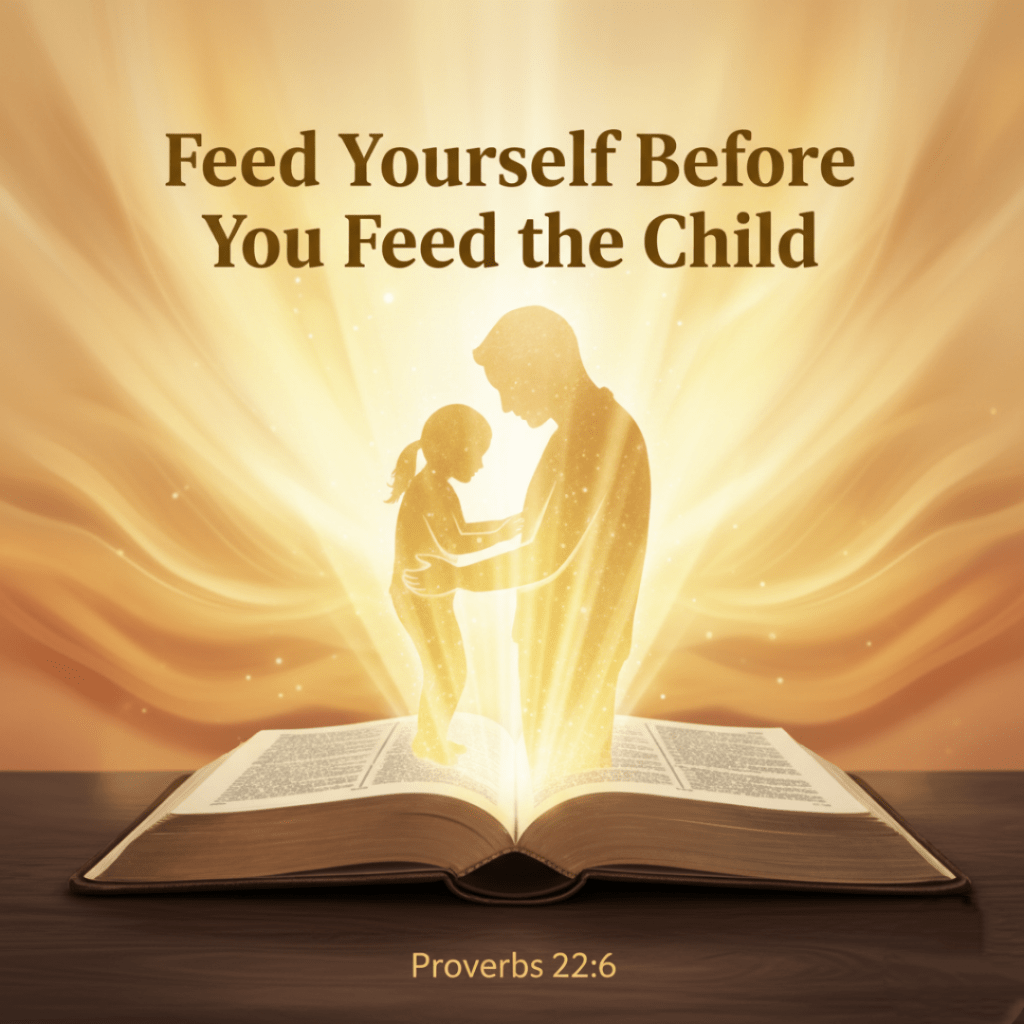
Every parent wants to raise godly, grounded children, but you can’t give what you don’t have. This post reminds parents that spiritual nourishment begins with you. Before you feed your child, make sure your own spirit is full. Your example becomes their foundation.
Discover a powerful lesson on godly parenting, why you must first be spiritually nourished before you can effectively nourish your children. Learn how your walk with God shapes the faith of your child.
I once visited a friend, and while I was in her house, her baby began to cry. At that moment, she was in the kitchen preparing food for herself.Out of concern, I asked, “Won’t you go and attend to your baby first?”
But she said something I didn’t understand at first: “I have to eat first before I feed my baby.”
I kept reminding her because the baby was still crying, but she calmly replied, “I’m not wicked to mty baby. I’m only trying to help myself, because without eating, I cannot feed my baby. The milk won’t come out if I haven’t eaten.”
That statement stayed with me. It taught me a big lesson.
Later, as I reflected, I realized something profound — God’s Word is also food. The Bible says,
“Man shall not live by bread alone, but by every word that proceeds from the mouth of God.” (Matthew 4:4)
In the same way, a parent must be nourished with the Word of God before they can nourish their child spiritually. You cannot give what you don’t have. You must feed yourself before you can feed your child.
So the big question is: What have you been feeding on? Because what you feed on determines what your child will eventually feed on.
The Bible says,
“Let the Word of Christ dwell in you richly.” (Colossians 3:16)
That means, as parents, we must let God’s Word fill our hearts daily. Parenting begins with personal growth.
Filling up a child is vital, but it starts with a parent who takes responsibility to be word-loaded. Even if you’re not perfect or naturally godly, start somewhere. Let your children see you reading your Bible, praying, or speaking faith. Even if it feels like you’re pretending at first, keep doing it. Because what they see, they will imitate.
A Personal Example
I remember when I was younger, my mom would pray almost every night. You’d see her burning the midnight candle, praying earnestly in the quiet hours. She never told me to do that. She never sat me down to instruct me, saying, “You have to pray.” But guess what? I grew up loving it. I grew up doing what I saw her do.
Just like my father too, he loved reading the Bible quietly at night, using a small table lamp. He didn’t command me to do the same, but I found myself following in his footsteps.
They both fed themselves with the Word, and because of that, it was easy for me to be nourished. They gave me what they already had, a living example of faith.
And that’s what parenting is all about. That’s what godly parenting truly means.
Children learn more by what they see than by what they hear. When parents feed on the Word, their children will naturally grow hungry for it too.
“Thus saith the LORD, thy Redeemer, the Holy One of Israel; I am the LORD thy God which teacheth thee to profit, which leadeth thee by the way that thou shouldest go.” – Isaiah 48:17 (KJV)
God, the Perfect Teacher
In Isaiah 48:17, God reminds His people that He is not only their Redeemer but also their Teacher and Guide. The Hebrew word translated “teacheth” (limmēd) carries the sense of training, disciplining, and correcting. It’s more than sharing information; it’s about shaping character.
That is why some old Bible notes explain it as “the rod being an oriental incentive.” In biblical (Eastern) culture, the rod was a recognized symbol of discipline, not merely for punishment, but as a tool of guidance and correction. Shepherds used rods to guide sheep, and parents used them to train children. Discipline was seen as a loving way to lead toward maturity.
God’s Teaching Includes Correction
God’s method of teaching His children mirrors this principle. He instructs us through His Word (2 Timothy 3:16), but He also corrects us when we go astray. Hebrews 12:6 puts it plainly:
“For whom the Lord loveth He chasteneth, and scourgeth every son whom He receiveth.”
Just as earthly fathers discipline their children out of love (Proverbs 13:24), God disciplines us so we can profit, so our lives reflect His purpose. His correction is never to destroy, but to restore.
Parenting in Light of God’s Example
As parents, we are called to follow God’s model:
Instruction with Love: “And these words, which I command thee this day, shall be in thine heart: And thou shalt teach them diligently unto thy children…” (Deuteronomy 6:6–7).
Correction with Consistency: “Foolishness is bound in the heart of a child; but the rod of correction shall drive it far from him.” (Proverbs 22:15).
Guidance with Patience: “Train up a child in the way he should go: and when he is old, he will not depart from it.” (Proverbs 22:6).
The “rod” in modern parenting may not always be physical; it can also be firm boundaries, consistent discipline, or consequences that lovingly guide a child back to the right path.
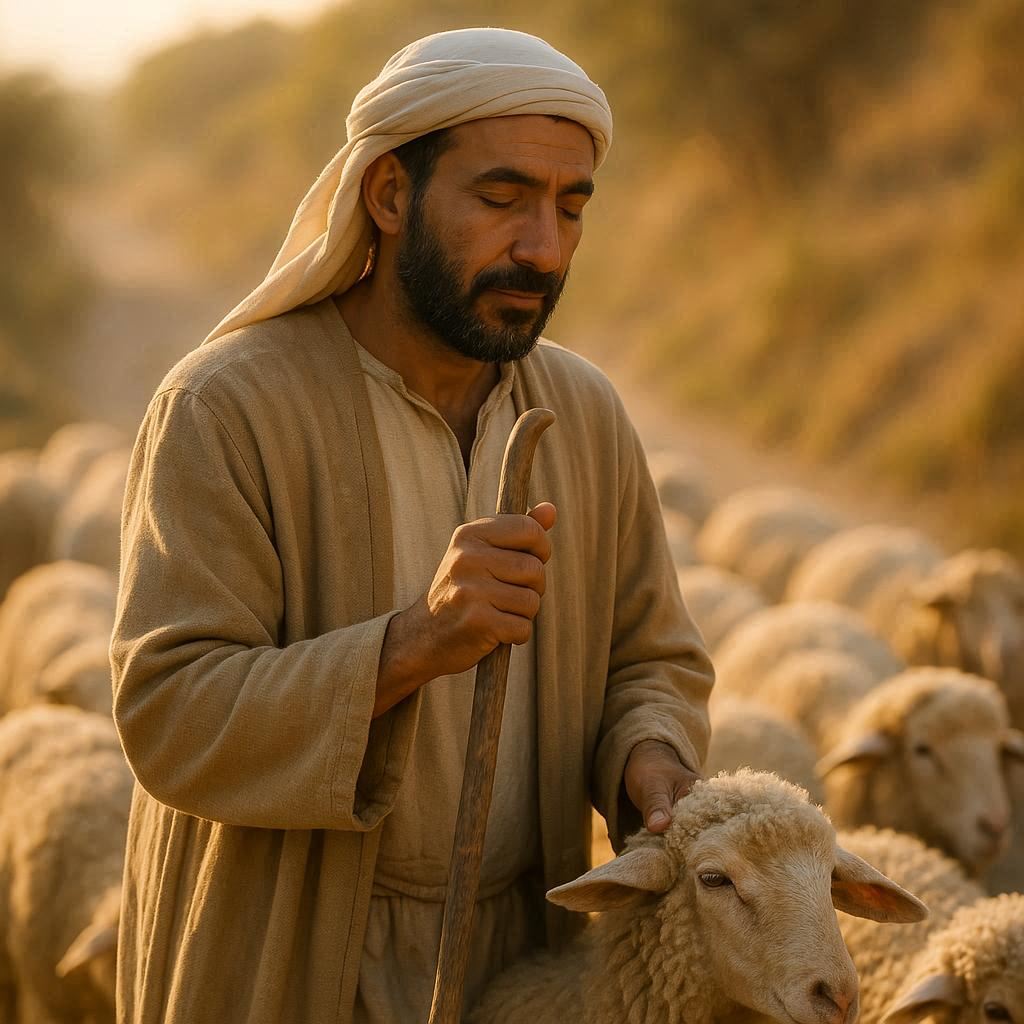
A Shepherd’s Example
The Psalmist says: “Thy rod and thy staff they comfort me.” (Psalm 23:4). Notice that the rod brings comfort, not fear. A shepherd uses the rod to correct, defend, and protect the sheep. In the same way, godly parenting involves both nurturing and correcting.
Discipline, when done in love, provides security and clarity. It tells a child: “I love you enough not to leave you in your error.”
A Simple Illustration
A father once walked with his little son near a busy road. The child, excited by the sight of cars, tried to run ahead. The father quickly pulled him back by the hand and firmly said, “Stay beside me.” The boy frowned at first, but later, when he saw how fast the cars zoomed by, he understood his father’s correction was for his safety.
That’s how God’s rod works. His correction may feel restrictive in the moment, but it is always for our protection and profit. Parents must mirror this, guiding children firmly yet lovingly, for their good.
Key Takeaway for Parents
Godly parenting requires a balance: words that instruct and actions that correct.To truly teach a child, we must combine guidance with discipline, love with correction, and truth with grace.
The First Step to Godly Parenting
Before you can raise godly children, you must first be a child of God yourself. The first step to godly parenting is surrendering your life to Jesus, the Great Shepherd, and allowing Him to guide you.
If you have not yet given your life to Christ, you can do so right now. Pray this simple prayer from your heart:
🙏 Salvation Prayer
Lord Jesus, I come to You today. I know that I am a sinner, but I believe You died for me and rose again. I ask You to forgive me of all my sins and come into my heart. Be my Lord and Savior. From today, I choose to follow You. Thank You for saving me. Amen.If you prayed that prayer sincerely, you are now a child of God. Let Him lead you as you lead your children, and He will teach you the way to go.
If you prayed that prayer sincerely, you are now a child of God. Let Him lead you as you lead your children, and He will teach you the way to go.
✨ Closing Thought
God’s rod is not for destruction, but for direction. Jesus Himself is the Rod of correction: “And there shall come forth a rod out of the stem of Jesse…” (Isaiah 11:1). He is also the Word of God made flesh: “In the beginning was the Word, and the Word was with God, and the Word was God. The same was in the beginning with God… In Him was life; and the life was the light of men.” (John 1:1–5).
For parents, this means that Jesus, the living Word, is the divine standard and guide for shepherding children in God’s way. The Bible is not just a book of advice; it is the Word of God in print, required for godly parenting. As we allow Christ, the Rod and the Word, to shape us, we will be equipped to shape our children for His glory.