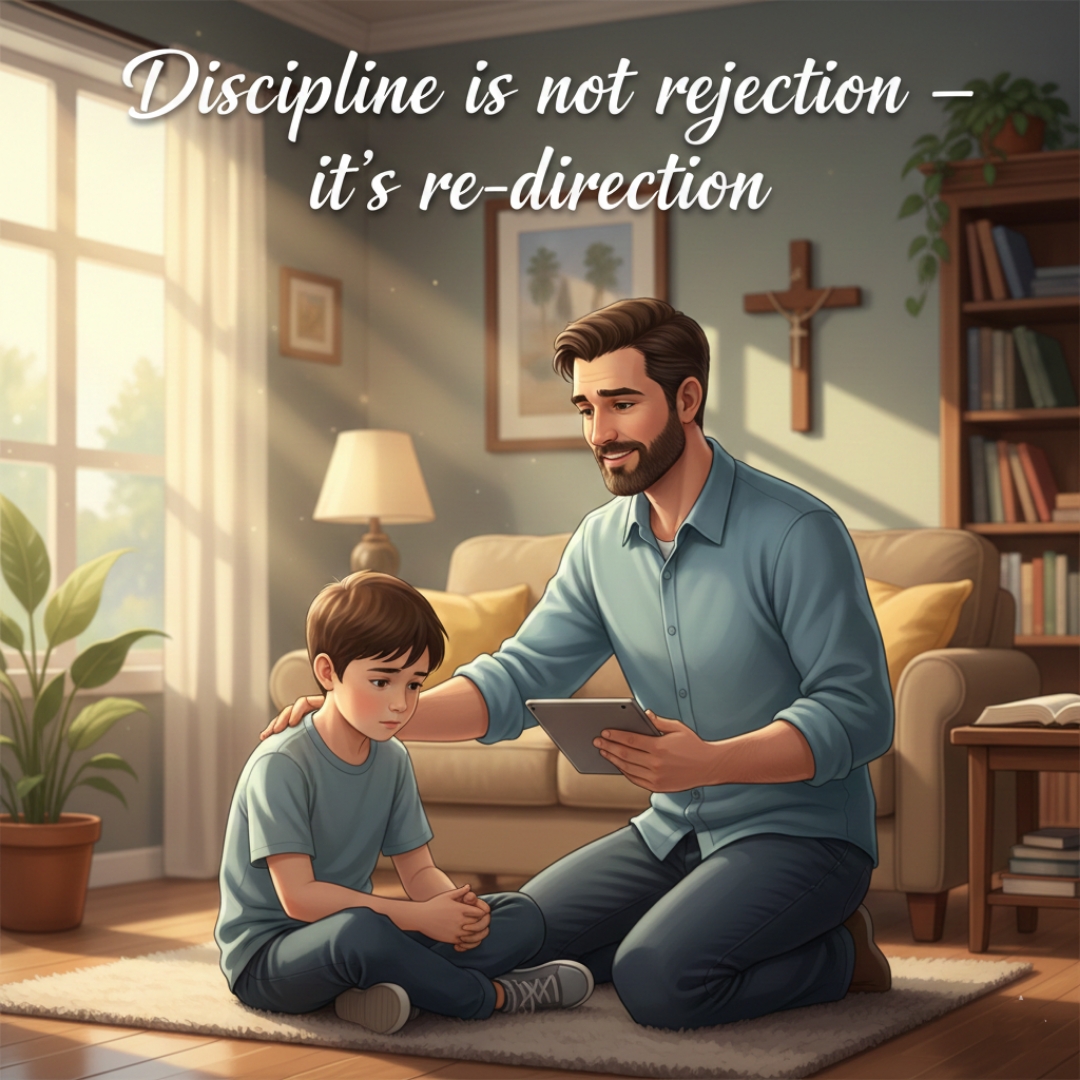
Withdrawal Privilege and Godly Parenting: Raising Children with Grace and Boundaries

A father once excused his daughter’s bad habits until they embarrassed him in public. That moment revealed a powerful truth: correction delayed is correction denied. This article explores the Christian principle of withdrawal privilege, a loving, biblical approach to discipline that teaches responsibility, restores respect, and mirrors the way God trains His own children with grace and boundaries.

A Lesson from My Uncle’s Story

I remember once when one of my uncles would always refuse to correct his daughter about slapping adults as a way of playing. Whenever anyone cautioned him, he would shrug it off and say, “She’s just a child.” For a while, it seemed harmless, just innocent fun.

But one day, during a family gathering, that same little girl playfully slapped her father in public. This time, it was no longer funny. He felt deeply embarrassed. Sadly, it was too late to correct her in that moment, because what he had once excused had now become her habit.

That experience taught me something vital: correction delayed is correction denied. In our effort to be loving and gentle, we sometimes forget that godly love includes discipline. Parenting is not only about showing affection, it’s also about guiding behavior with firmness and grace.

“Love without correction breeds destruction; correction without love breeds rebellion.”

Understanding Withdrawal Privilege

In Christian parenting, withdrawal privilege means temporarily removing certain benefits or freedoms when a child disobeys or fails to take responsibility. It’s not done in anger, but as a gentle lesson in accountability and growth.

For example, if a teenager neglects their homework, they may lose screen time until they complete it. If a younger child disrespects instructions, they might lose playtime or a favorite treat. The goal isn’t to hurt them, but to help them understand that privileges are earned through responsibility, just as blessings often follow obedience in our relationship with God.

A beautiful example is seen in Jesus’ early life. When He stayed behind in the temple at age twelve (Luke 2:41–52), His parents, Joseph and Mary, were worried and searched for Him for three days. When they finally found Him, Mary lovingly corrected Him, saying,

“Son, why have You done this to us? Look, Your father and I have sought You anxiously.” — Luke 2:48 (NKJV)

Jesus’ response was respectful, yet Scripture notes something significant afterward:

“Then He went down with them and came to Nazareth, and was subject to them.” — Luke 2:51

That gentle correction restored understanding and order. The Bible never recorded Him repeating such an act. It shows us that even in love, parents must teach boundaries, and that loving correction can prevent future errors.

The Biblical Foundation for Discipline

In the Bible, discipline means doing what is right, not what we like. It’s not about punishment but about training, helping children build habits that please God and strengthen character.

“For whom the Lord loves He disciplines, and He scourges every son whom He receives.” — Hebrews 12:6 (NKJV)

God’s discipline is an expression of love, not rejection. Sometimes, He allows us to experience the consequences of our actions so we can grow in wisdom. When we drift from His will, He may withhold certain blessings, not out of anger, but to draw us back to the right path.

Think of the Prodigal Son (Luke 15:11–24). The father allowed his son to leave and experience the loss of privileges that came with rebellion. Yet, when the son repented, the father restored him completely. That’s divine discipline, correction with the goal of restoration.

The Purpose Behind Withdrawing Privileges

Every act of godly discipline should aim to heal, not to hurt. When parents withdraw privileges, it should be done prayerfully, with a heart focused on growth, not frustration.

Withdrawal of privileges teaches:

  • Responsibility: Children learn that actions have consequences.
  • Respect: They begin to honor rules and authority.
  • Restoration: They realize that obedience restores lost privileges, just as repentance restores relationship with God.

“Withdrawal privilege should never say ‘You’re unloved,’ but ‘I love you too much to let you continue in this behavior.’”

Practical Ways to Apply Withdrawal Privilege (with Scripture)

1. Be Clear and Consistent — Proverbs 29:15

“The rod and rebuke give wisdom, but a child left to himself brings shame to his mother.”

Children thrive when expectations are clear. Define rules and link them to privileges. For instance: “If you complete your homework, you can watch your favorite show. If not, that privilege will be paused.” Consistency helps children understand that obedience brings reward, and disobedience brings consequence.

2. Stay Calm and Prayerful — James 1:19–20

“Everyone should be quick to listen, slow to speak and slow to become angry, because human anger does not produce the righteousness that God desires.”

Parenting under pressure can test your patience. But correction done in anger can damage trust. Before reacting, take a moment to pray. Ask the Holy Spirit for peace and self-control. Let your discipline reflect God’s calm firmness, not human frustration.

3. Communicate with Love — Proverbs 15:1

“A gentle answer turns away wrath, but a harsh word stirs up anger.”

After withdrawing a privilege, explain why it happened. Let your child understand the connection between their action and the consequence. Always reassure them of your love: “I’m correcting you because I love you, and I want you to learn what’s right.” This builds security, not resentment.

4. Restore Gracefully — Galatians 6:1

“Brothers and sisters, if someone is caught in a sin, you who live by the Spirit should restore that person gently.”

When your child takes responsibility or shows repentance, restore their privilege with warmth. Celebrate their growth. Just as God restores us when we turn back to Him, let restoration be a moment of joy and encouragement, not pride or guilt.

Balancing Grace and Discipline

Godly parenting means balancing grace and truth. Too much leniency can lead to entitlement; too much harshness can lead to rebellion.

“Fathers, do not provoke your children to wrath, but bring them up in the training and admonition of the Lord.” — Ephesians 6:4

Parenting isn’t about control, it’s about cultivating character. The goal is not perfection but partnership with God in shaping hearts. Each child is unique, so rely on the Holy Spirit for wisdom on when and how to apply discipline.

“God never withdraws His love, even when He withdraws a privilege.”

A Call to Godly Parents

Parenting will always stretch our patience, wisdom, and humility. But as we mirror God’s nature, firm in truth, rich in mercy, steadfast in love, we reflect His heart to our children.

When correction is guided by love, it strengthens relationship, not weakens it. Withdrawal privilege, when done rightly, becomes a bridge to maturity, not a barrier to connection.

A Short Prayer for Parents

Heavenly Father, thank You for the gift of parenting. Teach us to correct our children with wisdom and love. Help us to reflect Your nature in discipline, firm yet full of grace. May our homes be places of learning, joy, and righteousness. In Jesus’ name, Amen.

Final Thoughts

Parenting is one of the most sacred ministries on earth. As we guide our children, let us remember: discipline is not rejection, it’s redirection. And just as God lovingly shapes us, so we are called to shape our children with patience, purpose, and prayer.

Proverbs 22:6 Explained: What ‘Train Up a Child’ Really Means for Christian Parenting


Understanding Proverbs 22:6 Through the Lens of Christ

“Train up a child in the way he should go: and when he is old, he will not depart from it.”
Proverbs 22:6 (KJV)

This well-known proverb is often quoted by parents, teachers, and guardians. But how often do we stop to ask:
What exactly is “the way” that God is referring to?

It’s not just about education, good manners, or career guidance, it’s much deeper. To raise children who won’t depart from the right path, we must understand what the “way” truly is, and how to apply it in parenting.

Let’s walk through the Word of God together to uncover this divine blueprint.


What Is “The Way” in Proverbs 22:6?

Cross glowing as a path leading forward, symbol of Jesus as the Way.

In John 14:6, Jesus gives us the clearest answer:

“I am the way, the truth, and the life. No man comes to the Father, but by Me.”

Jesus is the Way.

So, when Proverbs 22:6 says, “train up a child in the way he should go,” it means we are to train them to know, follow, and live in Christ, not just in religion, but in a real, living relationship with Jesus, the Son of God.


Who Is Jesus, and How Does He Relate to Parenting?

Photo of a curious African family (father, mother, and two children) standing together in a natural outdoor setting, looking ahead with curiosity.

Let’s go to John 1:1–5:

“In the beginning was the Word, and the Word was with God, and the Word was God… All things were made by Him… In Him was life, and the life was the light of men.”

Jesus is the Word of God made flesh. Therefore, to train our children in Jesus is to train them in the Word of God, the Holy Bible.

This gives us a simple truth:

“Train up a child in the way of God’s Word (the Bible), and when he is old, he will not forget it.”

We must let Scripture be the foundation for all parenting, teaching, correcting, disciplining, and loving, because God’s Word carries the power to transform the heart of any child.


Jesus: The Rod and the Word

Shepherd holding staff while guiding sheep lovingly, soft illustration, symbol of correction with love.

Another beautiful image is found in Isaiah 11:1:

“And there shall come forth a rod out of the stem of Jesse, and a Branch shall grow out of his roots.”

This “Rod” is symbolic of Jesus, the righteous ruler and corrector.

Now compare this with:

  • Proverbs 22:15“Foolishness is bound in the heart of a child; but the rod of correction shall drive it far from him.”
  • Proverbs 23:13-14“Withhold not correction from the child…”
  • Proverbs 29:15“The rod and reproof give wisdom…”

Many misinterpret these verses as a license for harsh punishment. But if Jesus is the Rod, then the rod of correction is not abuse, it is the Word of God used in love, discipline, and truth.

Correction is not about fear; it’s about formation, shaping a heart to reflect Christ.

Rules without love create rebellion. Discipline with love creates disciples.


God’s Word: The Only Sure Foundation

House built on solid rock standing firm against storm, biblical parable illustration Matthew 7:24–27.

A godly child cannot be raised on culture, trends, or personal opinions. Only the Word of God can lay a firm and eternal foundation.

Consider these Scriptures:

  • 1 Corinthians 3:11“For other foundation can no man lay than that is laid, which is Jesus Christ.”
  • Isaiah 28:16“…a sure foundation…”
  • Psalm 11:3“If the foundations be destroyed, what can the righteous do?”
  • Hebrews 4:12“For the Word of God is quick, and powerful… a discerner of the thoughts and intents of the heart.”

We must build our children’s lives on Christ, the Rock, not shifting sand (Matthew 7:24–27).


Love: The Power That Never Fails

African Parents hugging their child warmly with Bible on the Study-table.

Parenting must always be rooted in love, not just rules. Discipline without love leads to rebellion. But discipline with love, shaped by God’s Word, produces fruit that lasts.

“Love never fails.” — 1 Corinthians 13:8

Even when correction is needed, it should come from a place of genuine care, not anger. We are not just correcting behavior, we are shaping eternal souls.


God’s Word Has Transforming Power

An African Family of six studying Bible together in the sitting room.

It doesn’t matter where a child starts from, God’s Word can transform any heart, any attitude, and any background. It has an inbuilt power to renew the mind, convict the heart, and produce godly character.

Isaiah 55:11 reminds us:

“So shall My Word be that goeth forth out of My mouth: it shall not return unto Me void…”

So when you sow the Word into your child’s heart, you can trust that it is working, even when you don’t see immediate results.


Practical Steps for Training Children in “The Way”

Here are a few simple, powerful ways to apply all of this:

  1. Read the Bible together daily. Example: During breakfast, read one proverb and ask your child what it means to them.
  2. Pray with your children. Example: At bedtime, let them pray in their own words, it builds confidence in God’s listening ear.
  3. Discipline in love. Example: Instead of saying, “You’re always careless,” say, “God’s Word teaches us to be diligent (Proverbs 12:24). Let’s practice that together.”
  4. Model Christ. Example: Let your children see you forgive quickly. Your actions preach louder than your sermons.
  5. Encourage Scripture memory. Example: Turn memory verses into a fun family challenge with rewards, kids remember faster when it’s fun.

Reflective question: Which of these five steps will you start practicing this week?


Parenting God’s Way

“Train up a child in the way he should go…”

That way is Jesus Christ, the Word made flesh, the Rod of correction, the sure Foundation, and the King of Glory.

When we raise our children on the Word, in love, and with prayer, we are not just preparing them for this life, we are preparing them for eternity.

So don’t give up. Don’t grow weary.

📖 Keep sowing the Word.
🕊️ Keep loving in truth.
🙏 Keep trusting God.

Because Jesus is Lord, and He is faithful to watch over His Word to perform it, in your children’s lives, and in yours.

Closing Thought

The first step to godly parenting is being a child of God yourself. You must first allow Jesus to be your Great Shepherd.

Prayer of Salvation

Would you like to take that step today?

Lord Jesus, I come to You today. I am a sinner, but You died for me. Forgive me of my sins, come into my heart, and be my Lord and Savior. From today, I choose to follow You. Thank You for saving me. Amen.

If you prayed this prayer, welcome to the family of God! Begin your journey by feeding daily on His Word and connecting with a Bible-believing church.

💬 Share in the comments: What has been your experience with applying God’s Word in parenting?

Remain Ever Blessed. Jesus Is Lord.


📌 Share this Blog

If this message blessed you, please share it with other parents, youth leader, teachers, or church groups.

Let’s build a generation that walks in the Way, lives by the Word, and reflects the Love of Christ.

Explore more:


The Weight of Words: Godly Parenting and the Power of Speech

“Death and life are in the power of the tongue: and they that love it shall eat the fruit thereof.” – Proverbs 18:21 (KJV)

Have you ever said something to your child or grandchild, only to realize later that it cut deeper than you intended? Words shape hearts, and in parenting, they carry eternal weight.

Grandma's sharp tongue left wounds on her grandson-- godly parenting blog

Ten-year-old Sheyi dreaded each time his mother sent him to his grandmother’s house. Though his grandmother loved him, her sharp tongue left wounds that her hugs couldn’t heal.

“Get your bum off that couch and play soccer, ya sack of taters,” she once said. She thought Sheyi was too young to understand her lingo—but he understood every word, and it pierced his heart.

This story is a reminder that, as parents and caregivers, the words we speak can either build up or tear down. Godly parenting calls us to be intentional with our words, to nurture with grace, and to guide with wisdom rooted in Scripture.

The Power of Words in Godly Parenting

God’s Word makes it clear: our tongue has power. Sheyi’s grandmother didn’t mean to harm him, but her careless words created insecurity. Similarly, when parents or caregivers speak harshly, they unknowingly plant seeds of rejection, fear, or self-doubt.

“Pleasant words are as an honeycomb, sweet to the soul, and health to the bones.” – Proverbs 16:24

“Let no corrupt communication proceed out of your mouth, but that which is good to the use of edifying, that it may minister grace unto the hearers.” – Ephesians 4:29

As godly parents, we are called to choose uplifting language that shapes a child’s heart in truth, love, and encouragement.

Bridging the Generational Gap with Grace

Grandparents often raise children differently than parents do today. Each generation has its values, struggles, and blind spots. But Scripture reminds us to honor our parents:

“Honour thy father and thy mother: that thy days may be long upon the land which the Lord thy God giveth thee.” – Exodus 20:12

Parents play a bridge role between children and grandparents:

  • Teaching children to respect elders.
  • Guiding grandparents to understand today’s challenges.
  • Creating a culture of open, gracious communication.

This ensures children grow up with both roots of tradition and wings of understanding.

Teaching Children Their Identity in Christ

Sheyi’s mother gave him the phrase “metabolically challenged” to help him cope. While creative, Scripture gives us an even stronger identity to stand on. A child’s worth is not in size, looks, or abilities but in being fearfully and wonderfully made by God.

“I will praise thee; for I am fearfully and wonderfully made: marvellous are thy works; and that my soul knoweth right well.” – Psalm 139:14

“For we are his workmanship, created in Christ Jesus unto good works…” – Ephesians 2:10

Parents must constantly affirm children’s God-given identity. When children know who they are in Christ, negative words lose their power.

Practical Biblical Parenting Tips for Encouraging Speech

  • Pray before you speak: Ask God for wisdom (James 1:5).
  • Replace criticism with correction in love: Instead of saying, “You’re lazy,” say, “I believe you can do better because God has given you strength.”
  • Affirm daily: Speak blessings over your children every morning (Numbers 6:24–26).
  • Teach empathy: Help children understand how their words affect others (Matthew 7:12).

Creating a Home of Edification

Godly parenting isn’t about perfection—it’s about intention. A Christ-centered home must be a haven of encouragement, not a battlefield of harsh words.

“Fathers, provoke not your children to wrath: but bring them up in the nurture and admonition of the Lord.” – Ephesians 6:4

“But speaking the truth in love, may grow up into him in all things, which is the head, even Christ.” – Ephesians 4:15

When children feel valued, loved, and heard, they will thrive not just emotionally, but spiritually.

Conclusion & Encouragement

Sheyi’s story reminds us that words weigh more than we realize. As godly parents, grandparents, and caregivers, let us lean on the wisdom of God’s Word to speak life into our children. May our homes be filled with words of hope, encouragement, and truth that reflect the heart of Christ.

Prayer for Parents

“Lord, set a guard over my lips. Let my words be seasoned with grace, full of truth, and rich in love. Help me speak life into my children and guide them in the way they should go. In Jesus’ name, Amen.”

Call to Action

💬 What are some words of encouragement you speak over your children?

Share them in the comments—I’d love to hear from you!

📢 If this post blessed you, share it with another parent, grandparent, or caregiver who needs encouragement today.

Remain Ever Blessed

Design a site like this with WordPress.com
Get started