
Withdrawal Privilege and Godly Parenting: Raising Children with Grace and Boundaries

A father once excused his daughter’s bad habits until they embarrassed him in public. That moment revealed a powerful truth: correction delayed is correction denied. This article explores the Christian principle of withdrawal privilege, a loving, biblical approach to discipline that teaches responsibility, restores respect, and mirrors the way God trains His own children with grace and boundaries.

A Lesson from My Uncle’s Story

I remember once when one of my uncles would always refuse to correct his daughter about slapping adults as a way of playing. Whenever anyone cautioned him, he would shrug it off and say, “She’s just a child.” For a while, it seemed harmless, just innocent fun.

But one day, during a family gathering, that same little girl playfully slapped her father in public. This time, it was no longer funny. He felt deeply embarrassed. Sadly, it was too late to correct her in that moment, because what he had once excused had now become her habit.

That experience taught me something vital: correction delayed is correction denied. In our effort to be loving and gentle, we sometimes forget that godly love includes discipline. Parenting is not only about showing affection, it’s also about guiding behavior with firmness and grace.

“Love without correction breeds destruction; correction without love breeds rebellion.”

Understanding Withdrawal Privilege

In Christian parenting, withdrawal privilege means temporarily removing certain benefits or freedoms when a child disobeys or fails to take responsibility. It’s not done in anger, but as a gentle lesson in accountability and growth.

For example, if a teenager neglects their homework, they may lose screen time until they complete it. If a younger child disrespects instructions, they might lose playtime or a favorite treat. The goal isn’t to hurt them, but to help them understand that privileges are earned through responsibility, just as blessings often follow obedience in our relationship with God.

A beautiful example is seen in Jesus’ early life. When He stayed behind in the temple at age twelve (Luke 2:41–52), His parents, Joseph and Mary, were worried and searched for Him for three days. When they finally found Him, Mary lovingly corrected Him, saying,

“Son, why have You done this to us? Look, Your father and I have sought You anxiously.” — Luke 2:48 (NKJV)

Jesus’ response was respectful, yet Scripture notes something significant afterward:

“Then He went down with them and came to Nazareth, and was subject to them.” — Luke 2:51

That gentle correction restored understanding and order. The Bible never recorded Him repeating such an act. It shows us that even in love, parents must teach boundaries, and that loving correction can prevent future errors.

The Biblical Foundation for Discipline

In the Bible, discipline means doing what is right, not what we like. It’s not about punishment but about training, helping children build habits that please God and strengthen character.

“For whom the Lord loves He disciplines, and He scourges every son whom He receives.” — Hebrews 12:6 (NKJV)

God’s discipline is an expression of love, not rejection. Sometimes, He allows us to experience the consequences of our actions so we can grow in wisdom. When we drift from His will, He may withhold certain blessings, not out of anger, but to draw us back to the right path.

Think of the Prodigal Son (Luke 15:11–24). The father allowed his son to leave and experience the loss of privileges that came with rebellion. Yet, when the son repented, the father restored him completely. That’s divine discipline, correction with the goal of restoration.

The Purpose Behind Withdrawing Privileges

Every act of godly discipline should aim to heal, not to hurt. When parents withdraw privileges, it should be done prayerfully, with a heart focused on growth, not frustration.

Withdrawal of privileges teaches:

  • Responsibility: Children learn that actions have consequences.
  • Respect: They begin to honor rules and authority.
  • Restoration: They realize that obedience restores lost privileges, just as repentance restores relationship with God.

“Withdrawal privilege should never say ‘You’re unloved,’ but ‘I love you too much to let you continue in this behavior.’”

Practical Ways to Apply Withdrawal Privilege (with Scripture)

1. Be Clear and Consistent — Proverbs 29:15

“The rod and rebuke give wisdom, but a child left to himself brings shame to his mother.”

Children thrive when expectations are clear. Define rules and link them to privileges. For instance: “If you complete your homework, you can watch your favorite show. If not, that privilege will be paused.” Consistency helps children understand that obedience brings reward, and disobedience brings consequence.

2. Stay Calm and Prayerful — James 1:19–20

“Everyone should be quick to listen, slow to speak and slow to become angry, because human anger does not produce the righteousness that God desires.”

Parenting under pressure can test your patience. But correction done in anger can damage trust. Before reacting, take a moment to pray. Ask the Holy Spirit for peace and self-control. Let your discipline reflect God’s calm firmness, not human frustration.

3. Communicate with Love — Proverbs 15:1

“A gentle answer turns away wrath, but a harsh word stirs up anger.”

After withdrawing a privilege, explain why it happened. Let your child understand the connection between their action and the consequence. Always reassure them of your love: “I’m correcting you because I love you, and I want you to learn what’s right.” This builds security, not resentment.

4. Restore Gracefully — Galatians 6:1

“Brothers and sisters, if someone is caught in a sin, you who live by the Spirit should restore that person gently.”

When your child takes responsibility or shows repentance, restore their privilege with warmth. Celebrate their growth. Just as God restores us when we turn back to Him, let restoration be a moment of joy and encouragement, not pride or guilt.

Balancing Grace and Discipline

Godly parenting means balancing grace and truth. Too much leniency can lead to entitlement; too much harshness can lead to rebellion.

“Fathers, do not provoke your children to wrath, but bring them up in the training and admonition of the Lord.” — Ephesians 6:4

Parenting isn’t about control, it’s about cultivating character. The goal is not perfection but partnership with God in shaping hearts. Each child is unique, so rely on the Holy Spirit for wisdom on when and how to apply discipline.

“God never withdraws His love, even when He withdraws a privilege.”

A Call to Godly Parents

Parenting will always stretch our patience, wisdom, and humility. But as we mirror God’s nature, firm in truth, rich in mercy, steadfast in love, we reflect His heart to our children.

When correction is guided by love, it strengthens relationship, not weakens it. Withdrawal privilege, when done rightly, becomes a bridge to maturity, not a barrier to connection.

A Short Prayer for Parents

Heavenly Father, thank You for the gift of parenting. Teach us to correct our children with wisdom and love. Help us to reflect Your nature in discipline, firm yet full of grace. May our homes be places of learning, joy, and righteousness. In Jesus’ name, Amen.

Final Thoughts

Parenting is one of the most sacred ministries on earth. As we guide our children, let us remember: discipline is not rejection, it’s redirection. And just as God lovingly shapes us, so we are called to shape our children with patience, purpose, and prayer.
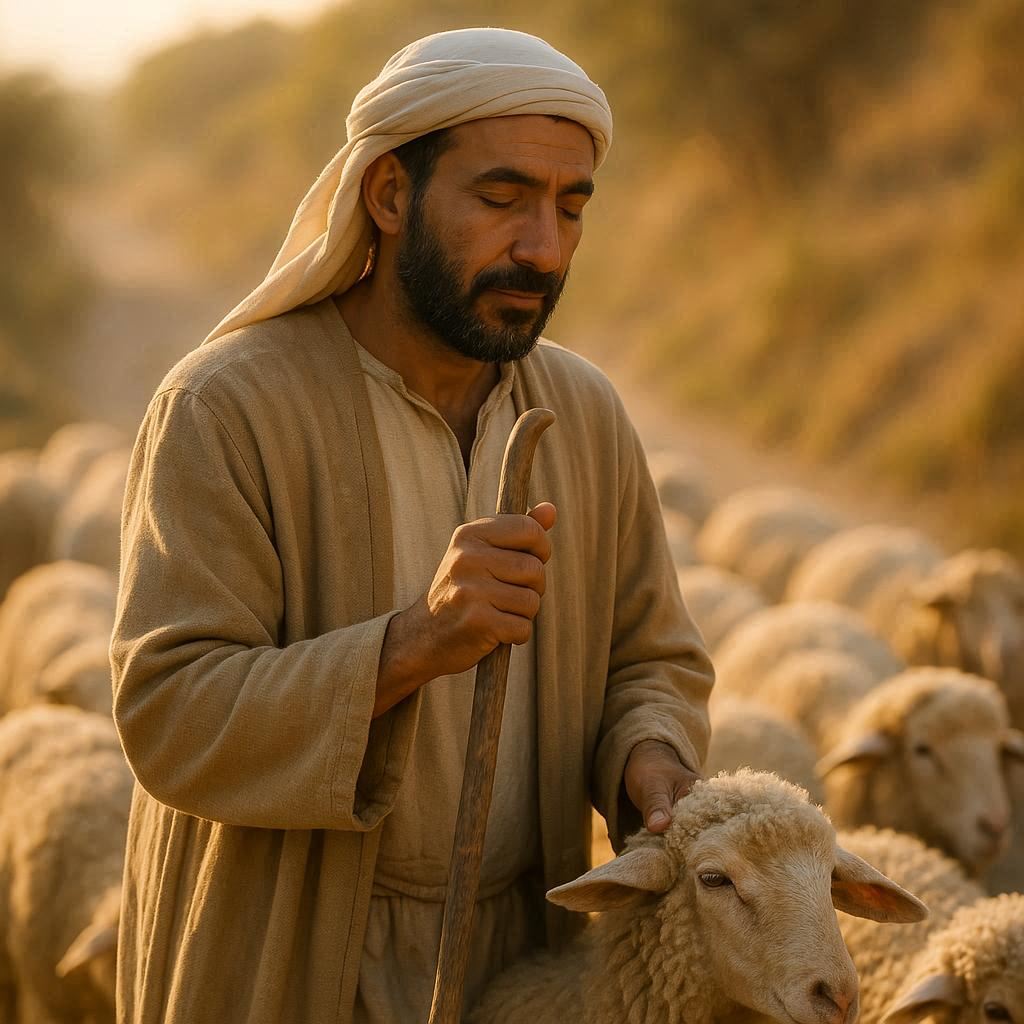
The Rod as an Oriental Incentive: God’s Model for Parenting

A peaceful Middle Eastern shepherd holding a rod, gently guiding sheep along a safe path.

“Thus saith the LORD, thy Redeemer, the Holy One of Israel; I am the LORD thy God which teacheth thee to profit, which leadeth thee by the way that thou shouldest go.” – Isaiah 48:17 (KJV)

God, the Perfect Teacher

In Isaiah 48:17, God reminds His people that He is not only their Redeemer but also their Teacher and Guide. The Hebrew word translated “teacheth” (limmēd) carries the sense of training, disciplining, and correcting. It’s more than sharing information; it’s about shaping character.

That is why some old Bible notes explain it as “the rod being an oriental incentive.” In biblical (Eastern) culture, the rod was a recognized symbol of discipline, not merely for punishment, but as a tool of guidance and correction. Shepherds used rods to guide sheep, and parents used them to train children. Discipline was seen as a loving way to lead toward maturity.

God’s Teaching Includes Correction

God’s method of teaching His children mirrors this principle. He instructs us through His Word (2 Timothy 3:16), but He also corrects us when we go astray. Hebrews 12:6 puts it plainly:

“For whom the Lord loveth He chasteneth, and scourgeth every son whom He receiveth.”

Just as earthly fathers discipline their children out of love (Proverbs 13:24), God disciplines us so we can profit, so our lives reflect His purpose. His correction is never to destroy, but to restore.

Parenting in Light of God’s Example

As parents, we are called to follow God’s model:

  • Instruction with Love: “And these words, which I command thee this day, shall be in thine heart: And thou shalt teach them diligently unto thy children…” (Deuteronomy 6:6–7).
  • Correction with Consistency: “Foolishness is bound in the heart of a child; but the rod of correction shall drive it far from him.” (Proverbs 22:15).
  • Guidance with Patience: “Train up a child in the way he should go: and when he is old, he will not depart from it.” (Proverbs 22:6).

The “rod” in modern parenting may not always be physical; it can also be firm boundaries, consistent discipline, or consequences that lovingly guide a child back to the right path.

A Shepherd’s Example

The Psalmist says: Thy rod and thy staff they comfort me.” (Psalm 23:4). Notice that the rod brings comfort, not fear. A shepherd uses the rod to correct, defend, and protect the sheep. In the same way, godly parenting involves both nurturing and correcting.

Discipline, when done in love, provides security and clarity. It tells a child: “I love you enough not to leave you in your error.”

A Simple Illustration

A father once walked with his little son near a busy road. The child, excited by the sight of cars, tried to run ahead. The father quickly pulled him back by the hand and firmly said, “Stay beside me.” The boy frowned at first, but later, when he saw how fast the cars zoomed by, he understood his father’s correction was for his safety.

That’s how God’s rod works. His correction may feel restrictive in the moment, but it is always for our protection and profit. Parents must mirror this, guiding children firmly yet lovingly, for their good.

Key Takeaway for Parents

Godly parenting requires a balance: words that instruct and actions that correct.To truly teach a child, we must combine guidance with discipline, love with correction, and truth with grace.

The First Step to Godly Parenting

Before you can raise godly children, you must first be a child of God yourself. The first step to godly parenting is surrendering your life to Jesus, the Great Shepherd, and allowing Him to guide you.

If you have not yet given your life to Christ, you can do so right now. Pray this simple prayer from your heart:

🙏 Salvation Prayer

Lord Jesus, I come to You today. I know that I am a sinner, but I believe You died for me and rose again. I ask You to forgive me of all my sins and come into my heart. Be my Lord and Savior. From today, I choose to follow You. Thank You for saving me. Amen.If you prayed that prayer sincerely, you are now a child of God. Let Him lead you as you lead your children, and He will teach you the way to go.

If you prayed that prayer sincerely, you are now a child of God. Let Him lead you as you lead your children, and He will teach you the way to go.

✨ Closing Thought

God’s rod is not for destruction, but for direction. Jesus Himself is the Rod of correction: “And there shall come forth a rod out of the stem of Jesse…” (Isaiah 11:1). He is also the Word of God made flesh: “In the beginning was the Word, and the Word was with God, and the Word was God. The same was in the beginning with God… In Him was life; and the life was the light of men.” (John 1:1–5).

For parents, this means that Jesus, the living Word, is the divine standard and guide for shepherding children in God’s way. The Bible is not just a book of advice; it is the Word of God in print, required for godly parenting. As we allow Christ, the Rod and the Word, to shape us, we will be equipped to shape our children for His glory.

The Weight of Words: Godly Parenting and the Power of Speech

“Death and life are in the power of the tongue: and they that love it shall eat the fruit thereof.” – Proverbs 18:21 (KJV)

Have you ever said something to your child or grandchild, only to realize later that it cut deeper than you intended? Words shape hearts, and in parenting, they carry eternal weight.

Grandma's sharp tongue left wounds on her grandson-- godly parenting blog

Ten-year-old Sheyi dreaded each time his mother sent him to his grandmother’s house. Though his grandmother loved him, her sharp tongue left wounds that her hugs couldn’t heal.

“Get your bum off that couch and play soccer, ya sack of taters,” she once said. She thought Sheyi was too young to understand her lingo—but he understood every word, and it pierced his heart.

This story is a reminder that, as parents and caregivers, the words we speak can either build up or tear down. Godly parenting calls us to be intentional with our words, to nurture with grace, and to guide with wisdom rooted in Scripture.

The Power of Words in Godly Parenting

God’s Word makes it clear: our tongue has power. Sheyi’s grandmother didn’t mean to harm him, but her careless words created insecurity. Similarly, when parents or caregivers speak harshly, they unknowingly plant seeds of rejection, fear, or self-doubt.

“Pleasant words are as an honeycomb, sweet to the soul, and health to the bones.” – Proverbs 16:24

“Let no corrupt communication proceed out of your mouth, but that which is good to the use of edifying, that it may minister grace unto the hearers.” – Ephesians 4:29

As godly parents, we are called to choose uplifting language that shapes a child’s heart in truth, love, and encouragement.

Bridging the Generational Gap with Grace

Grandparents often raise children differently than parents do today. Each generation has its values, struggles, and blind spots. But Scripture reminds us to honor our parents:

“Honour thy father and thy mother: that thy days may be long upon the land which the Lord thy God giveth thee.” – Exodus 20:12

Parents play a bridge role between children and grandparents:

  • Teaching children to respect elders.
  • Guiding grandparents to understand today’s challenges.
  • Creating a culture of open, gracious communication.

This ensures children grow up with both roots of tradition and wings of understanding.

Teaching Children Their Identity in Christ

Sheyi’s mother gave him the phrase “metabolically challenged” to help him cope. While creative, Scripture gives us an even stronger identity to stand on. A child’s worth is not in size, looks, or abilities but in being fearfully and wonderfully made by God.

“I will praise thee; for I am fearfully and wonderfully made: marvellous are thy works; and that my soul knoweth right well.” – Psalm 139:14

“For we are his workmanship, created in Christ Jesus unto good works…” – Ephesians 2:10

Parents must constantly affirm children’s God-given identity. When children know who they are in Christ, negative words lose their power.

Practical Biblical Parenting Tips for Encouraging Speech

  • Pray before you speak: Ask God for wisdom (James 1:5).
  • Replace criticism with correction in love: Instead of saying, “You’re lazy,” say, “I believe you can do better because God has given you strength.”
  • Affirm daily: Speak blessings over your children every morning (Numbers 6:24–26).
  • Teach empathy: Help children understand how their words affect others (Matthew 7:12).

Creating a Home of Edification

Godly parenting isn’t about perfection—it’s about intention. A Christ-centered home must be a haven of encouragement, not a battlefield of harsh words.

“Fathers, provoke not your children to wrath: but bring them up in the nurture and admonition of the Lord.” – Ephesians 6:4

“But speaking the truth in love, may grow up into him in all things, which is the head, even Christ.” – Ephesians 4:15

When children feel valued, loved, and heard, they will thrive not just emotionally, but spiritually.

Conclusion & Encouragement

Sheyi’s story reminds us that words weigh more than we realize. As godly parents, grandparents, and caregivers, let us lean on the wisdom of God’s Word to speak life into our children. May our homes be filled with words of hope, encouragement, and truth that reflect the heart of Christ.

Prayer for Parents

“Lord, set a guard over my lips. Let my words be seasoned with grace, full of truth, and rich in love. Help me speak life into my children and guide them in the way they should go. In Jesus’ name, Amen.”

Call to Action

💬 What are some words of encouragement you speak over your children?

Share them in the comments—I’d love to hear from you!

📢 If this post blessed you, share it with another parent, grandparent, or caregiver who needs encouragement today.

Remain Ever Blessed

Design a site like this with WordPress.com
Get started